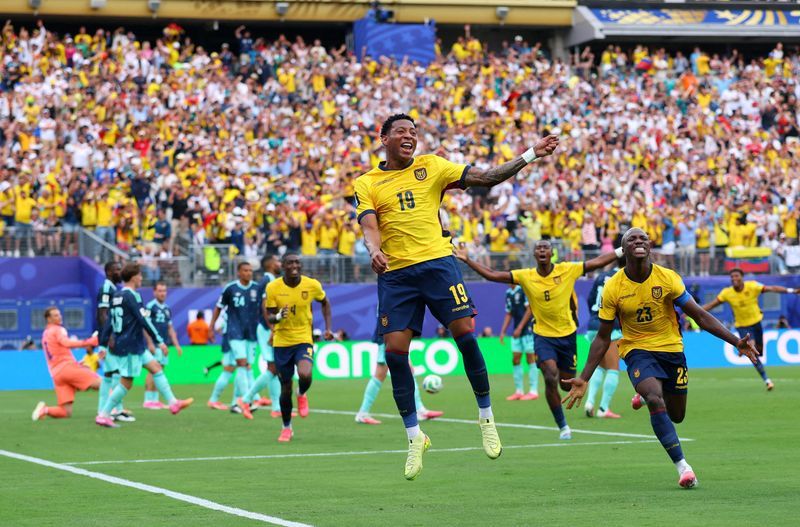
In a thrilling display of resilience that defied the odds stacked heavily against them, Ecuador staged an improbable comeback to overcome Germany 2-1 in their Group E finale on Thursday at East Rutherford, New Jersey. The South American side's victory proved decisive in salvaging their World Cup campaign from the brink of elimination, earning them a spot in the knockout round as one of the eight best third-placed finishers in the tournament.
Ecuador arrived for their decisive encounter facing an all-or-nothing scenario after disappointing results in their opening matches. A loss to Ivory Coast followed by a stalemate against Curacao had left the team's qualification hopes hanging by a thread. Compounding their predicament was a deeply concerning attacking problem—they had managed just one goal in 39 previous shots during the group stage, a statistic that suggested their tournament might end in heartbreak. With nothing to lose, coach Gustavo Alfaro's squad threw caution to the wind and pursued an attacking strategy from the opening whistle.
Their aggressive approach was immediately tested when Germany, already assured of advancing as group leaders, struck with devastating speed. Leroy Sane converted in the second minute, finishing left-footed from inside the penalty area after Florian Wirtz executed a clever quick throw-in to set up the unmarked attacker. The goal represented a milestone for Sane, marking his first major international tournament goal in his 15th appearance at that level. However, Ecuador's protests over a potential high foot from Aleksandar Pavlovic in the buildup fell on deaf ears as referee Tori Penso allowed the goal to stand, handing Germany an ideal start.
The setback could have shattered Ecuador's morale, yet instead it galvanized their response. Just seven minutes later, in the ninth minute, Nilson Angulo broke the tournament's scoring curse for his nation with a beautifully executed finish. The midfielder curled the ball into the net from the edge of the box with goalkeeper Manuel Neuer appearing slow to react to the danger. The goal sparked jubilant scenes among Ecuador's supporters, shifting momentum decisively toward the South Americans as they chased their unlikely dream of progression.
The match's narrative momentum continued shifting throughout the encounter, particularly following a controversial second-half incident that could have altered the trajectory entirely. Germany appeared to have earned a penalty when referee Penso judged that Joel Ordonez had tripped Kai Havertz, a decision that seemed to hand the Germans a lifeline. However, upon consultation with the video assistant referee, Penso reversed the decision after identifying a foul committed by Germany earlier in the buildup play. The overturned penalty decision proved consequential, denying Germany a chance to seize control and keeping Ecuador's hopes intact.
With clear-cut opportunities proving scarce for either side through much of the second half, the match remained delicately balanced and tense. Ecuador's defensive organization improved considerably, while Germany's attacking rhythm never fully coalesced despite their quality. The decisive moment arrived in the 78th minute when substitute Kevin Rodriguez flicked a corner kick toward the near post, presenting Gonzalo Plata with a goalscoring opportunity. Reacting with sharp instincts, Plata finished his chance ahead of Neuer, sending the sold-out stadium into wild celebration as Ecuador completed their remarkable resurrection.
Germany's failure to secure a third consecutive group-stage victory denied them the chance to extend their winning streak to 12 consecutive matches at international level. Nevertheless, the defending champions still finished atop Group E with six points, maintaining their perfect record on the tournament scoreline. However, their defensive vulnerabilities proved concerning, as they conceded in all three group matches—a worrying pattern heading into the knockout stages. Ivory Coast's 2-0 victory over Curacao initially pushed them into second place on goal difference, a result that perfectly illustrated how tightly contested the group had become.
Ecuador's progression holds particular significance for South American football, showcasing how determination and collective belief can overcome significant statistical disadvantages. Their scoring drought—lasting 40 shots before finally breaking through—represented one of the tournament's most striking anomalies, suggesting either tactical rigidity or fundamental finishing issues that appeared mysteriously resolved when the stakes reached their highest point. The team's qualification as a third-placed finisher rather than topping their group underscores how unpredictable World Cup football can be, with momentum and psychology often mattering as much as quality.
For Malaysian and Southeast Asian observers, Ecuador's achievement carries instructive lessons about tournament football. The match demonstrated how even relatively modest football nations can trouble elite sides through pressing intensity, tactical flexibility, and unwavering commitment. Moreover, Ecuador's narrow path to advancement—squeezing through as a third-placed team—mirrors the knife-edge realities that characterize Asian qualification campaigns, where goal difference, head-to-head records, and late dramatics frequently determine fates. The South Americans' journey embodies the tournament's essential unpredictability, reminding viewers that World Cup football remains beautifully unscripted, capable of producing narratives that defy conventional wisdom and pretext.

