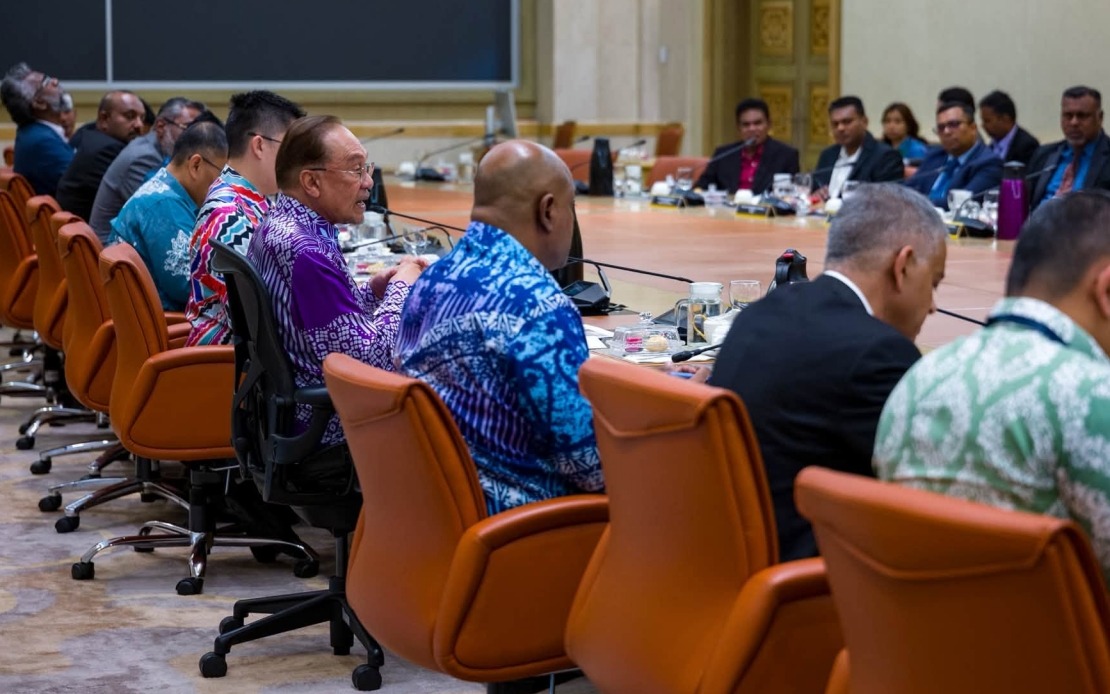
Prime Minister Datuk Seri Anwar Ibrahim has called for a comprehensive strategy centred on education, welfare support, and employment pathways to advance the socioeconomic standing of Malaysia's Indian community. Speaking following consultations with Indian community leaders, Anwar stressed that meaningful empowerment requires moving beyond policy announcements to address the tangible, everyday challenges faced by Indian Malaysians.
The emphasis on quality education reflects a recognition that schooling remains the most direct route to improved economic outcomes and social mobility. Anwar's position aligns with broader understanding among policymakers that educational disparities compound over generations, creating persistent inequality. For the Indian community in Malaysia, which has historically experienced unequal access to quality schooling and training opportunities, prioritising this sector signals a shift toward remedying structural disadvantages that have limited advancement prospects for many families.
Beyond formal education, Anwar highlighted the importance of skills development and vocational training—areas where targeted intervention can yield relatively rapid employment gains. These programmes matter particularly in Malaysia's evolving economy, where traditional employment pathways have narrowed whilst demand for technically skilled workers has grown. By coupling education with practical skills training, the government can better align community aspirations with market opportunities, reducing unemployment and underemployment that have long characterised segments of the Indian population.
The Malaysian Indian Transformation Unit (MITRA), the dedicated government agency overseeing community initiatives, features prominently in Anwar's strategy. His directive urging MITRA to adopt a more proactive grassroots approach suggests frustration with previous implementation gaps. Community leaders often report that government programmes reach only a fraction of intended beneficiaries due to poor awareness, administrative barriers, or misalignment between policy design and actual community needs. Anwar's emphasis on ground-level engagement addresses this implementation challenge directly.
Crucially, Anwar linked empowerment efforts to principles of accountability and good governance. This framing moves the discussion beyond benevolence or symbolic gestures toward a framework demanding measurable outcomes and transparent resource allocation. The Prime Minister specifically instructed relevant agencies to verify that implemented initiatives genuinely reach the most vulnerable, rather than being captured by intermediaries or benefiting only those already positioned to access support. Such oversight mechanisms remain weak in Malaysian governance generally, making this explicit reminder significant.
The welfare dimension of Anwar's framework addresses immediate material needs whilst education and skills address longer-term prospects. Comprehensive welfare—encompassing healthcare, social assistance, and family support—creates stability that enables individuals to pursue education and skills training without the distraction of meeting basic needs. For communities with higher poverty rates and lower household savings, such support can be transformative, allowing talented individuals to complete schooling rather than dropping out to contribute family income.
Anwar's mention of ensuring no segment of society is left behind carries particular weight given Malaysia's persistent economic stratification along ethnic and class lines. The Indian community, though diverse, contains pockets of significant deprivation alongside more prosperous segments. A genuinely inclusive approach must address this internal diversity, targeting support toward the most marginalised whilst creating pathways for broader advancement. Generic programmes often fail to reach the poorest households, which lack information networks or face cultural and practical barriers to access.
The timing of these statements reflects broader political dynamics. With general elections potentially approaching and the Indian community representing a meaningful electoral constituency, demonstrating commitment to their advancement holds political salience. However, the substance of Anwar's message—focusing on education, employment, and welfare rather than promises of patronage—suggests recognition that genuine community progress requires structural interventions rather than short-term handouts. This approach potentially builds longer-term political support by creating tangible improvements in living standards.
For Malaysian policymakers and the broader region, Anwar's framework offers a template for community development that prioritises systemic improvement over symbolic gestures. Countries throughout Southeast Asia grapple with minority community empowerment and economic inequality. The emphasis on education combined with accountability mechanisms addresses root causes rather than symptoms, though implementation will ultimately determine effectiveness. The challenge lies in translating these clearly articulated priorities into sustained budgetary commitment and coordinated agency action over multiple election cycles.
The success of this approach will depend heavily on MITRA's capacity to deliver and on whether government agencies genuinely prioritise ground-level engagement over top-down programme delivery. Community leaders will be monitoring implementation closely, and visible progress in education outcomes, employment figures, and welfare coverage will either validate or undermine the government's commitment. For the Indian community itself, the transition from consultation to implementation represents the critical test of whether these priorities translate into real improvements in opportunity and living standards.

