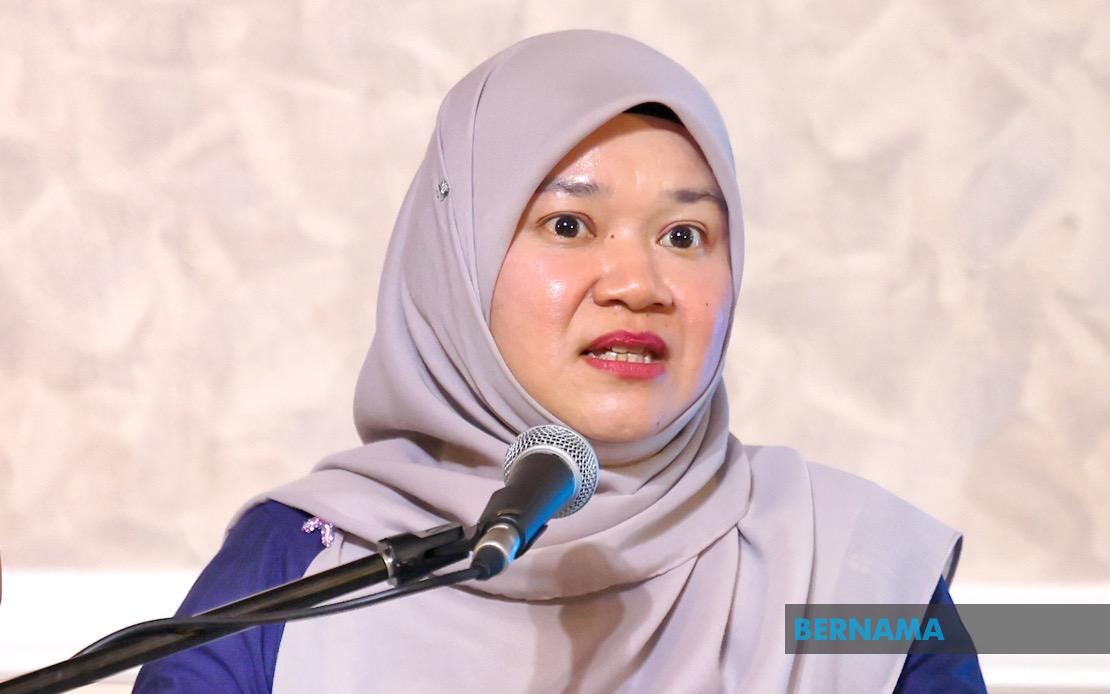
Education Minister Fadhlina Sidek, who leads the women's wing of Parti Keadilan Rakyat (PKR), has escalated a serious matter to law enforcement authorities by filing a police report regarding the distribution of an artificially-generated video that contains false and damaging claims directed at her. The incident highlights growing concerns about the weaponisation of artificial intelligence technology to create convincing but fabricated content that undermines public figures, particularly women in positions of political authority.
In a statement released on June 24, Fadhlina characterised the video as fundamentally malicious in its intent and purpose. She expressed her displeasure at what she views as a coordinated effort to undermine her professional standing and destroy her public reputation through the dissemination of false information. The use of AI technology to generate such content represents a troubling evolution in political attacks, as the sophistication of deepfake technology makes it increasingly difficult for the general public to distinguish between authentic and fabricated material.
The Education Minister has formally requested that law enforcement agencies conduct a thorough and rigorous investigation into the matter and pursue appropriate legal remedies. Her statement emphasised the importance of the police applying all available provisions of Malaysian law to address this apparent breach of her personal and professional dignity. This approach signals her determination to establish a legal precedent that such attacks will not go unchallenged and will carry serious consequences for those responsible.
Beyond her individual case, Fadhlina has used the opportunity to articulate a broader call for societal accountability regarding attacks on women in political life. She explicitly urged all segments of society to take a firm and uncompromising stance against slander, character assassination, and sexual harassment directed at female politicians. This intervention touches on a systemic problem that has been documented by civil society organisations across Malaysia and the wider region, whereby women elected officials and political figures face disproportionate levels of personal attacks and harassment compared to their male counterparts.
The circulation of defamatory content targeting women politicians serves multiple damaging purposes simultaneously. It creates a chilling effect that discourages other women from entering public service, as they perceive the personal costs and vulnerabilities involved. It also distorts public discourse by injecting false narratives into the information environment that citizens rely upon to form political judgments. The weaponisation of AI-generated media compounds these harms by making it exponentially more difficult to identify and combat misinformation at scale.
Malaysia's legal framework provides several potential avenues for addressing such conduct, including defamation law and provisions within the Communications and Multimedia Act. However, the rapid pace of technological change has outstripped the capacity of existing legal infrastructure to respond effectively. Deepfake technology operates in a regulatory grey zone where the technical sophistication of modern AI generation tools far exceeds current law enforcement expertise and investigative capabilities in most jurisdictions, including Malaysia.
The political dimensions of this incident warrant careful consideration. As Education Minister, Fadhlina holds a position of significant public responsibility and influence. Attacks on her credibility and character therefore have implications extending beyond her personal reputation to the functioning of the education portfolio itself. If citizens lose confidence in the integrity of their education minister due to misinformation, public faith in the institution suffers accordingly.
This case also intersects with ongoing international discussions about the governance of artificial intelligence and digital platform accountability. Major technology platforms have implemented various safeguards against deepfake content, but enforcement remains inconsistent and often reactive rather than preventive. Malaysia, as a significant digital economy and consumer of online content, has stakes in how these challenges are addressed both domestically and internationally.
The broader implications for Southeast Asian democracies are considerable. As digital technology becomes increasingly sophisticated and accessible, the capacity for malicious actors to manufacture convincing false evidence grows correspondingly. Without robust legal frameworks, institutional capacity, and public media literacy, authoritarian and democratically-problematic uses of such technology could undermine electoral integrity and public trust in institutions across the region.
Fadhlina's public action in filing the police report and calling for broader societal action represents an important assertion that such attacks will not be tolerated without consequence. Her appeal for unified action against defamation and harassment of women politicians signals that the issue transcends partisan politics and affects the health of Malaysia's democratic institutions. The investigation that follows will likely establish important precedents for how law enforcement agencies approach AI-generated defamatory content in the Malaysian context.
Moving forward, this incident will likely catalyse discussions among policymakers about the adequacy of Malaysia's existing legal and institutional frameworks for combating deepfake technology and protecting public figures from malicious misinformation. Educational campaigns promoting digital literacy and critical consumption of media will also become increasingly important as AI generation tools become more accessible and sophisticated. The success of this particular investigation may well influence how future cases of AI-generated defamatory content are pursued under Malaysian law.