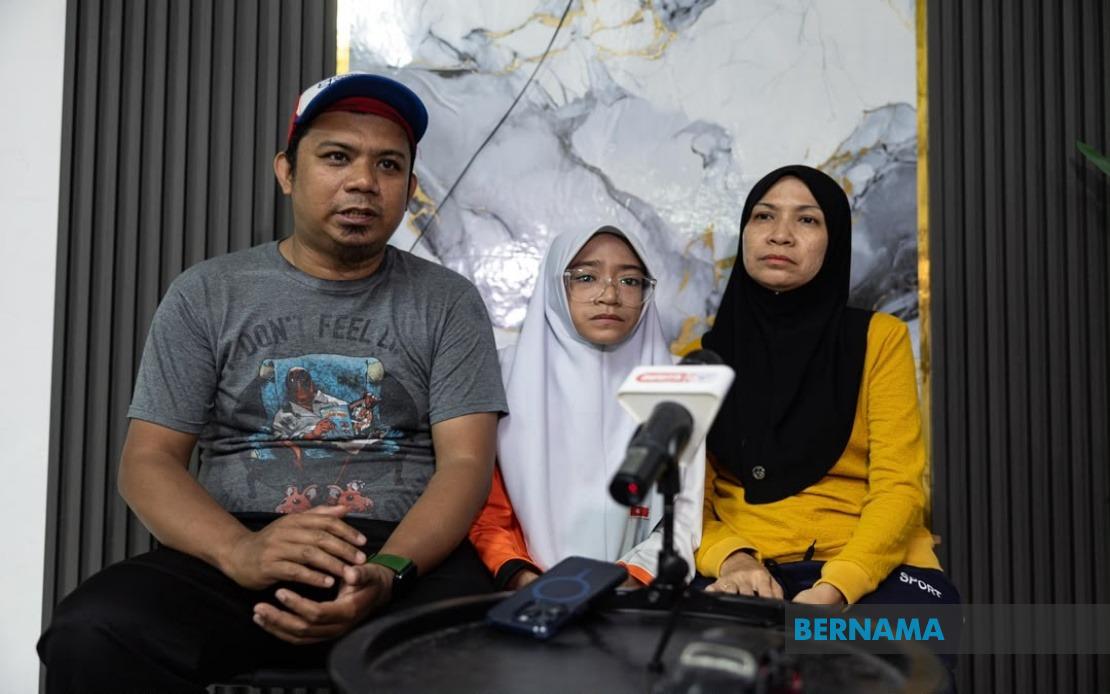
Education Minister Fadhlina Sidek and the Tun Hussein Onn Teachers' Foundation (YGTHO) have jointly provided RM10,000 to fund scoliosis surgery for 13-year-old Arissa El Zahra Reduan, resolving a family's financial crisis over a critical medical procedure. The surgical intervention, scheduled for September 8 at Raja Permaisuri Bainun Hospital in Ipoh, addresses a spinal condition that had threatened to derail the teenager's education and development during formative years. The joint contribution marks a tangible example of government support extending beyond classroom policy to address the healthcare barriers that often force students from lower-income families to abandon their studies.
The announcement came after Arissa's father, Reduan Saad, publicly appealed for assistance in covering the surgery's cost. Rather than allowing the matter to languish in administrative channels, Fadhlina personally intervened by initiating a video call with the teenager and her mother to deliver news of the funding approval. This direct communication approach underscores an increasingly personalised style of ministerial engagement with constituents facing acute hardship, moving beyond standard press releases to demonstrate genuine human connection with those seeking help. The video call served both practical and symbolic purposes—reassuring Arissa that her path back to normalcy was secured while simultaneously signalling that government agencies remain responsive to individual cases that might otherwise fall through support mechanisms.
Scoliosis, characterised by abnormal curvature of the spine, can progress rapidly during adolescence when skeletal systems are still developing. Left untreated, the condition deteriorates progressively, potentially causing chronic pain, mobility restrictions, and respiratory complications that would severely compromise quality of life and educational participation. For families lacking financial resources to access private surgical care, public hospital facilities become the sole viable option, yet even subsidised public procedures sometimes require out-of-pocket contributions that exceed household budgets. Arissa's case reflects a broader healthcare equity challenge across Malaysia, where medical expenses frequently precipitate financial catastrophe for middle and lower-income families, forcing impossible choices between treatment and basic survival needs.
The Tun Hussein Onn Teachers' Foundation, named after Malaysia's third Prime Minister, operates as a charitable organisation aligned with the education sector. Its participation in funding Arissa's surgery reflects institutional commitment to supporting students whose access to schooling faces health-related jeopardy. Teachers' foundations historically focus on educator welfare and development, yet this contribution expands that mandate to encompass direct student assistance in circumstances where medical conditions threaten educational continuity. Such interventions create important precedents within government bodies, demonstrating that social safety nets can respond with appropriate flexibility when circumstances demand it.
Fadhlina's public handling of Arissa's case carries implications for how ministerial offices approach social welfare problems in their constituencies. By personally engaging with the case, documenting the intervention through social media, and framing the contribution explicitly around enabling the teenager's return to school, the Education Minister positioned the decision within her portfolio's core mission rather than treating it as peripheral charity. This framing matters because it normalises the concept that government resources should actively remove barriers to educational access, including health-related obstacles that individual families cannot manage alone. The emphasis on Arissa's determination to continue attending school—highlighted in Fadhlina's statement—reframes the narrative from passive relief to active investment in a young person's future prospects.
The September 8 surgery date provides a window of opportunity for Arissa to recover substantially before the next academic year commences, potentially minimising disruption to her studies. Spinal surgery recovery timelines typically extend across several months, with graduated return to normal activities occurring progressively. The timing suggests coordination with educational calendar considerations, indicating that hospital scheduling and personal health needs were balanced against the teenager's academic needs. Such coordination between medical and educational planning reflects a more holistic approach to student welfare than exists when healthcare and education sectors operate in isolation from one another.
This case also illuminates the resourcefulness of modern families navigating healthcare systems through media appeals and social networks. Reduan's decision to publicise his daughter's situation, rather than pursuing assistance exclusively through confidential welfare channels, demonstrates how information accessibility and public visibility can catalyse governmental response. While not every family possesses the social capital or confidence to make public appeals, those who do sometimes succeed in mobilising high-level attention that might not materialise through conventional administrative procedures. The disparity this creates—where visibility and media connections influence who receives help—suggests that Malaysia's safety nets remain somewhat dependent on individual initiative and chance rather than systematic universal coverage.
Regionally, Malaysia's approach to medical assistance for students offers interesting contrasts with neighbouring countries' systems. Thailand, Indonesia, and the Philippines grapple with similar healthcare access challenges for lower-income students, yet responses vary significantly based on governmental capacity, insurance coverage, and philanthropic ecosystem maturity. Malaysia's relatively developed institutional infrastructure—reflected in the existence of established foundations like YGTHO and the capacity of ministers to mobilise resources relatively quickly—positions the country favourably within the region. However, the fact that individual cases still require ministerial intervention rather than being automatically covered by universal systems suggests structural gaps persist.
Looking forward, Arissa's case invites reflection on whether isolated interventions should evolve into systemic frameworks. If spinal conditions represent one category of medically necessary treatments that routinely create educational access barriers, consideration might be given to establishing clearer protocols that identify qualifying conditions and automatically trigger support mechanisms. Such systematisation could reduce administrative friction, democratise access by removing dependency on individual appeal skills, and ensure consistent support regardless of a family's ability to navigate media channels. The current approach, while successful for Arissa, ultimately remains reactive and discretionary rather than proactive and universal.
The broader significance of Fadhlina's involvement extends to how government coalitions distribute welfare responsibilities. Education ministries increasingly find themselves addressing non-curricular barriers to learning—transportation, nutrition, healthcare, and now surgical intervention. Whether such expansion of ministerial scope represents appropriate responsiveness to contemporary student needs or mission creep that diverts resources from core educational functions remains contested among policymakers. For students like Arissa, however, the distinction carries little practical significance; what matters is whether obstacles to schooling are removed, regardless of which government department coordinates the response.
Arissa's family now faces a clearly defined path toward treatment, with financial uncertainty eliminated and surgical dates confirmed. The teenager's recovery trajectory will depend on post-operative care quality, physiotherapy adherence, and personal determination to rebuild strength and function. Her return to school in months ahead will represent not merely personal triumph but vindication of the principle that government support can materially alter outcomes for students facing seemingly insurmountable challenges. How subsequent cases are handled—whether with similar ministerial engagement or through more standardised processes—will reveal whether this intervention signals the beginning of systematic change or remains an encouraging but ultimately isolated example of responsive governance.

