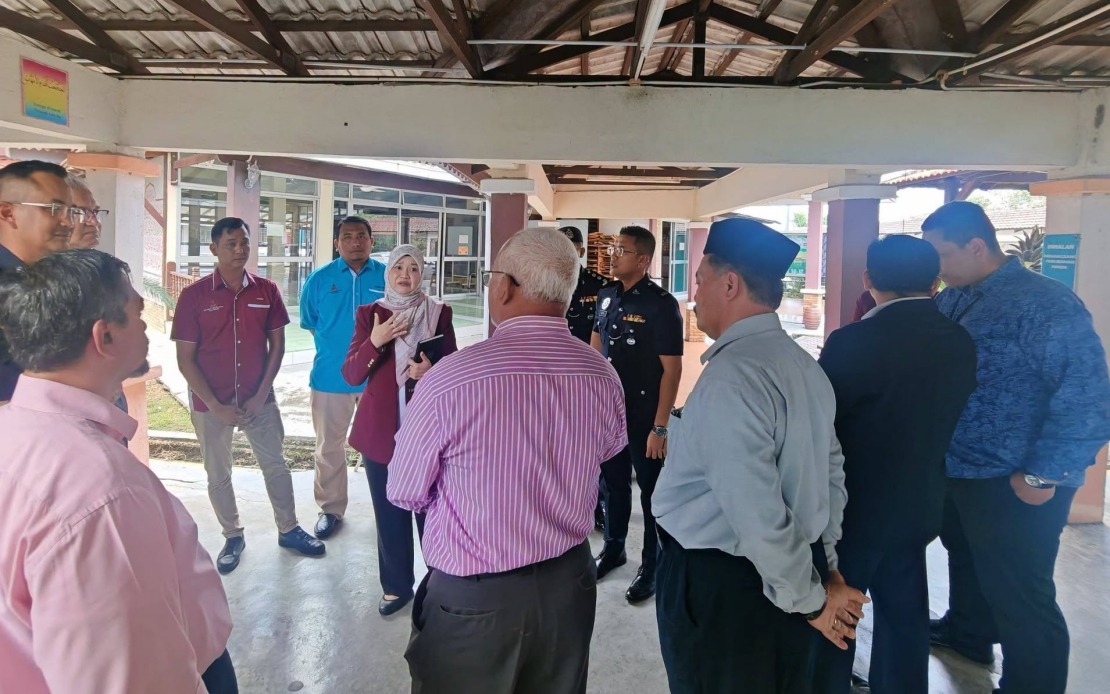
Education Minister Fadhlina Sidek made an unscheduled visit to a secondary school in Banting, Kuala Langat, on Saturday afternoon after a disturbing incident left a Form Three schoolgirl injured. The minister arrived at the institution at 1.20 pm to meet with school management and assess the situation firsthand, underscoring the seriousness with which the education portfolio views safety lapses within the national school system.
The stabbing occurred early that morning when tensions between two female students escalated into violence on school grounds. Police received the emergency call at 9.50 am, with officers from the Kuala Langat district arriving promptly to secure the scene and contain the situation. According to the initial police report, the victim suffered stab wounds inflicted with a knife by another pupil, though the exact circumstances and motivations behind the assault remain under investigation.
The injured student was immediately transported to Banting Hospital, where medical staff have confirmed she is in stable condition. Authorities have also taken the alleged attacker into custody, with investigators working to establish a clear timeline of events and any factors that may have contributed to the violence. The police have not yet disclosed details about the suspect's age, whether she faces formal charges, or whether the incident was isolated or preceded by ongoing conflict between the students.
Fadhlina's response prioritized victim welfare and psychological support for the wider school community. She emphasized that authorities are committed to ensuring the injured girl receives comprehensive medical care while also addressing the emotional trauma experienced by classmates and staff who witnessed or learned of the incident. The minister called for public restraint, specifically asking Malaysians to avoid spreading unverified claims or speculation about the stabbing while the police investigation continues—a plea that reflects growing concern about how such incidents are amplified through social media.
In a statement posted on social media, the education minister extended her sympathies to the principal, teaching staff, and student body, acknowledging the strain such traumatic events place on school communities. She thanked the various government agencies responding to the crisis, including the health services, police, and education department officials coordinating assistance. The measured tone of her remarks suggested an attempt to project institutional calm while taking the incident seriously enough to warrant ministerial intervention.
Selangor's Banting assemblyman V. Paparaidu, who also chairs the state's Human Resources and Poverty Eradication Committee, used the incident as an impetus for broader security discussions. Paparaidu commended the State Education Department for deploying psychosocial support teams to counsel the victim, her family, and traumatized students, but he went further in advocating for systemic security improvements across Selangor schools. His comments reflected frustration that such incidents continue despite existing safety protocols.
The assemblyman's statement highlighted vulnerabilities in current school security arrangements, particularly regarding gate access and the monitoring of individuals entering and leaving school premises. Paparaidu stressed that security personnel must maintain heightened vigilance during peak arrival and departure times, when students are most vulnerable and when unauthorized individuals might attempt unauthorized entry. He warned that inadequate gate security undermines all other safety measures and creates opportunities for both external threats and internal conflicts to escalate dangerously.
Pararaidu's emphasis on making schools "safe spaces" where students can pursue education without fear taps into a wider Malaysian concern about campus safety. The stabbing incident joins a series of school-related security concerns that have prompted periodic calls for reviews of protective measures. While Malaysia's schools have not experienced the scale of violence seen in some international contexts, individual incidents generate significant public anxiety and force policymakers to balance educational access with protective oversight.
The incident raises questions about peer conflict resolution mechanisms within schools and whether existing counseling services are adequate to identify and de-escalate tensions before they become violent. Education officials will likely conduct a full review of what transpired and whether warning signs were missed. The involvement of a fellow student as the attacker, rather than an external intruder, suggests that school administrators and teachers may need additional training in recognizing behavioral indicators of escalating conflict among pupils.
From a broader Southeast Asian perspective, this stabbing reflects challenges faced across the region as schools grapple with student safety, mental health support, and security infrastructure. Malaysia's education system, which enrolls over five million pupils nationwide, must balance creating welcoming, open environments with implementing meaningful protective measures. The incident will likely inform discussions within the Ministry of Education about national safety standards and whether additional resources should be allocated to school security and student counseling services.
The police investigation will determine whether this was an isolated explosive moment between two students or whether ongoing bullying, rivalry, or other interpersonal issues contributed to the violence. Such distinctions matter for how schools and education authorities respond institutionally. If underlying conflict was visible to peers or staff, post-incident reviews will examine why intervention did not prevent escalation. The case will therefore likely shape how Malaysian schools approach peer mediation, mental health screening, and early intervention protocols moving forward.
As news of the stabbing spread through social media channels, misinformation and unverified claims predictably circulated, prompting Fadhlina's direct appeal for public responsibility. This dimension underscores how schools must now manage not only immediate physical safety but also the secondary trauma that can result from sensationalized online narratives. The education ministry's response suggests an awareness that how incidents are framed and discussed in the public sphere affects both the victim's recovery and the community's sense of safety.

