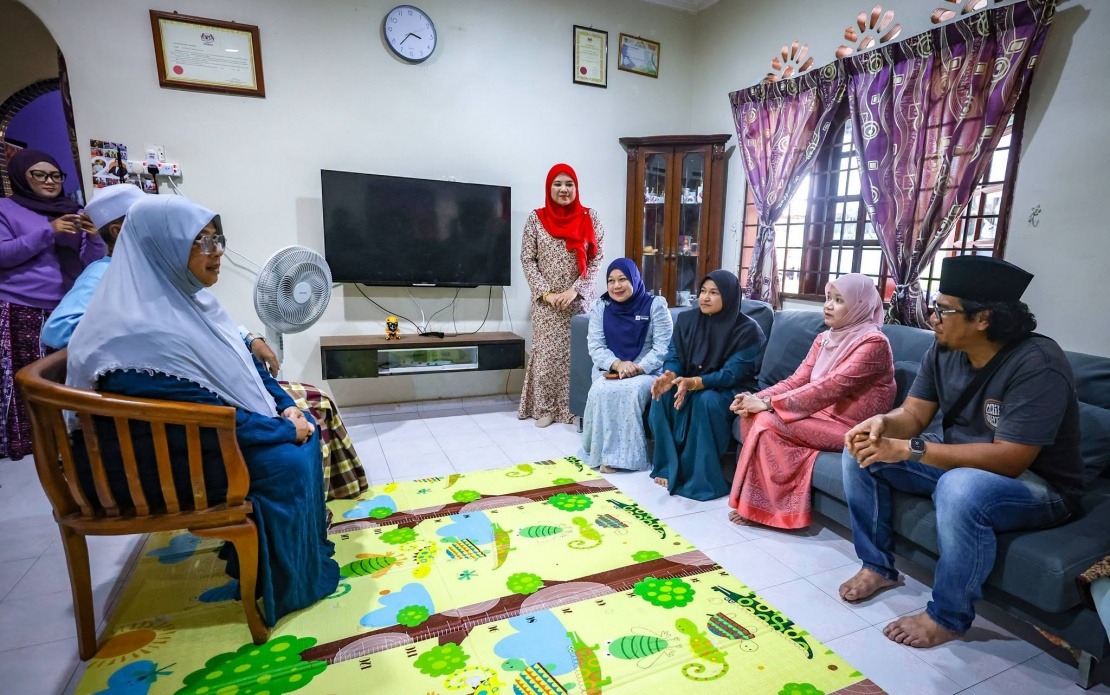
Education Minister Fadhlina Sidek made a compassionate visit to the family of Muhammad Raiyan Nufael, a Form Two student who tragically lost his life following a collapse during rugby training at a school in Telok Mas, Melaka. The minister's visit, conducted on behalf of the Ministry of Education (MOE) and its personnel, underscores the gravity of the incident and the government's commitment to supporting grieving families during times of profound loss.
The 14-year-old student's death occurred on Wednesday evening at approximately 6 pm after he experienced a sudden medical emergency during an after-school sports activity. According to reports, the teenager had only been engaged in the training exercise for roughly 15 minutes before the incident took place. The collapse appears to have occurred during what should have been a routine educational activity, raising immediate concerns about the circumstances surrounding the tragic event.
Recounts of the incident indicate that after a brief training break, the student began listening to instructional remarks from the coach when he suddenly experienced severe respiratory distress. This sequence of events suggests a rapid and unexpected health deterioration that occurred in a supervised school environment. The sudden onset of shortness of breath during what would typically be considered a normal phase of the training session has prompted questions about monitoring protocols and emergency response procedures at educational institutions.
In her public statement shared through social media, Fadhlina expressed sympathy for the bereaved family while invoking religious sentiments. She articulated hopes that the deceased student's soul would find peace among the righteous and prayed that the family would receive divine strength and patience as they navigate their grief. Such official acknowledgment of student deaths carries particular weight in Malaysian society, signalling institutional recognition of the loss and demonstrating that the education system takes such incidents with utmost seriousness.
This tragedy highlights an ongoing challenge within Malaysian schools regarding the balance between promoting physical fitness and athletic participation among youth while simultaneously ensuring robust safety measures and medical oversight. Rugby, while valued for developing teamwork and physical conditioning, is a contact sport that demands careful supervision, especially when involving adolescents whose bodies are still developing. The incident raises important questions about whether schools have adequate medical personnel present during training sessions and whether coaches are properly trained in recognising early signs of medical distress.
The death also brings into focus the broader conversation about student welfare in Malaysian educational institutions. Parents increasingly expect schools to provide not only academic instruction but also safe environments for extracurricular activities. Incidents such as this one invariably trigger discussions among parent groups and education advocacy organisations about what preventative measures could be implemented to avoid similar tragedies. The timing of the incident—occurring towards the end of the school day during an optional training session—may also prompt review of how schools schedule such activities and allocate supervision resources.
From a public health perspective, the incident warrants investigation into whether the student had any pre-existing conditions that might have contributed to the collapse, or whether environmental factors such as weather conditions, hydration levels, or fatigue played a role. Medical professionals often emphasise that sudden cardiovascular events in adolescents can sometimes occur without warning, even in apparently healthy teenagers. Understanding the root cause will be essential for implementing appropriate preventative measures across the education sector.
The Ministry of Education will likely conduct a thorough review of the circumstances leading to the student's death. Such investigations typically examine whether school protocols were followed, whether emergency services were contacted promptly, and whether first aid was administered appropriately. The findings from such inquiries often form the basis for updated guidelines and training programmes that are subsequently distributed to schools nationwide, aiming to prevent recurrence of similar incidents.
For the school community in Telok Mas and the broader Melaka education district, this incident represents a sobering reminder of the fragility of life and the unexpected ways tragedy can strike. Student deaths are profoundly disturbing events that can affect the emotional wellbeing of peers, teachers, and staff members for extended periods. Schools typically respond by offering counselling services and creating supportive environments to help students process their grief and anxiety.
The incident also resonates across Malaysian society more broadly, particularly among parents who must reconcile their desire for their children to engage in physical activity and character-building sports with the natural parental anxiety about safety. While school-based sports programmes provide invaluable benefits for student development, physical health, and social cohesion, cases like this underscore the necessity for continuous vigilance regarding safety standards, emergency preparedness, and appropriate medical coverage during training sessions and competitions.

