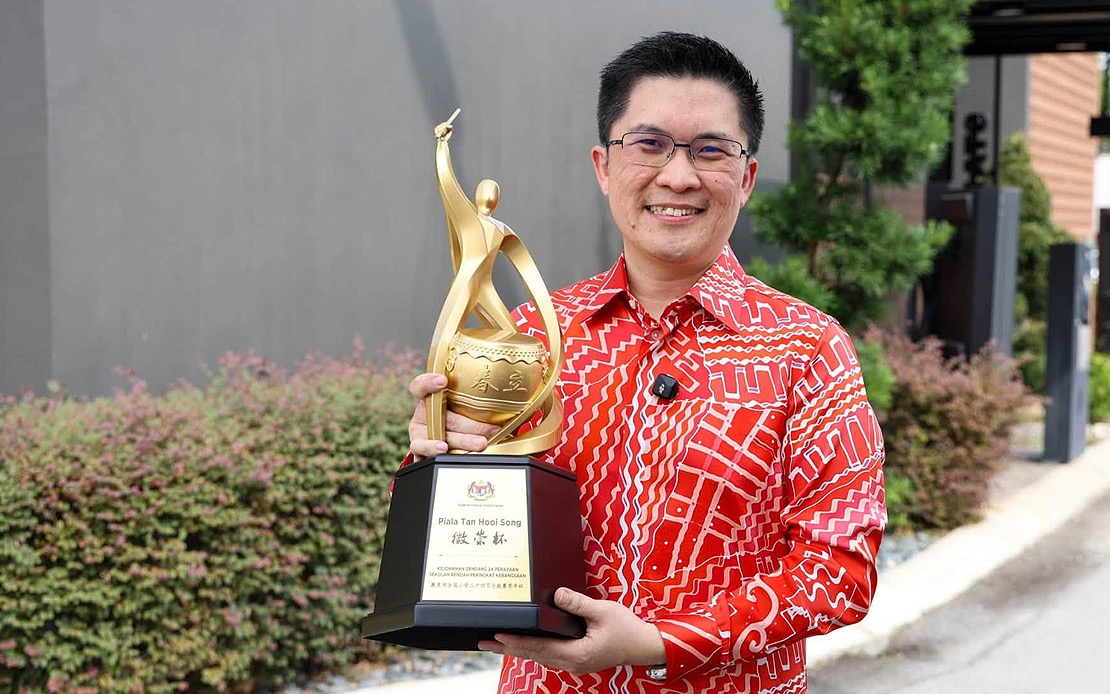
The Ministry of Education has announced plans to pursue international recognition for Gendang 24 Perayaan through the United Nations Educational, Scientific and Cultural Organisation, marking a significant step in safeguarding one of Malaysia's distinctive cultural treasures. Deputy Education Minister Wong Kah Woh revealed the initiative during the closing ceremony of the National Primary Schools Gendang 24 Finals Competition at Stadium Indera Mulia in Ipoh, signalling government commitment to elevating this percussion art form onto the global stage.
The pursuit of UNESCO status reflects broader government strategy to protect Malaysia's intangible cultural heritage from dilution in an increasingly globalized environment. Wong explained that preliminary discussions between his ministry and community stakeholders took place in May, laying groundwork for what officials view as a critical preservation objective. By securing international recognition, the ministry hopes to enhance the cultural value of Gendang 24 Perayaan and strengthen its position within Malaysian educational institutions.
Gendang 24 Perayaan carries significant historical weight within the Malaysian cultural landscape. The art form was established locally in 1988 through the creative vision of two cultural pioneers, the late Tan Hooi Song and Tan Chai Puan, who developed a distinctive performance style that has since become embedded in Malaysia's identity. The government formally recognized it as Intangible National Heritage in 2009, acknowledging its importance to the nation's cultural continuity and artistic legacy.
What distinguishes this initiative is the tangible expansion of Gendang 24 Perayaan's reach within the education system. The inaugural National Primary Schools competition, held in Ipoh and organized jointly by the Sports, Co-curricular and Arts Division and the Malaysia Gendang 24 Perayaan Association, drew 16 top teams representing 417 students from schools throughout the country. This substantial participation demonstrates that the art form has transcended niche cultural circles and now commands genuine enthusiasm among younger Malaysians.
The trajectory of Gendang 24 Perayaan's development offers instructive lessons for heritage preservation in Southeast Asia. From modest beginnings with limited school participation, the art form has grown into a nationwide movement encompassing hundreds of schools. This organic expansion suggests that strategic government support, when aligned with genuine community passion, can successfully transmit traditional knowledge to new generations without requiring heavy-handed interventions.
Education Ministry efforts to institutionalize transmission of Gendang 24 Perayaan techniques represent a thoughtful approach to heritage conservation. The Train the Trainers programme, a key initiative undertaken by the ministry, focuses on equipping school educators with knowledge and performance skills they can then transfer to their students. This cascading model creates sustainable capacity within the education system, ensuring that expertise flows continuously to younger cohorts rather than remaining concentrated among aging masters.
The competitive format of the primary schools finals carries pedagogical significance beyond entertainment value. By creating high-profile platforms where students showcase their abilities, the ministry generates motivation among participants while simultaneously raising public awareness of the art form. The competition structure also encourages schools to incorporate Gendang 24 Perayaan into their co-curricular offerings, embedding it within formal educational infrastructure rather than treating it as peripheral cultural activity.
UNESCO recognition would carry material benefits for Gendang 24 Perayaan's future development. International status would enhance funding opportunities, attract scholarly attention, and position the art form within global networks of recognized cultural heritage. For Malaysia specifically, such recognition amplifies soft power benefits by demonstrating the nation's cultural sophistication and commitment to preserving artistic traditions in an era when many heritage forms face extinction.
The involvement of Yayasan Sime Darby as primary sponsor of the inaugural competition reflects private sector engagement with cultural preservation objectives. Corporate support for heritage arts creates sustainability that government funding alone cannot guarantee. This partnership model between government agencies, community organizations, and private entities offers a blueprint for other Southeast Asian nations seeking to protect endangered cultural practices while maintaining their relevance to contemporary audiences.
Looking forward, the UNESCO application process will test Malaysia's capacity to document and articulate the distinctive characteristics of Gendang 24 Perayaan in terms that international evaluators recognize as meeting heritage criteria. This requires detailed recording of performance techniques, historical documentation, community narratives, and demonstration of continued transmission to younger generations—areas where Malaysia's existing institutional frameworks already show promising development.
The government's initiative reflects broader recognition that cultural heritage cannot be taken as automatically self-perpetuating. Without deliberate intervention, even vibrant traditional arts gradually fade as generational knowledge transfer breaks down and younger people pursue alternative interests. By positioning Gendang 24 Perayaan within educational systems and now seeking international recognition, Malaysian policymakers acknowledge that preservation requires active investment and strategic planning.

