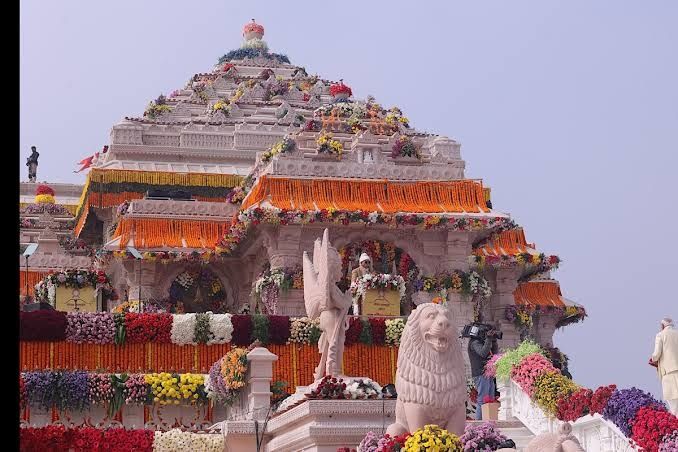
Indian police have arrested eight individuals in connection with allegations of large-scale theft and misappropriation of donations at the Ram Mandir in Uttar Pradesh, one of India's most high-profile religious construction projects and a cornerstone of Prime Minister Narendra Modi's Hindu-nationalist political agenda. The criminal investigation was registered on Thursday, June 25, following complaints about irregularities in how the temple handled financial offerings from devotees. The arrests mark an embarrassing chapter for a project that was inaugurated with considerable ceremonial prominence just months earlier, with Modi himself presiding over the opening in early 2024.
The Ram Mandir occupies an extraordinarily sensitive site in Hindu-Muslim relations across India. The temple was constructed on land in Ayodhya where the Babri mosque stood for centuries before being demolished in 1992, an event widely remembered as a turning point in Indian communal politics. Hindu devotional tradition holds that the deity Ram was born at this exact location more than 7,000 years ago, positioning the shrine as sacred to India's Hindu majority. The demolition of the mosque, which preceded the temple's construction by over three decades, became a rallying cause that helped propel Modi's Bharatiya Janata Party from opposition status to the electoral dominance it now enjoys, effectively displacing the secular Congress party that had governed India since independence.
The individuals arrested were primarily engaged in counting, sorting, and managing the substantial cash and precious metal donations that flow into the temple from millions of devotees. According to government statements and media reports, gold, silver, and monetary contributions constitute a significant portion of the temple's operating resources. The investigation alleges that certain staff members exploited their privileged access to systematically misappropriate these offerings, a betrayal of the trust placed in them by the faithful. While official statements have declined to specify the total amount involved, opposition parties and investigative media reports have suggested the alleged embezzlement could exceed US$20 million, a figure that would represent a substantial proportion of the temple's annual collections.
The scale of the scandal has proven deeply unsettling to the devotee community. Viti Saxena, a 44-year-old homemaker who contributed her own money to the temple, expressed profound disillusionment over the revelations. She articulated a concern that resonates beyond individual donations, questioning whether her contributions and those of millions of others actually reached the temple's legitimate coffers or were diverted into private hands. The episode has transformed the Ram Mandir from a symbol of religious aspiration into a subject of international scrutiny for the wrong reasons, lending credence to her characterization of the situation as a matter of global embarrassment. More fundamentally, the scandal threatens to erode the spiritual faith and institutional trust that underpin the temple's standing within Hindu communities across India and the diaspora.
The eight arrested face serious criminal charges including breach of trust, theft, criminal conspiracy, and corruption. These are not minor administrative violations but offences that carry substantial prison sentences under Indian law, reflecting the gravity with which authorities are treating the matter. Uttar Pradesh Chief Minister Yogi Adityanath, whose state government established the Special Investigation Team tasked with examining the case, issued a public statement vowing that no guilty person would escape accountability. This assurance from a high-ranking BJP official—delivered through official channels—indicates an attempt to contain potential political damage by demonstrating swift and uncompromising action.
The timing and scale of the Ram Mandir project itself provide important context for understanding the scandal's implications. The temple's construction consumed an estimated US$240 million entirely sourced from public donations, according to the trust overseeing the site. This reliance on voluntary contributions from devotees worldwide meant the project depended critically on public confidence in the integrity of fund management. The allegations of theft therefore strike at the foundation of the fund-raising model that made the temple's completion possible. For Modi's political coalition, which has repeatedly positioned itself as the custodian of Hindu interests and values, any whiff of corruption at such a flagship religious project carries particular electoral and ideological consequences.
The scandal arrives at a delicate moment for Hindu-Muslim relations in India more broadly. The Ram Mandir project itself remains contested terrain, with Muslim communities in India and internationally maintaining that the mosque's demolition represented an injustice that was never adequately addressed. By allowing the theft allegations to metastasize into a major scandal, the Modi government risks validating criticisms that the entire project was contaminated from its inception. Opposition politicians have seized on the arrests as evidence of mismanagement and potential corruption within BJP-led governance, particularly in Uttar Pradesh, where Yogi Adityanath's administration has been criticized by human rights organizations for various initiatives.
For Southeast Asian observers, the Ram Mandir scandal offers instructive lessons about the challenges facing large religious institutions that mobilize popular donations. Malaysia's own temples, mosques, churches, and other faith establishments have faced occasional transparency concerns, and the Ram Mandir case demonstrates the reputational damage that can ensue when financial controls prove inadequate. The episode also highlights how major religious infrastructure projects, regardless of their cultural significance, require robust governance frameworks and independent oversight mechanisms to maintain public confidence.
The investigation now proceeds under scrutiny not only from Indian law enforcement but from international media attention and diaspora Hindu communities worldwide who invested emotionally and financially in the temple's realization. The outcome of the criminal proceedings will carry symbolic weight far beyond the immediate prosecutions, potentially shaping public perception of institutional accountability within Modi's India for years to come. Whether authorities successfully prosecute those responsible and restore public confidence in the temple's administration remains an open question with implications extending across India's complex religious and political landscape.

