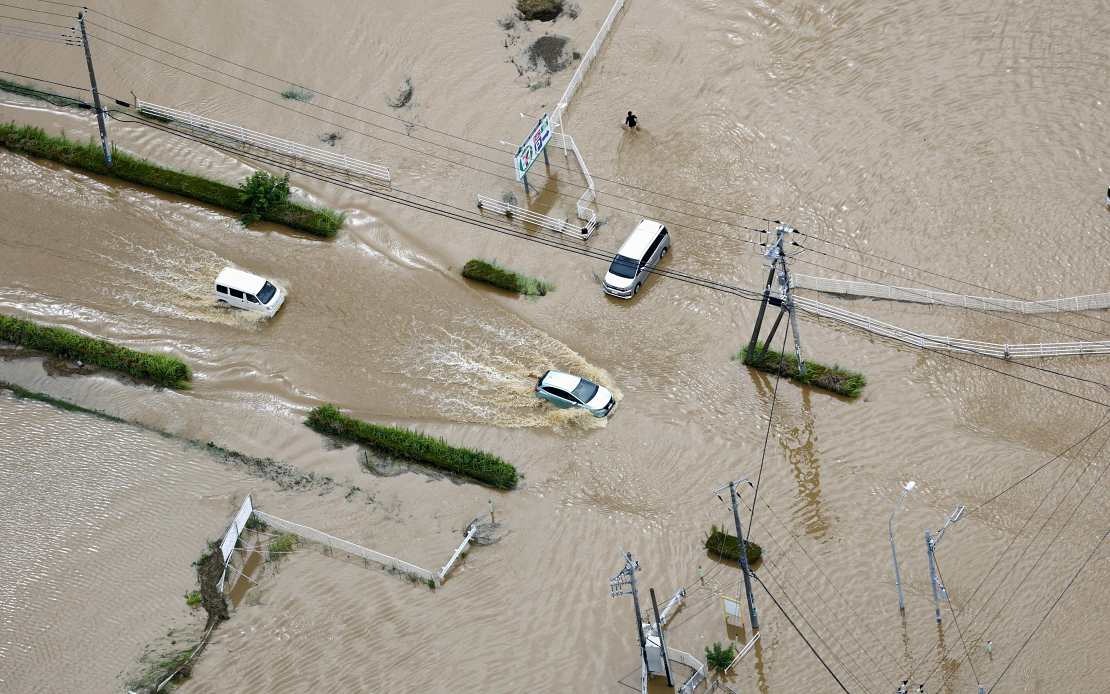
A devastating downpour across Japan's Chiba Prefecture in eastern Japan has claimed eight lives, with authorities confirming fatalities in the cities of Chiba, Kashiwa, Ichikawa, Sakura and Yachiyo as of early Friday morning. Four additional individuals sustained minor injuries during the extreme weather event that unfolded through Thursday and into the early hours of Friday, according to the Chiba Prefectural Government.
The intensity of rainfall recorded during this weather system has shattered historical records for the region. Chiba City accumulated 348 millimetres of precipitation within a compressed 12-hour window ending at 1.40 am on Friday, representing a staggering three-fold increase compared to the municipality's typical monthly rainfall for August. This concentration of water falling in such a brief timespan overwhelmed local drainage infrastructure and caught many residents off guard despite advance weather warnings issued by forecasters.
Japan's meteorological authorities had escalated their alert status to the maximum Level 5 designation, signalling extreme danger from both torrential rainfall and the substantial risk of landslides affecting vulnerable regions throughout Chiba Prefecture. The Japan Meteorological Agency maintained this critical alert posture through much of Thursday evening before downgrading conditions to Level 4 or lower on Friday morning as the most intense phase of the weather system moved away from the prefecture. However, meteorologists cautioned that additional heavy rainfall remained possible and urged residents to exercise continued caution.
The evacuation response to this disaster has been substantial in scope. As of 11 am local time on Friday, approximately 102,600 residents across Chiba Prefecture remained under formal evacuation orders, indicating the widespread nature of flooding and landslide hazards affecting multiple municipalities. These evacuation directives reflect the precautionary approach Japanese disaster management authorities employ when facing conditions that could generate secondary hazards in the hours following the main weather event.
Transportation networks serving the region experienced severe disruption throughout the overnight period. Narita Airport, located within Chiba Prefecture's boundaries, found itself unable to operate normal services as the torrential conditions disabled both rail and bus transport links. Approximately 7,000 passengers became stranded within the airport facilities overnight, unable to depart or reach their destinations as ground transportation options collapsed under the weight of weather-related damage and safety concerns.
The cascading effects of this extreme weather event highlight vulnerabilities in Japan's infrastructure when confronted with rainfall intensities that exceed historical precedent. Climate scientists have increasingly warned that shifting atmospheric patterns are producing precipitation events that standard engineering designs may not adequately accommodate, requiring reassessment of flood mitigation systems across vulnerable regions in Japan and throughout East Asia. Chiba Prefecture, situated in one of Japan's most densely populated corridors, contains critical infrastructure and dense residential areas that amplify the consequences when severe weather strikes.
For Malaysian and Southeast Asian readers, this event underscores the growing frequency of extreme rainfall episodes in temperate and subtropical regions globally. While Malaysia's monsoon systems produce their own intense precipitation patterns, the Japanese experience demonstrates how even highly developed nations with advanced weather forecasting and infrastructure struggle when rainfall volumes exceed historical thresholds. The rapid urbanization and infrastructure density of regions like Chiba Prefecture means that even moderate rainfall variations can trigger disproportionate impacts on transportation, utilities, and residential safety.
The coordination between Japanese disaster agencies, from the Japan Meteorological Agency's forecasting to the Fire and Disaster Management Agency's evacuation coordination, provides a model of institutional response capability. However, the persistence of eight fatalities despite these systems emphasizes that technological forecasting and institutional frameworks have inherent limitations when confronting natural phenomena that surpass previous experience. Southeast Asian nations monitoring intensifying weather patterns should consider both the capabilities and constraints evident in Japan's response architecture.
As recovery operations commence in Chiba Prefecture, attention will focus on understanding whether this represents a singular extreme event or part of a broader climatic shift toward more intense precipitation episodes. Japanese meteorological institutions will likely conduct detailed post-event analysis to determine whether historical rainfall records require revision and whether infrastructure design standards should be recalibrated. Such technical assessments influence policy decisions across East Asia regarding disaster preparedness investment and urban planning, with implications extending to neighboring countries throughout the region experiencing similar meteorological pressures.

