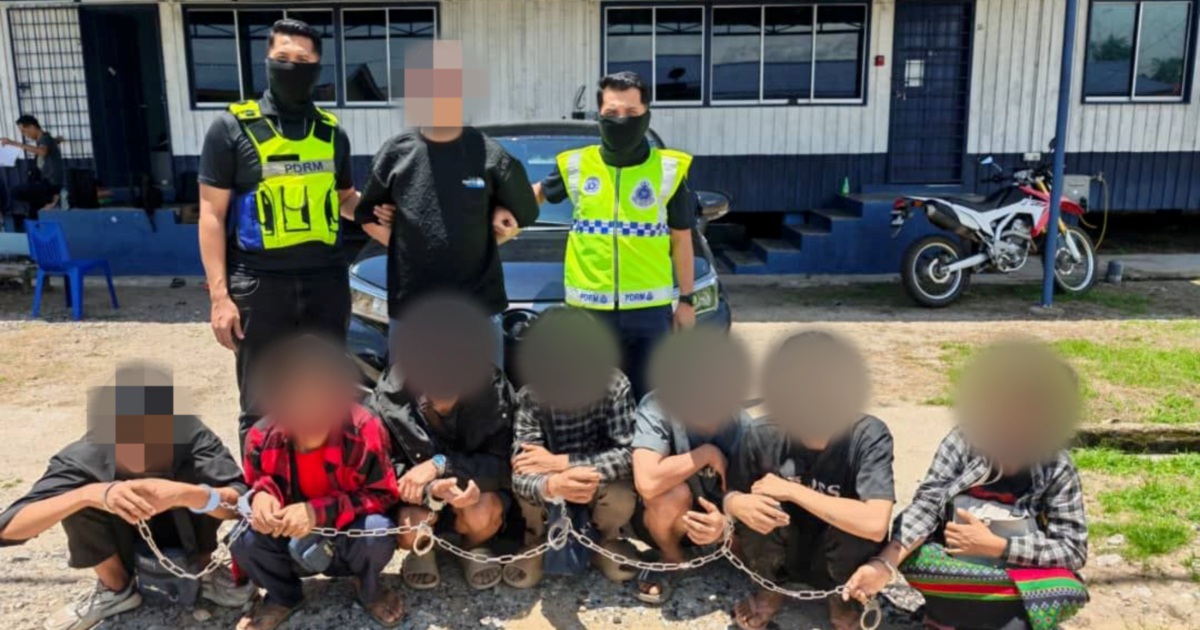
Police in Kelantan have apprehended eight individuals in connection with a suspected migrant smuggling operation that came to light during an early morning enforcement action in Kota Baru. Among those detained is a Malaysian man believed to have played a central role in transporting seven undocumented nationals from Myanmar. The coordinated arrest underscores the persistent challenge of irregular migration flows through Malaysia's porous borders and the organised networks facilitating such movements.
The operation represents another intervention in what has become an increasingly widespread problem across Malaysia's northern states. The discovery of undocumented Myanmar nationals in the vehicle signals the involvement of established smuggling routes that typically funnel vulnerable migrants northward from the Thai-Myanmar border region. These networks often exploit geographic proximity and inadequate border controls to move people across national boundaries with minimal detection, a pattern that intelligence agencies have flagged repeatedly over recent years.
Malaysia's geographic position and economic disparities compared to neighbouring countries have made it a prime transit hub for irregular migration. Myanmar nationals seeking economic opportunities or fleeing instability frequently rely on smugglers to navigate illegal entry and onward movement. The involvement of Malaysian citizens in facilitating these movements suggests deep community complicity or financial incentives powerful enough to overcome legal consequences. This blurs traditional distinctions between trafficking victims and willing participants, complicating enforcement efforts.
The detention of eight individuals—substantially more than the group being transported—indicates police targeted an entire operational cell rather than simply intercepting migrants mid-journey. This suggests intelligence work identified broader network infrastructure, potentially involving logistics coordinators, safe house operators, transportation providers, and financial handlers. Dismantling such networks requires addressing multiple operational layers simultaneously, an approach that demands resource-intensive investigation and coordination between federal and state police units.
Undocumented migrants from Myanmar face severe vulnerability throughout their journey. They traverse dangerous terrain, pay substantial sums to smugglers, endure overcrowded transport, and risk exploitation by handlers at every stage. Once in Malaysia, they typically work in low-skill sectors including agriculture, construction, and domestic service—industries heavily reliant on irregular labour despite official restrictions. This demand-side dynamic perpetuates trafficking networks by ensuring consistent profits and minimal market disruption despite enforcement activity.
Kelantan's position along major trafficking corridors makes it particularly susceptible to such operations. The state's relatively long border with Thailand, combined with uneven surveillance capabilities and porous inland routes, creates ideal conditions for smuggling. Additionally, communities in Kelantan have historical ties to Myanmar, potentially facilitating the recruitment of local facilitators and handlers. Previous enforcement actions in the state have consistently revealed networks leveraging familial and ethnic connections to operate relatively openly.
The legal framework governing migrant smuggling in Malaysia carries substantial penalties, yet deterrent effects remain limited. Perpetrators weigh potential sentences against lucrative returns, particularly when costs are distributed across large operational networks. A single smuggling operation might generate returns of hundreds of thousands of ringgit, while individual network participants face charges that, even if convicted, result in sentences proportionate to enforcement and prosecution capacity rather than actual harm caused.
Government responses have intensified following international pressure and domestic concerns over irregular migration's strain on public services. Enhanced border controls, increased surveillance, task forces targeting smuggling networks, and partnerships with neighbouring countries form the official strategy. However, implementation remains inconsistent, with resource limitations and coordination challenges constraining effectiveness. Regional countries frequently highlight the need for burden-sharing on migrant management, yet concrete mechanisms remain elusive amid competing national interests.
The broader context includes Myanmar's ongoing political instability, which has displaced millions internally and driven external migration. Economic collapse accompanying military rule has intensified outmigration, particularly among working-age populations seeking remittance income for families. Simultaneously, Thailand and Malaysia remain primary destinations due to geographic proximity and established migrant communities. This structural push-pull dynamic persists independent of enforcement, suggesting demand for smuggling services will continue regardless of individual network disruptions.
For Malaysian readers, these arrests illustrate the human cost of border management failures. Migrant labour fills genuine gaps in the economy, yet irregular status renders workers vulnerable to exploitation and depresses wages across low-skilled sectors. Communities bearing greatest exposure to irregular migrants—typically urban poor and working-class neighbourhoods—often experience social tensions exacerbated by competition for limited resources and perceived security risks. The detention operation, while necessary, addresses symptoms rather than underlying drivers of irregular migration.
Asean-level coordination on migration management remains underdeveloped despite the issue's regional dimensions. Myanmar's travails affect neighbouring countries' stability and economic dynamics, yet collective responses have proven inadequate. Malaysia's approach—alternating between tolerance of irregular labour and enforcement sweeps—reflects the absence of coherent regional frameworks addressing both humanitarian obligations and legitimate national interests regarding migration management.

