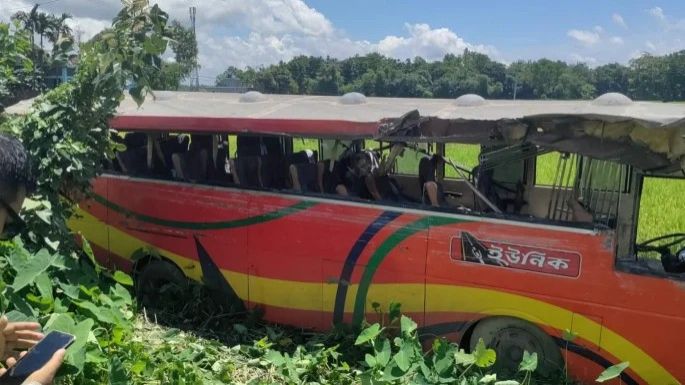
A devastating collision between two passenger buses in Bangladesh's Sylhet district killed eight people and caused multiple injuries on Friday morning, underscoring the persistent danger that travellers face on the country's highways. The accident occurred near Osmani Nagar, approximately 240 kilometres northeast of Dhaka, at around 7:30 a.m. local time, with authorities indicating that investigations into the precise cause were already underway.
According to Golam Mostafa, the officer-in-charge of the Osmani Nagar police station, the crash also left 25 other passengers with injuries ranging in severity. Emergency responders and medical personnel deployed to the scene to treat the wounded and manage the immediate aftermath of what represents another tragic incident in a nation grappling with alarming rates of fatal road accidents. The details surrounding exactly how the two vehicles came to collide remain under official examination.
Bangladesh's road safety record has long been a matter of serious concern for policymakers, transport officials, and safety advocates alike. The nation consistently ranks among countries with the highest number of fatalities per vehicle on the road, a grim statistic that reflects systemic weaknesses throughout the transportation infrastructure and regulatory framework. These accidents are not isolated incidents but rather symptoms of deeper structural problems that have persisted despite periodic awareness campaigns and pledges by authorities to improve conditions.
The primary culprits behind Bangladesh's road accident epidemic are well documented. Highway conditions across much of the country remain substandard, with many major routes suffering from poor maintenance, inadequate signage, and dangerous design features that contribute to collisions. The condition of the vehicles themselves frequently compounds these challenges, with many buses and lorries operating with worn brakes, faulty steering mechanisms, and other mechanical defects that should have rendered them unfit for service.
Driver behaviour and training standards represent another critical component of the crisis. Traffic violations—excessive speeding, aggressive overtaking, driving whilst fatigued, and general disregard for road rules—occur with alarming frequency on Bangladeshi highways. Many operators prioritise speed and tight schedules over passenger safety, with drivers often working excessive hours without adequate rest. The absence of rigorous testing and licensing requirements has allowed many drivers to operate vehicles despite lacking proper training or competence.
Enforcement capacity constitutes perhaps the most glaring weakness in Bangladesh's road safety ecosystem. The traffic department remains chronically under-resourced, with insufficient personnel to monitor compliance with traffic laws across the vast network of highways and arterial roads. Limited presence on major routes means violations frequently go unchecked, and operators learn that the risk of punishment remains minimal. Corruption within enforcement agencies has further eroded deterrence, with some officials reportedly accepting bribes in exchange for overlooking safety violations.
The Sylhet region, whilst economically significant and heavily travelled, has experienced multiple serious accidents in recent years, reflecting the particularly hazardous conditions on routes connecting the northeast with the rest of Bangladesh. The frequency of collisions in this corridor suggests that localised factors—whether infrastructure deficiencies, driver fatigue from long-distance travel, or congestion at key bottlenecks—may warrant specific attention from regional authorities.
For Malaysian and Southeast Asian observers, the Bangladesh situation serves as a sobering reminder of transportation challenges that transcend individual nations. Regional countries with developing infrastructure and rapidly expanding vehicle populations face similar pressures, though each has adopted different approaches to managing risks. Malaysia, despite its own road safety challenges, has invested substantially in highway infrastructure modernisation, enforcement technology, and driver education programmes that have yielded measurable improvements in accident prevention.
The broader development lesson from Bangladesh's experience is that road safety requires comprehensive, sustained intervention across multiple fronts simultaneously. Infrastructure investment alone proves insufficient without corresponding improvements in vehicle maintenance standards, driver licensing and education, traffic law enforcement, and a cultural shift prioritising safety over schedule adherence. International development organisations and neighbouring countries have opportunities to share knowledge and best practices that might accelerate improvements.
Responses to such incidents often prove temporary, with initial investigations giving way to routine operations without implementing systemic reforms. Unless Bangladesh commits to addressing root causes through coordinated action by transport ministries, police agencies, vehicle operators, and civil society, fatal collisions will continue claiming lives with tragic regularity. The eight deaths in Sylhet represent not merely individual tragedies but evidence of a public health crisis demanding urgent, comprehensive national attention.

