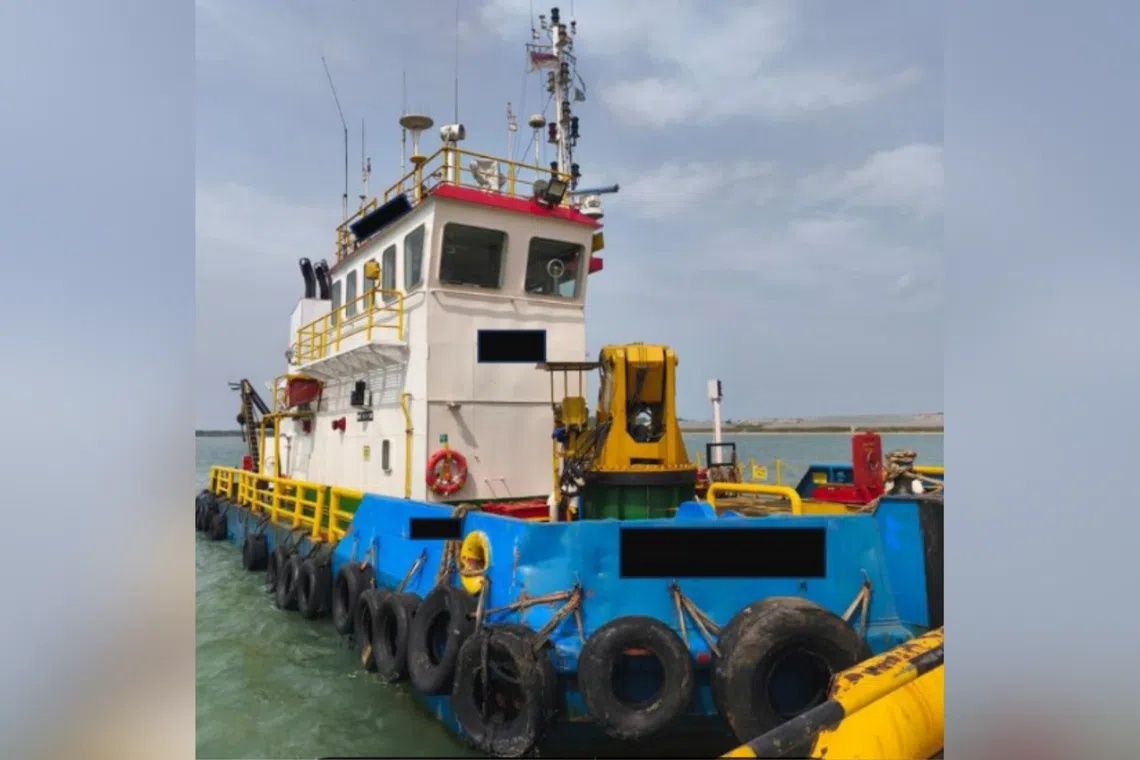
Eight tugboat crew members are facing theft charges following their arrest for allegedly pilfering marine gas oil from a vessel operating in Singaporean waters. The men, ranging in age from 25 to 54 years old, were taken into custody during a predawn enforcement operation conducted by Police Coast Guard officers near Tuas on August 13. All eight are scheduled to appear before the courts on Friday, August 14, to face formal charges relating to the illicit appropriation of fuel valued at approximately S$10,570.
The discovery emerged when Police Coast Guard personnel performed a routine inspection aboard the Singapore-registered tugboat operating in the waters adjacent to Tuas at approximately 1.05am. During this check, officers uncovered evidence that crew members stationed on the vessel had been systematically removing marine gas oil without authorisation from their employer. The investigation revealed that the stolen fuel was subsequently sold through unofficial channels, with the proceeds pocketed by the individuals involved rather than directed toward legitimate commercial purposes.
For regional maritime operators and regulatory authorities across Southeast Asia, this incident underscores an ongoing vulnerability within the shipping and offshore energy sectors. The theft of bunker fuel—marine gas oil destined for vessel propulsion—represents a persistent challenge for port authorities and shipping companies throughout the region. Singapore's strategic position as one of the world's busiest shipping hubs makes it particularly susceptible to such organised theft operations, which can compromise vessel operations, create environmental hazards, and undermine the integrity of supply chains.
The specific charge the men will face—theft by servant of property in possession of master—carries substantial legal consequences under Singapore law. Conviction can result in both monetary penalties and imprisonment extending up to seven years, reflecting the seriousness with which authorities treat breaches of trust involving maritime operations and fuel security. This legal framework aims to deter crew members from exploiting their positions of access and responsibility aboard commercial vessels.
The Police Coast Guard's enforcement action represents part of a broader strategy to combat fuel theft and black market trading in Singapore's territorial waters. Maritime fuel theft has evolved into a sophisticated operation across multiple Southeast Asian jurisdictions, involving networks of perpetrators ranging from individual crew members to organised criminal syndicates. The stolen fuel often enters unregulated supply chains serving fishing vessels, smaller commercial operations, or industrial facilities that purchase fuel at below-market rates without scrutiny regarding its origins.
For Malaysia and other regional nations, the implications extend beyond Singapore's immediate jurisdiction. Cross-border fuel smuggling networks frequently operate throughout the Strait of Malacca and surrounding waters, with stolen bunker fuel transiting between territorial waters of multiple countries. The incident highlights how theft originating in one jurisdiction can fuel broader regional maritime security concerns and illicit commercial networks that undermine legitimate shipping industries.
Singapore's police authorities have emphasised their commitment to maintaining security within territorial waters through sustained enforcement operations. The statement issued following the arrests indicated that police will intensify checks and monitoring activities designed to identify, prevent, and prosecute similar crimes. This proactive posture reflects recognition that deterrence requires visible and credible enforcement coupled with the certainty of legal consequences.
The tugboat crew incident also raises questions about internal compliance and security protocols within the maritime industry itself. Shipping companies and vessel operators face pressure to implement robust oversight mechanisms capable of detecting unauthorised fuel removal. Many operators have responded by installing monitoring equipment, implementing strict inventory controls, and establishing crew accountability procedures—measures that increase operational costs but prove necessary to protect valuable cargo and fuel supplies.
Beyond the immediate criminal proceedings, the case illustrates how vulnerability to fuel theft intersects with broader maritime security frameworks. Southeast Asian nations, including Malaysia, have collectively invested in capacity-building initiatives addressing port security, vessel monitoring, and inter-agency coordination. The regional Maritime Security Cooperation between littoral states aims to reduce opportunities for organised theft while enhancing information-sharing regarding suspected smuggling operations.
Environmental and safety dimensions also warrant consideration. Marine gas oil intended for legitimate commercial use undergoes quality testing and regulatory compliance verification. Stolen fuel entering black market channels bypasses such oversight, potentially containing contaminants or incorrect specifications that could damage engines or compromise vessel safety. This risk extends to smaller operators and fishing communities that may unwittingly purchase compromised fuel.
The Singapore Police Coast Guard's vigilance during routine inspections demonstrates how operational discipline can yield results. Random checks conducted during unsociable hours—such as the 1.05am inspection that uncovered this operation—prove particularly effective because they minimise opportunities for criminals to conceal evidence or alter vessel records. The timing and execution of enforcement operations therefore constitute critical components of maritime security strategy.
Moving forward, the prosecution of these eight individuals will likely receive attention from shipping industry stakeholders across the region. Conviction rates and sentencing severity influence whether maritime fuel theft remains perceived as a low-risk, high-reward enterprise. Singapore's demonstrated commitment to rigorous prosecution and substantial penalties helps establish deterrents that resonate throughout regional maritime communities where crew members, vessel operators, and criminal networks evaluate risk-benefit calculations.

