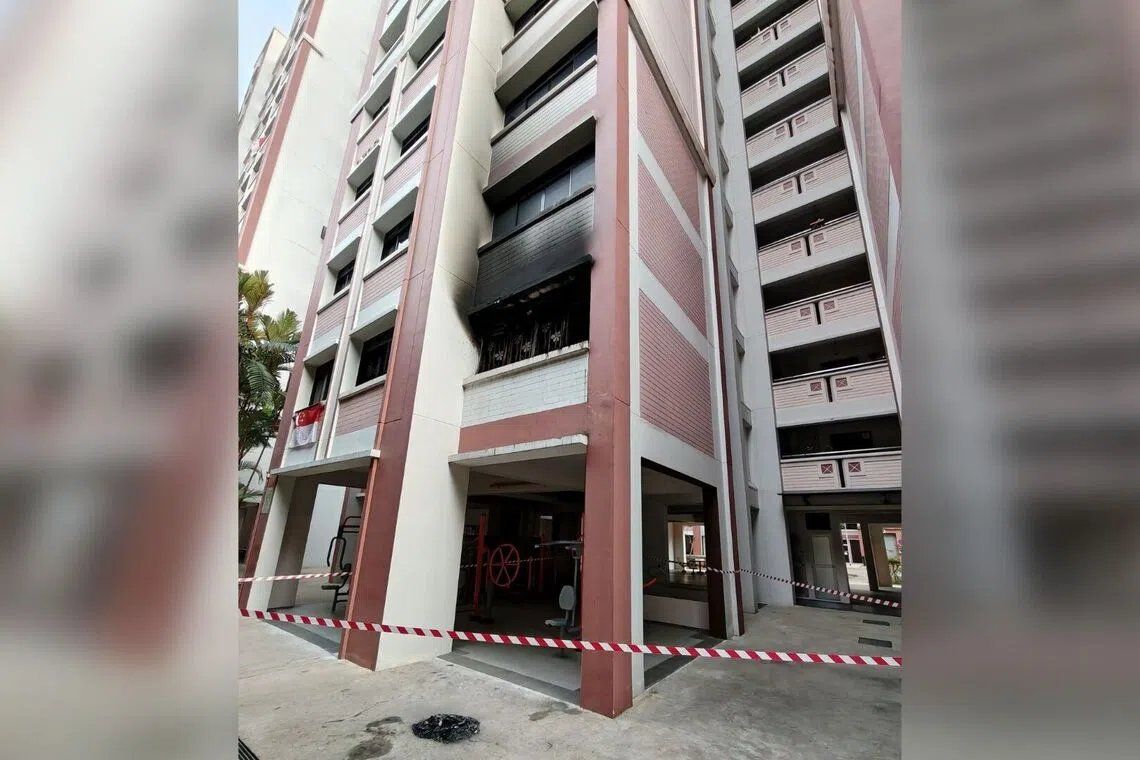
A residential fire in Singapore's Buangkok area in the pre-dawn hours of Thursday, August 20, left one elderly occupant hospitalised with injuries and prompted swift response from both emergency services and a quick-thinking neighbour. The Singapore Civil Defence Force received the alarm at approximately 12.25am regarding a fire at Block 979B Buangkok Crescent, located in the Ang Mo Kio district. Emergency crews arrived to find flames contained within a bedroom on the second floor of the affected unit, where the fire had begun consuming the room's contents.
The situation could have escalated significantly, but the rapid deployment of firefighting resources and effective use of water jets brought the blaze under control without spreading to adjacent units or common areas. The affected resident, an elderly man, sustained cuts to his feet during the incident and was transported to Sengkang General Hospital for treatment and observation. By the following afternoon, according to a public statement from the local Member of Parliament, the patient had already been cleared for discharge, suggesting the injuries, while requiring medical attention, were not severe.
What emerged as the most compelling aspect of the incident was the intervention of a neighbouring resident whose quick thinking and decisive action potentially prevented a more serious outcome. An ITE student living in an adjacent unit responded immediately upon learning of the fire, deploying a portable fire extinguisher to help contain the flames before evacuating three people from the burning unit. This intervention during the critical early stages of the fire demonstrated the importance of community awareness and preparedness in high-density residential settings where minutes can make a substantial difference in outcomes.
Ang Mo Kio GRC Member of Parliament Victor Lye publicly acknowledged the student's heroic actions through a Facebook post shared at about 1pm on August 20, highlighting how individual initiative can complement professional emergency response. Lye expressed gratitude for the neighbour's willingness to engage with a dangerous situation rather than simply alerting authorities and waiting for professional help. The MP's public recognition of this act serves to reinforce community values around mutual responsibility and neighbour-to-neighbour support, particularly important in Singapore's densely populated public housing estates.
Following the incident, local authorities moved to support the displaced family through established community infrastructure. The Residents' Network centre in the area was made available to the affected household as a temporary gathering or assistance point during the immediate aftermath. However, the family opted to accept the neighbouring ITE student's offer of hospitality, choosing to remain with their helpful neighbour rather than relocate to a community facility. This arrangement underscores the trust and goodwill that had been established through the student's emergency assistance.
Victor Lye also made a personal visit to the affected flat to offer direct support and solidarity to the family, demonstrating the expected engagement level of elected representatives with constituents experiencing sudden housing emergencies or property damage. Such visits serve multiple functions: they provide reassurance to affected residents that their situation has been noted at the political level, they facilitate access to whatever assistance or resources might be available through government or community channels, and they create an opportunity to understand the immediate needs of those impacted by such incidents.
The cause of the bedroom fire remains under official investigation by the authorities, with no preliminary findings yet released to the public. Understanding how the fire originated will be important for the affected family's insurance purposes and for broader fire safety recommendations that might emerge from the incident. In Singapore's context, where housing density in HDB blocks remains high and safety standards are rigorously maintained, individual fire incidents typically trigger careful investigation to determine whether systemic issues might be present.
This incident carries particular relevance for Malaysian readers and Southeast Asian residential communities more broadly, as it illustrates both the vulnerabilities of high-density public housing and the critical importance of community preparedness. In Malaysia's own public housing estates and in similar developments across the region, emergency response capacity and community awareness remain essential safeguards. The role of the ITE student in this incident emphasises how basic fire safety training and the presence of accessible fire extinguishers in residential blocks can provide crucial seconds of intervention before professional emergency services arrive.
The incident also highlights the interdependence inherent in high-rise residential living, where neighbourly relationships and mutual support networks form an important layer of safety infrastructure beyond official emergency services. For Malaysian apartment and flat dwellers, whether in public or private developments, the Buangkok example demonstrates why knowing neighbours, familiarising oneself with emergency equipment locations, and understanding basic fire response procedures constitute practical investments in residential security.

