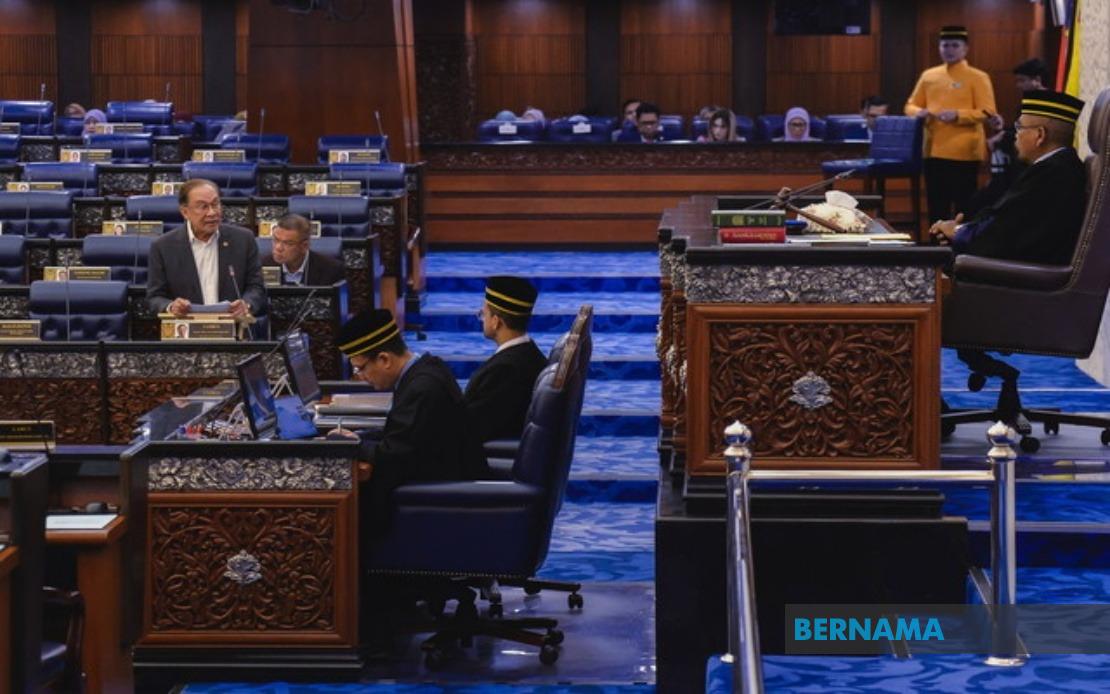
Prime Minister Datuk Seri Anwar Ibrahim has restated the government's firm stance on election campaign regulations, confirming that no new projects or policies may be announced during the campaign period for upcoming state elections. Speaking during Minister's Question Time in Parliament on June 30, Anwar emphasised that this restriction remains a cornerstone of Malaysia's electoral framework and will be strictly enforced as the Johor, Melaka and Negeri Sembilan state elections approach.
The legal foundation for this prohibition lies in Section 24B of the Election Offences Act 1954, which forms part of Malaysia's comprehensive electoral legislation designed to ensure fair competition between political parties. By preventing government announcements of new projects during campaigns, the law aims to create a level playing field where parties compete on their merits rather than on the government's ability to announce fresh spending or initiatives. This safeguard is particularly important in Malaysia's context, where the ruling coalition's access to state machinery and resources has traditionally given it significant advantages over opposition parties.
Anwar's clarification came in response to a parliamentary query from Datuk Seri Dr Shahidan Kassim from Perikatan Nasional, who sought confirmation that the prohibition remains in effect and questioned how compliance will be monitored. The Prime Minister's response underscores the government's commitment to upholding electoral integrity ahead of the three state elections, which are expected to be closely contested given Malaysia's increasingly competitive political landscape. The question itself suggests ongoing concern among lawmakers about whether the restriction might be circumvented through creative reinterpretation or administrative loopholes.
Crucially, Anwar's statement includes an important clarification that distinguishes between genuinely new announcements and the continuation of previously approved initiatives. Projects that received approval and funding allocation under an earlier federal budget may be announced or progressed during the campaign period without violating electoral laws. This distinction prevents the government from becoming entirely immobilised during elections and allows it to continue implementing pre-existing commitments. However, the distinction requires careful application, as it demands clear documentation that projects were previously approved rather than being devised in response to campaign considerations.
The restriction applies comprehensively across all levels of government apparatus. City councils, state governments, and the Federal Government are equally bound by the prohibition, meaning that neither local authorities nor federal agencies can use their administrative resources to announce new allocations or projects once nomination day has been declared. This comprehensive approach recognises that the distinction between federal, state and local government is often blurred in the eyes of voters, and that voters might view government announcements from any level as partisan advantages for the ruling coalition.
For Malaysian voters and political observers, these election rules represent an attempt to ensure that campaigns focus on policy platforms and party credentials rather than on which party can promise the most immediate tangible benefits. In practice, enforcement of these rules has sometimes proven challenging, with opposition parties and observers occasionally raising concerns about whether the spirit of the law is being violated even if the letter is technically observed. The coming state elections will provide another test of how effectively these provisions are monitored and enforced by electoral authorities.
The timing of Anwar's restatement is significant, occurring during a period when Malaysia's electoral calendar is becoming increasingly crowded. With multiple state elections scheduled and the possibility of a federal general election within the next year, clarity on campaign rules becomes essential for maintaining electoral confidence. Opposition parties will likely scrutinise government announcements carefully during the campaign period, and any perception of rule violations could undermine public confidence in the fairness of the electoral process.
From a Southeast Asian perspective, Malaysia's election campaign regulations reflect broader regional concerns about preventing the misuse of state resources during electoral competition. Several neighbouring countries face similar challenges in preventing incumbents from leveraging government resources for electoral advantage. Malaysia's codified approach through the Election Offences Act provides a model, though questions persist about whether legislation alone can adequately constrain powerful incumbents who control substantial government machinery.
The prohibition also has implications for government planning and delivery. Civil servants and elected officials must carefully schedule their announcements and project launches, distinguishing between campaign periods and non-election windows. This can create inefficiencies, as important development projects may need to wait until after elections are concluded before being publicly unveiled, even if preparations are underway. The requirement to suspend new project announcements during campaigns thus represents a trade-off between electoral integrity and administrative efficiency.
Enforcement mechanisms remain crucial to the effectiveness of these rules. The Election Commission must have adequate resources and authority to investigate potential violations, while the Attorney General's office must be willing to prosecute clear breaches. However, the borderline cases—projects announced as continuations of previous work when critics argue they were actually devised for campaign effect—often fall into grey areas that depend on interpretation and proof of intent rather than straightforward violations.

