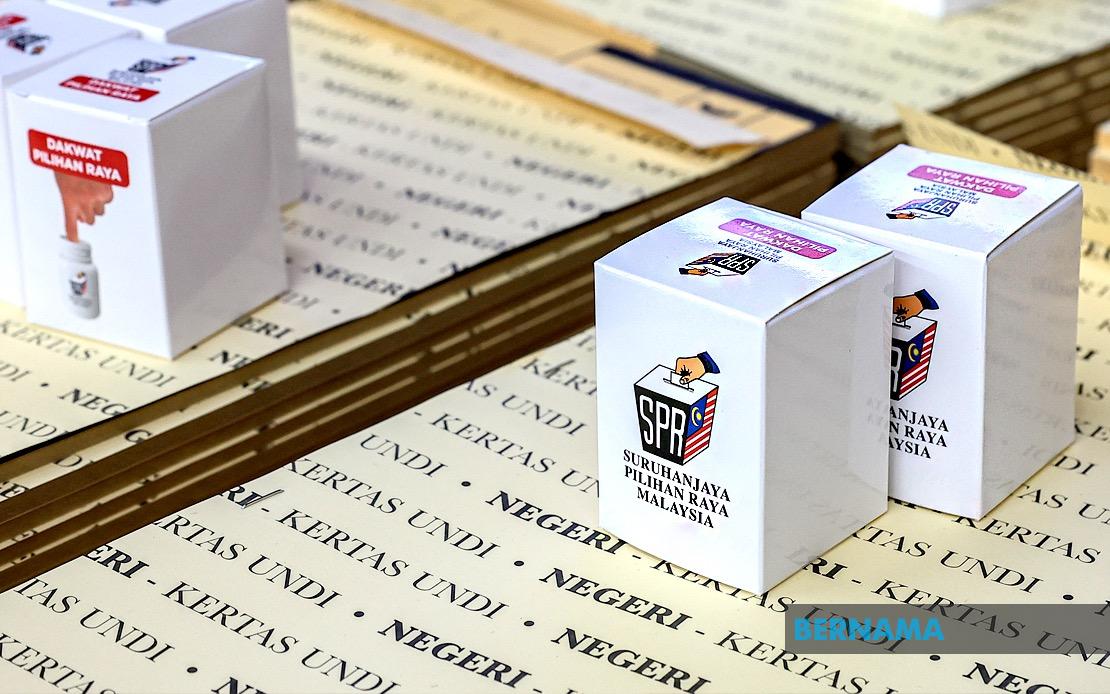
The Election Commission has intensified efforts to encourage voters who have moved to update their electoral registration details before the upcoming state elections in Johor and Negeri Sembilan. Dr Azmi Sharom, the EC's deputy chairman, stressed that maintaining accurate voter addresses is crucial for the integrity of Malaysia's constituency-based representation system, which hinges on elected officials serving their actual constituents rather than absentee voters from distant areas.
Malaysia's democratic framework operates on the principle that State Assemblymen and Members of Parliament derive their mandate from residents within clearly defined geographical boundaries. When voters maintain registrations in their hometowns rather than their current places of residence, this fundamental design breaks down. Dr Azmi articulated the practical implications: voters casting ballots hundreds of kilometres away from where they actually live undermines the connection between elected representatives and the communities they are supposed to serve. This misalignment can result in representatives prioritising issues important to non-resident voters while neglecting concerns of those who genuinely live and work in the constituency.
The EC has streamlined the address update process to remove practical barriers. Voters must first ensure their national identification card reflects their current residential address before modifying their electoral registration. Crucially, this adjustment can now be completed online, eliminating the need for in-person visits to EC offices. This digital capability represents a significant modernisation that should reduce the time and effort required for voters to maintain accurate records.
A key enabler for faster processing is the EC's transition to monthly electoral roll updates, departing from the previous quarterly cycle. This acceleration means that voters submitting address changes will see their registrations updated more swiftly, reducing the window where their details lag behind their actual circumstances. For voters planning to move before election dates, this faster turnaround provides greater flexibility in updating records without concern about missing the cutoff.
Despite the practical convenience and democratic importance of maintaining current addresses, Dr Azmi acknowledged that emotional attachment to hometowns presents a psychological barrier. Many Malaysians, particularly those from rural areas who have migrated to urban centres for employment or education, retain sentimental connections to their places of origin. This emotional pull can override rational considerations about representation quality. The EC's messaging strategy therefore needs to balance respect for these feelings with clear explanation of why voting in one's actual locality strengthens rather than weakens democratic participation.
The timing of this push is significant given the imminent elections. For the Johor state election scheduled for July 11, the EC reported that logistical arrangements had reached advanced stages, with only final operational details remaining. More than 43,000 personnel would be deployed across Johor polling stations, reflecting the substantial administrative undertaking required to conduct a state-level election. This massive workforce must operate smoothly across numerous locations, making accurate voter information essential for efficient management.
Preparations for the Negeri Sembilan state election were at an earlier phase, with nomination processes still to commence and ballot papers not yet printed. The EC was therefore focusing its immediate voter outreach efforts on Johor, where the compressed timeline left less room for last-minute adjustments. For Negeri Sembilan voters, there remains a somewhat longer window to rectify registration discrepancies before nomination opens and the election campaign officially commences.
The EC's emphasis on electoral worker appreciation underscores the human dimension of election management. Over 15,000 additional personnel would staff the Negeri Sembilan election, while the Johor operation required nearly three times that number. These workers shoulder responsibility for implementing electoral procedures, verifying voter credentials, managing polling locations, and ensuring security. Their commitment directly affects voter experience and public confidence in results, making the EC's recognition of their contributions more than ceremonial.
For Malaysian voters navigating mobility—whether relocating for careers, pursuing education, or responding to family circumstances—the EC's messaging carries practical implications. Failing to update registration addresses creates multiple problems beyond representation misalignment. Voters registered far from current residences face logistical challenges accessing their designated polling stations, particularly if living hundreds of kilometres away. They also receive voter communications at outdated addresses, potentially missing important election information or schedule changes. Furthermore, maintaining ghost registrations in abandoned areas inflates electoral rolls, complicating the EC's administrative processes and potentially creating vulnerabilities in the electoral system.
The broader context of this registration drive touches on fundamental questions about electoral legitimacy in a mobile society. Malaysia's urbanisation has accelerated internal migration, with millions now residing permanently in cities far from their registered constituencies. Without corrective mechanisms encouraging address updates, electoral rolls gradually diverge from actual population distribution. This distortion can skew political representation, allowing candidates with strong support among diaspora voters to win in constituencies with sparse actual residents, or conversely, leaving growing urban areas underrepresented.
The EC's modernised systems—online registration, monthly roll updates—represent incremental improvements toward administrative efficiency. Yet their effectiveness depends entirely on voter participation. The responsibility for maintaining accurate rolls is therefore shared between the electoral authority and individual voters. The EC's role is removing barriers and providing clear information; voters must follow through with updates when they move.
Looking ahead, the Johor and Negeri Sembilan elections will test whether this voter outreach proves effective. The extent to which registered voters align with actual populations in these states will influence election dynamics, campaign strategies, and ultimately, which candidates win. If significant misalignment persists—with many voters registered far from where they actually live—the elections may not fully reflect the preferences of communities most directly affected by state-level governance decisions. This measurement will provide important data for assessing whether voluntary registration updates suffice or whether more proactive mechanisms might be needed to maintain electoral integrity.

