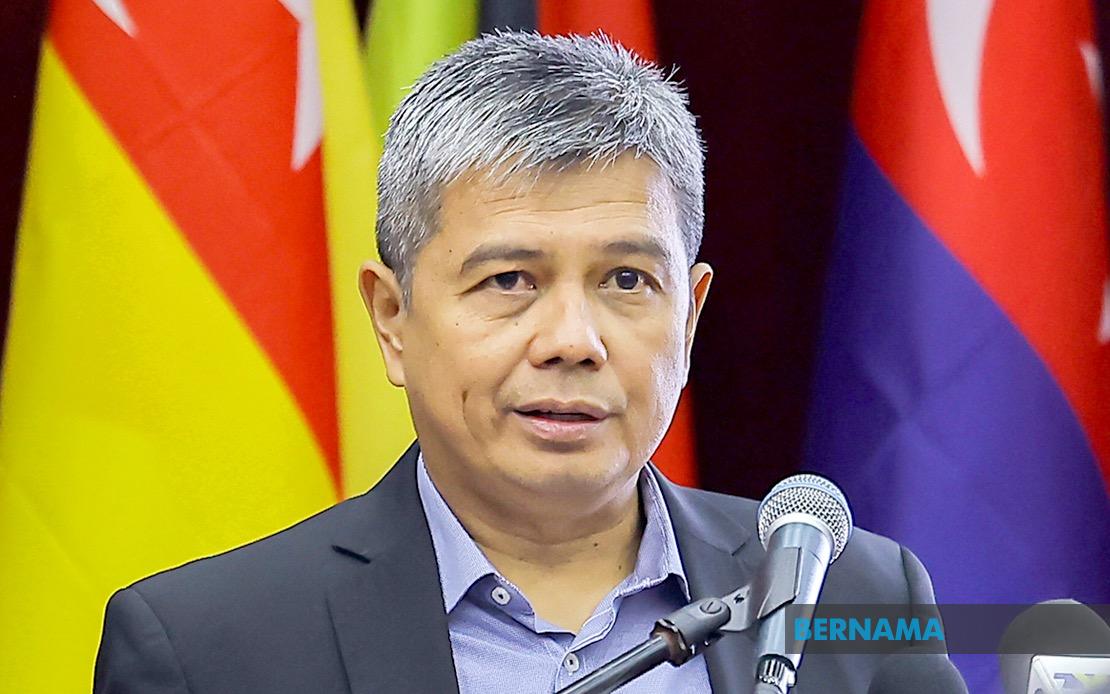
With the curtain set to fall on campaigning for the 16th Johor State Election tonight at 11.59pm, the Election Commission has issued a comprehensive set of directives to ensure all contesting parties adhere to regulatory boundaries and maintain electoral integrity. EC secretary Datuk Khairul Shahril Idrus delivered the reminder in Johor Bahru, emphasizing that the cessation of campaign activities must be total and immediate once the deadline passes, with violations carrying legal consequences under Malaysia's election framework.
The prohibition extends far beyond traditional ground-level canvassing to encompass the entire digital landscape where modern political messaging thrives. Parties and candidates are explicitly forbidden from continuing any vote-seeking activities on social media platforms including Facebook, X, Instagram, TikTok, and Threads, reflecting how election supervision has evolved to address contemporary campaigning methods. This blanket restriction on digital campaigning underscores the EC's determination to establish a level playing field in the final hours before polling day, preventing last-minute persuasion efforts that could influence undecided voters.
A particular concern highlighted by the EC involves the erection of campaign booths, locally known as barung, on polling day itself. The commission has reiterated that establishing, maintaining, or operating such structures constitutes a prosecutable offence under the Election Offences Act 1954. This regulation aims to prevent parties from maintaining visible campaign presence at or near polling locations, which could subtly coerce or influence voters at their most consequential moment of decision-making.
Voter conduct at polling stations will be subject to equally stringent controls, with mobile phone usage prohibited within voting streams. Election officials will display prominent notices inside and outside all polling centres to communicate this restriction clearly. Voters who arrive with mobile devices must deposit them in designated areas after receiving ballot papers, retrieving them only after completing their voting process. This measure seeks to prevent surreptitious recording, transmission of voting intentions, or any form of documentation that could compromise ballot secrecy and individual voting autonomy.
The EC encouraged voters to avoid last-minute voting congestion by checking recommended voting times through the MySPR Semak application, though the official polling window remains flexible between 8am and 6pm according to individual polling centre schedules. This recommendation balances administrative efficiency with voter convenience, acknowledging that some citizens face employment or personal constraints that necessitate voting outside peak hours. For registered voters employed in both public and private sectors, employers face legal obligations under electoral law to grant reasonable time for staff to cast ballots tomorrow, preventing workplace-based barriers to political participation.
Authentication requirements for voters centre on the statutory identity card check, with officials conducting verification upon voters' arrival at polling stations. The EC stressed that voters should never relinquish their identity documents to unauthorized individuals, a safeguard against potential fraud or impersonation schemes. Preliminary preparation through available digital platforms enables voters to confirm their registration details and locate their assigned polling locations in advance, streamlining the voting experience and reducing processing delays that can frustrate voters or create bottlenecks.
Behind the visible infrastructure of tomorrow's election lies substantial preparation undertaken by the EC's technical apparatus. Equipment inspection cycles on Thursday and Friday encompassed ballot boxes, indelible ink, ballot papers, and voting booths destined for distribution to Presiding Officers supervising each polling stream. These quality assurance checks examined not merely the numerical completeness of supplies but their physical condition, ensuring that indelible ink dispensers function properly, ballot boxes remain securely constructed, and voting booths provide the privacy essential to the democratic process. Such meticulous preparation reflects the EC's operational sophistication and commitment to eliminating technical failures that could undermine voter confidence or delay results.
For Malaysian and Southeast Asian observers, the elaborate regulatory architecture surrounding the Johor election illustrates how established democracies implement comprehensive safeguards addressing both traditional and emergent threats to electoral integrity. The explicit references to social media regulation acknowledge that political campaigning has fundamentally transformed, with instantaneous digital communication enabling coordination and messaging at unprecedented scale and speed. By establishing clear temporal boundaries for online activity mirroring those applied to physical campaigning, the EC demonstrates an adaptive regulatory approach.
The multiple reminders issued by the EC reflect institutional awareness that enforcement requires clear communication and repeated messaging, particularly as election day approaches and campaign intensity typically peaks. Parties may test regulatory boundaries, whether through aggressive social media postings or booth placement in grey-area locations, rendering explicit and repeated statements of prohibitions strategically important. The emphasis on employer compliance also acknowledges that workplace dynamics can subtly discourage voter participation if supervisors create implicit pressure against voting-related absences, necessitating legal reinforcement of worker voting rights.
For employers across Johor, the EC's reminder carries practical implications requiring workplace management planning. Providing adequate time for employee voting while maintaining operational efficiency demands advance scheduling and coverage arrangements, particularly in customer-facing sectors where staffing gaps create service disruptions. The legal framework protecting worker voting rights, however, establishes this accommodation as a non-negotiable obligation rather than discretionary goodwill, with the EC's public reminder signalling enforcement attention.
The comprehensive nature of these directives suggests the EC's learning from previous elections regarding compliance gaps and enforcement challenges. By spelling out specific prohibited activities—booths on polling day, social media campaigning beyond the cutoff, mobile phone use in voting areas—rather than relying on general references to election laws, the commission reduces ambiguity that parties might exploit to claim inadvertent violations. This crystalline specificity also facilitates voter understanding, enabling citizens to recognize and report rule violations by parties attempting to gain illicit advantage.
As Johor voters prepare to exercise their franchise tomorrow, the regulatory framework established for this election demonstrates the intricate balance democracies must maintain between enabling free political expression and preventing activities that undermine electoral integrity or voter autonomy. The EC's final reminders tonight establish the closing moment of campaigning's controlled chaos, followed by polling day's ordered tranquility where voters' choices—not parties' persuasion—determine outcomes.

