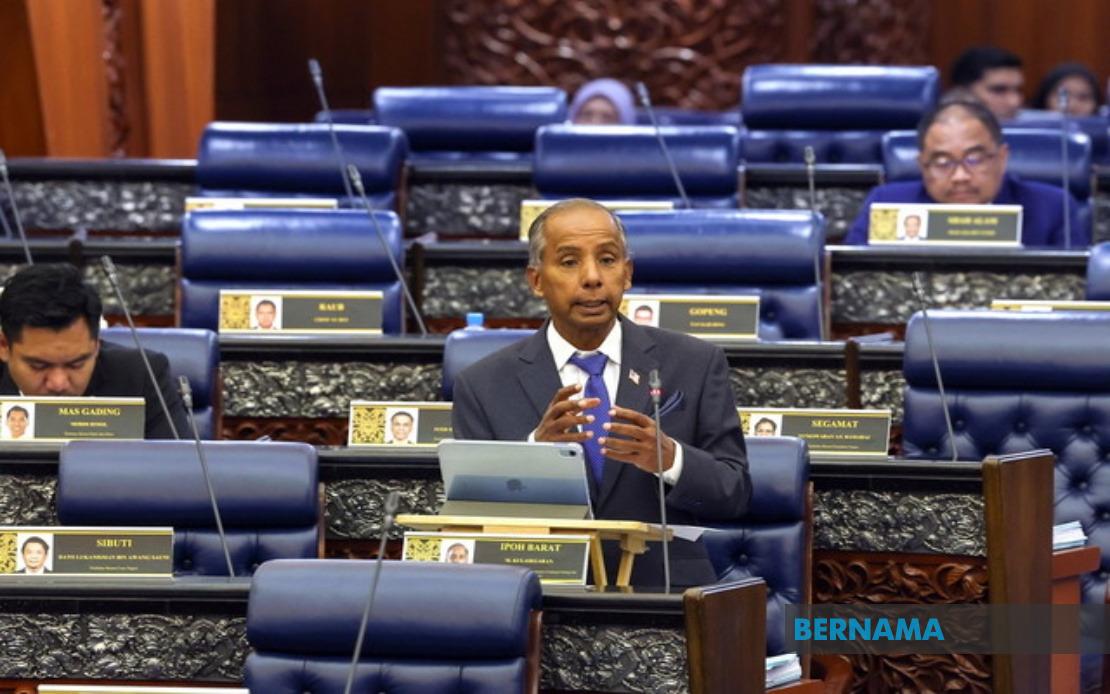
The Election Commission is undertaking an extensive examination of domestic postal voting for Malaysian voters spanning Peninsular Malaysia, Sabah and Sarawak, with a completion date targeted for next year. The initiative represents a significant potential shift in how Malaysians exercise their electoral rights, particularly for those unable to vote at polling stations on election day. Deputy Minister in the Prime Minister's Department (Law and Institutional Reform) M. Kulasegaran outlined the scope of this work during parliamentary proceedings, emphasising that the review process demands careful consideration and broad engagement across the political spectrum.
The postal voting proposal has generated considerable interest among lawmakers concerned with modernising Malaysia's electoral infrastructure. Isnaraissah Munirah Majilis, representing the WARISAN party from Kota Belud, raised the matter as part of a broader discussion on transforming electoral processes to accommodate voters who face genuine obstacles to in-person participation. This includes individuals with mobility issues, those working far from their constituencies, and citizens abroad. The timing of the initiative reflects growing recognition that postal voting could enhance electoral accessibility without compromising the integrity of the democratic process.
Kulasegaran emphasised that any decision to implement postal voting nationally would require thorough consultation with political parties and other critical stakeholders. Such engagement proves essential given that electoral reforms carry implications for all political contestants and their supporters. The deliberative approach suggests the government recognises that hasty implementation without adequate stakeholder buy-in could trigger disputes about electoral fairness and procedural legitimacy. The complexity of coordinating postal voting systems across three geographically distinct regions with different administrative structures adds technical dimensions that demand careful planning.
Beyond the postal voting inquiry, Kulasegaran indicated that the government remains receptive to reconsidering the institutional positioning of the Election Commission itself. Currently, the EC operates under the Prime Minister's Department, an arrangement that some observers argue may raise questions about institutional independence. A parliamentary suggestion to relocate the EC under Parliament's purview has gained traction among those advocating for stronger electoral governance safeguards. The Deputy Minister signalled openness to this proposal, noting that the recommendation warrants serious consideration and would be escalated to appropriate government bodies for formal review.
The question of electoral institutional independence carries particular significance in the Malaysian context, where public confidence in democratic processes remains crucial for political stability. Placing the EC under parliamentary oversight rather than executive supervision could be perceived as enhancing perceived independence and accountability. However, such a restructuring would require careful legislative work to define the relationship between Parliament and the Commission, determine funding mechanisms, and establish clear lines of responsibility. The government's willingness to explore this option demonstrates acknowledgment that electoral architecture reform extends beyond voting mechanisms to encompass institutional frameworks.
Regarding enforcement of polling station regulations, Kulasegaran addressed concerns about inconsistent implementation of mobile phone bans at polling streams. The government affirmed confidence in existing control mechanisms, determining that current procedures adequately restrict unauthorised recording and communication that could compromise ballot secrecy or create opportunities for voter intimidation. The position reflects a view that the framework already provides sufficient safeguards without requiring legislative amendments or elevation to a specific offence category under the Election Offences Act 1954.
This conservative stance on procedural enforcement contrasts with the more progressive approach to structural electoral reform. The government appears inclined toward exploring substantive changes like postal voting and institutional repositioning while maintaining confidence in existing enforcement protocols. The reasoning likely reflects assessment that most poll workers and security personnel adequately understand and implement phone restrictions without requiring statutory enhancement of penalties. Nevertheless, continued monitoring of enforcement consistency remains important for maintaining electoral integrity standards.
The postal voting initiative holds particular relevance for Malaysian voters whose circumstances make conventional polling attendance difficult. Healthcare workers, security personnel deployed across states, and citizens temporarily residing overseas represent populations that could benefit substantially from postal voting arrangements. Implementation would require developing secure ballot delivery and verification systems, establishing verification protocols to prevent fraudulent voting, and creating contingency procedures for postal failures. The technical complexity explains the extended study timeline and emphasis on stakeholder consultation before finalisation.
For Southeast Asian observers, Malaysia's examination of postal voting reflects broader regional trends toward electoral modernisation. Several neighbouring countries have experimented with or implemented variations of postal voting systems, offering comparative lessons regarding best practices and potential pitfalls. The Malaysian experience, once concluded, could inform similar discussions elsewhere in the region. The credibility of Malaysia's electoral process historically has depended substantially on transparent procedures and broad acceptance of democratic legitimacy, making careful implementation of any voting mechanism expansion essential to maintain public confidence.
The coordination across three separate administrative regions adds distinctive complexity to Malaysia's postal voting proposal. Peninsular Malaysia, Sabah and Sarawak each maintain distinct electoral registers and administrative capabilities, requiring harmonised procedures while respecting regional governance structures. This multi-region approach distinguishes Malaysia's inquiry from single-jurisdiction postal voting systems elsewhere. Successful implementation would demonstrate sophisticated federal electoral administration and could serve as a model for comparable federalist democracies navigating electoral modernisation across jurisdictional boundaries.
Movement on both postal voting and institutional repositioning indicates the government's broader commitment to electoral system evolution. Rather than treating these elements in isolation, the concurrent consideration of voting mechanisms and institutional governance reflects comprehensive thinking about electoral infrastructure. The extended timeline for the postal voting study, meanwhile, allows adequate preparation for systems that must function reliably once implemented. Public communication about the ongoing review process will prove important for building stakeholder understanding and generating informed debate about electoral modernisation before final policy decisions.

