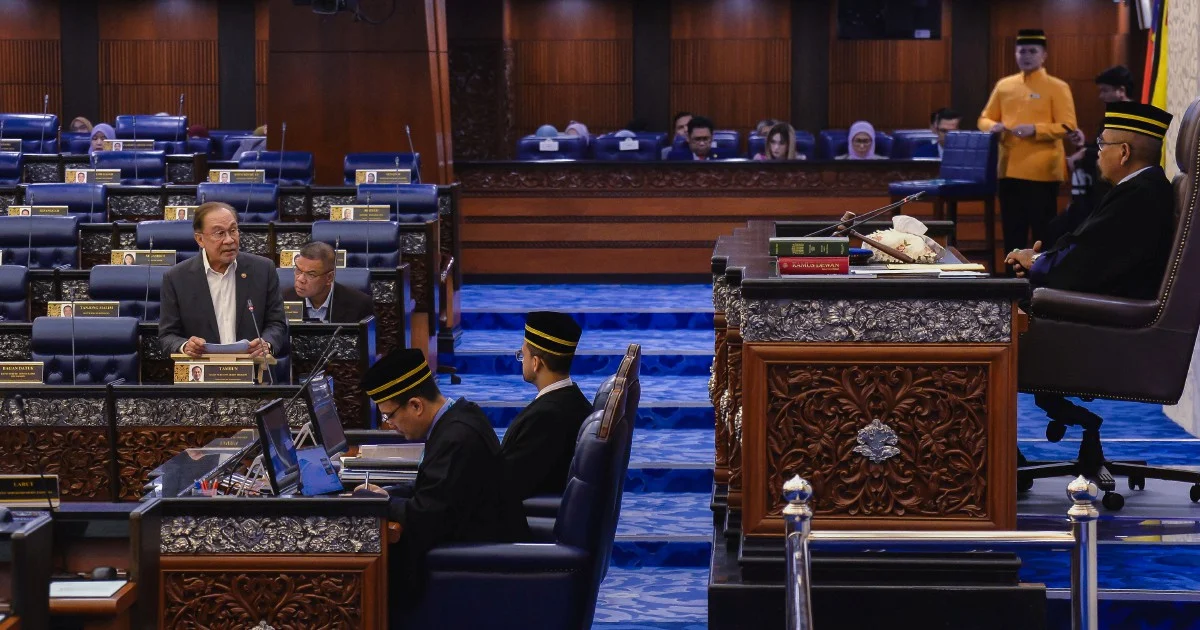
Prime Minister Datuk Seri Anwar Ibrahim has confirmed that Malaysia's Election Commission will enforce stricter oversight of caretaker administrations that transgress established electoral protocols through announcements or decisions carrying financial weight. This declaration underscores the growing concern over the conduct of interim governments during campaign periods, when authority should theoretically remain restrained and minimal.
The commitment represents a significant strengthening of the EC's supervisory role during electoral cycles. Historically, caretaker governments have operated in a grey zone where the scope of permissible administrative action remained ambiguous. By clarifying that bodies will face consequences for financially substantive moves, the Election Commission aims to level the playing field between competing parties and ensure that sitting administrations do not leverage their temporary power to gain electoral advantage through budget allocations or new spending commitments.
This intervention becomes particularly relevant in Malaysia's multi-layered political context, where federal, state, and local governments may all undergo simultaneous or staggered electoral processes. The potential for caretaker administrations to make decisions that bind successor governments—or voters—requires clear guardrails. Without robust enforcement mechanisms, an interim government could effectively commit resources, approve contracts, or announce initiatives that the next administration would struggle to reverse, thereby prejudicing electoral outcomes.
The guidelines themselves are not novel. Malaysia's electoral framework has long stipulated that caretaker governments should restrict themselves to routine administrative matters and urgent operational necessities. However, the interpretation of what constitutes "financial implications" has often been contentious. A salary increase for public servants, a new infrastructure tender, or approval of development projects can all be construed as having budgetary consequences, yet determining which cross the threshold into breaches requires nuanced judgment.
Enforcement has traditionally been weak, partly because the Election Commission lacks prosecutorial powers and relies on public complaints and media scrutiny to identify violations. The new emphasis on "taking action" suggests the EC may pursue warnings, formal investigations, or recommendations to other authorities such as the Malaysian Anti-Corruption Commission or the Attorney General's Chambers. Such escalation could serve as a powerful deterrent, particularly if punitive consequences become material enough to dissuade caretaker ministers from pushing contentious initiatives.
For Malaysian political stakeholders, this shift carries immediate tactical implications. Opposition parties can now cite the Election Commission's pledge to challenge spending decisions perceived as inappropriate, potentially triggering formal inquiries that consume political oxygen and damage the ruling coalition's campaign momentum. Conversely, the government can leverage the same framework to scrutinise opposition-controlled state administrations if they hold office during electoral campaigns.
The timing of the Prime Minister's statement reflects a calculated effort to rebuild confidence in electoral institutions following several cycles marked by accusations of bias or selective enforcement. By publicly committing the Election Commission to action, Anwar Ibrahim signals that the government acknowledges the need for transparent, impartial administration of electoral rules. This rhetorical move carries particular weight given Malaysia's recent political volatility and persistent concerns about the integrity of electoral processes.
Southeast Asian observers should note that Malaysia's approach mirrors concerns raised in regional democracies. Thailand, Indonesia, and the Philippines have all grappled with caretaker government abuses, where interim administrations have used their temporary authority to entrench incumbents or obstruct challengers. Malaysia's attempt to tighten enforcement could establish a regional benchmark for limiting interim government discretion during electoral periods.
However, implementation challenges remain substantial. Distinguishing between routine administrative decisions and impermissible financial initiatives requires institutional capacity and political will that may prove insufficient. Defining terms such as "significant financial implications" demands clarity that the current framework may lack. Additionally, the EC's willingness to act against powerful political actors, particularly those affiliated with the government, has historically fluctuated according to political circumstances.
The practical effect of this commitment will become evident during forthcoming electoral campaigns, whether at federal, state, or local level. Monitoring scrutiny by election observers, media organisations, and opposition parties will be essential to determining whether the Election Commission genuinely enforces its mandate or retreats into familiar patterns of inconsistent application. Public documentation of investigations, rulings, and any penalties imposed will signal whether the commitment represents substantive institutional reform or merely rhetorical accommodation.
For civil society and governance advocates, the statement represents a useful baseline against which to hold the Electoral Commission accountable. Organisations monitoring electoral compliance can now reference the Prime Minister's explicit acknowledgment of the EC's enforcement authority when documenting alleged breaches. This creates space for independent accountability mechanisms even if formal institutional enforcement falters.
Ultimately, the credibility of Malaysia's electoral system depends not merely on written guidelines but on their consistent, impartial application. The Election Commission's willingness to act against caretaker governments—regardless of their political affiliation—will determine whether this announcement represents genuine institutional strengthening or becomes another unfulfilled pledge to electoral reform.

