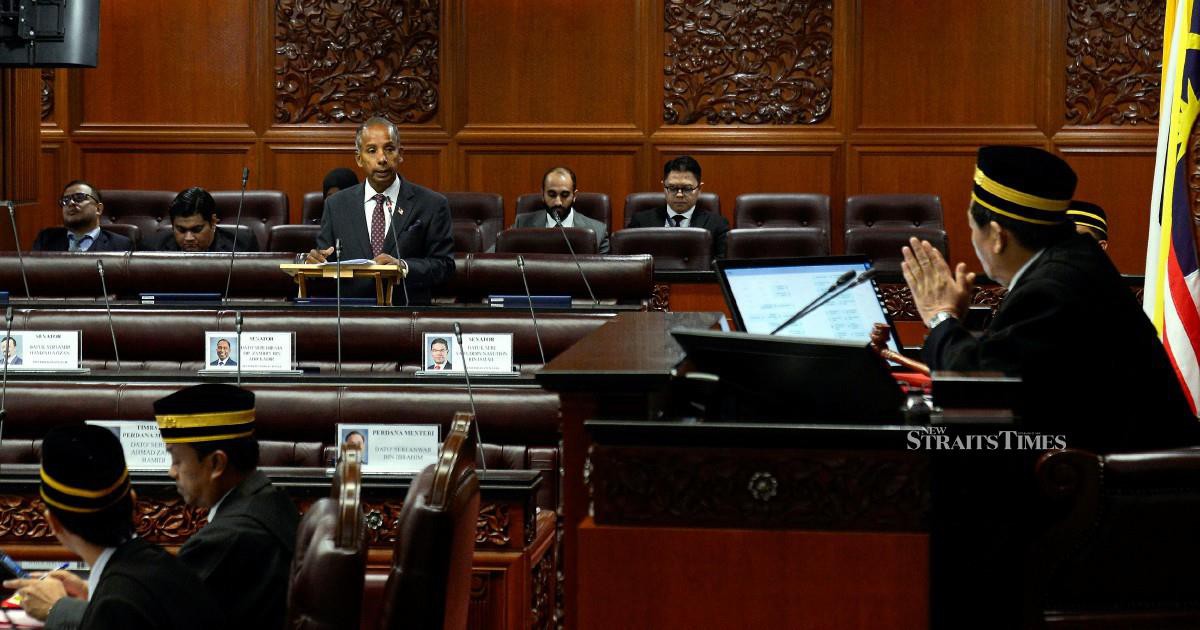
The Election Commission has agreed to examine a proposal that would allow auxiliary police officers deployed at Malaysia's strategic assets and critical infrastructure to vote by post, Deputy Minister in the Prime Minister's Department (Law and Institutional Reform) M. Kulasegaran announced. The initiative reflects ongoing efforts to enhance voting accessibility for uniformed personnel who face operational constraints during elections.
Auxiliary police forces play a vital protective role across Malaysia's essential facilities, including power plants, water treatment centres, ports, and telecommunications infrastructure. Their deployment often requires continuous presence at sensitive locations, making it logistically difficult for officers to travel to polling stations during election day. The postal voting proposal aims to address this operational reality while preserving their democratic rights.
The consideration of this measure comes amid broader discussions about electoral accessibility in Malaysia. Postal voting has long been available to specific categories of voters, including military personnel and overseas citizens, reflecting recognition that certain groups face genuine barriers to conventional voting. Extending the scheme to auxiliary police would follow similar reasoning, acknowledging that some professions demand sacrifices to personal convenience in service of national interests.
Kulasegaran's announcement suggests recognition within government circles that voting mechanisms must adapt to modern employment realities. The auxiliary police service, which combines public safety functions with private security operations, has grown significantly over the past two decades as Malaysia's critical infrastructure has expanded and security concerns have evolved. Officers often work irregular schedules and may be stationed in remote or restricted-access locations where leaving post during working hours proves impractical.
The Election Commission's willingness to study the proposal indicates receptiveness to electoral reform discussions. However, any expansion of postal voting mechanisms requires careful consideration of implementation logistics. The commission would need to establish clear protocols for verifying voter identity, preventing duplicate voting, and ensuring ballot security—challenges that postal systems inherently complicate compared to in-person voting supervision.
From a Southeast Asian perspective, Malaysia's approach demonstrates how democracies can innovate within established frameworks. Several regional neighbours face similar challenges with uniformed personnel voting access, and Malaysia's handling of this issue may influence broader discussions about electoral modernisation across the region. Thailand, Indonesia, and the Philippines all employ similar auxiliary security forces with comparable deployment challenges.
The proposal also reflects Malaysia's recent emphasis on institutional strengthening and governance improvements. The Deputy Minister's Law and Institutional Reform portfolio indicates that voting accessibility enhancements are viewed as part of broader democratic infrastructure development. This aligns with government commitments to institutional resilience and transparent governance frameworks.
Critical infrastructure protection presents complex operational demands. Unlike military personnel, who operate under unified command structures, auxiliary police officers serve diverse employers across both government and private sectors. This fragmentation could complicate postal voting implementation, requiring coordination between the Election Commission, multiple employers, and security-cleared personnel who would handle ballot logistics at restricted-access facilities.
The timing of this proposal warrants attention to Malaysia's electoral calendar. With state and federal elections potentially scheduled within the medium term, any voting system modifications require advance planning, public communication, and extensive testing. The commission must weigh implementation timelines against the need for thorough vetting and public consultation.
Beyond operational considerations, the proposal raises questions about eligibility scope. Should postal voting extend only to auxiliary police at the most sensitive facilities, or apply broadly across all auxiliary forces? Determining which infrastructure qualifies as sufficiently strategic to justify voting exceptions requires careful definition and could establish precedents affecting other professions facing access challenges.
Public perception of electoral processes carries enormous weight for democratic legitimacy. Any expansion of postal voting must be communicated transparently, demonstrating that the Election Commission maintains rigorous safeguards regardless of voting method. Building public confidence that postal ballots receive equivalent security and verification as in-person votes remains essential for system integrity.
The commission's study will likely examine international best practices from comparable democracies. Several nations have successfully implemented postal voting for security personnel while maintaining electoral security standards. Learning from these experiences could expedite Malaysia's process while avoiding implementation pitfalls identified elsewhere.
Ultimately, this proposal represents a practical accommodation between democratic principles and operational necessity. As Malaysia continues strengthening its democratic institutions and modernising governance frameworks, innovative solutions to participation barriers demonstrate commitment to inclusive electoral participation. The Election Commission's examination of this initiative suggests policymakers increasingly recognise that contemporary democracy requires flexible mechanisms adapted to diverse citizen circumstances.

