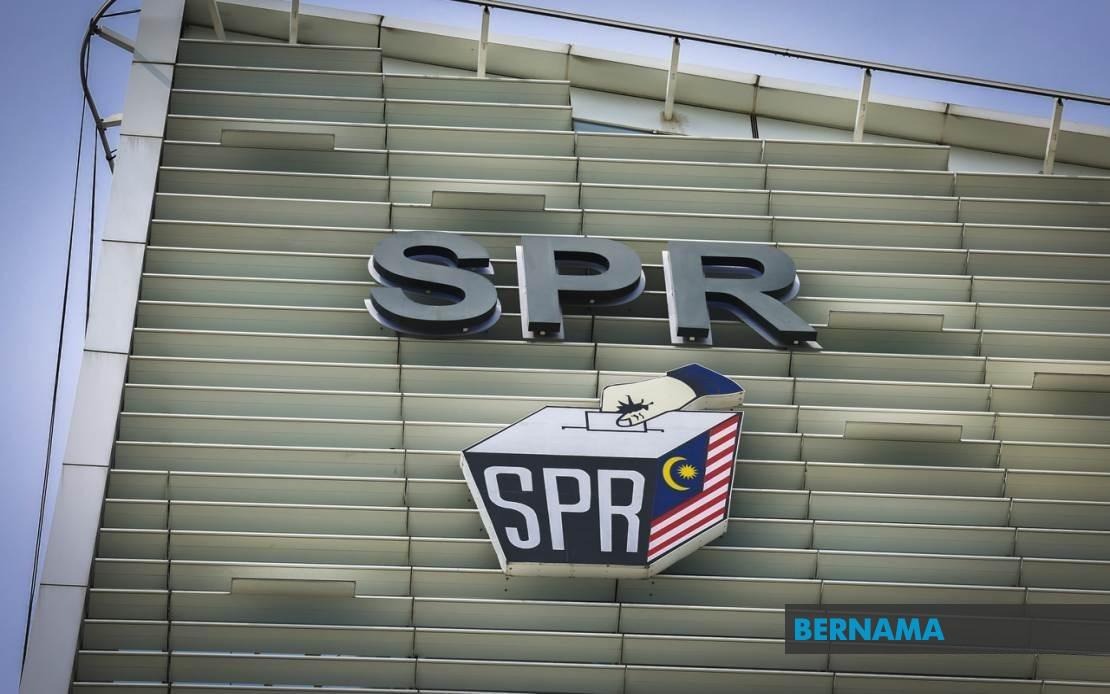
The Election Commission of Malaysia has agreed to conduct a comprehensive review of a proposal that would grant postal voting rights to auxiliary police officers stationed at the nation's critical infrastructure sites and strategic assets. Deputy Minister M. Kulasegaran, who holds responsibility for law and institutional reform within the Prime Minister's Department, confirmed the commitment during parliamentary proceedings on August 3rd, emphasising that the study would consider operational requirements, legal framework constraints, and the practical implementation of electoral procedures.
The push for expanded voting access originates from Senator Datuk Salehuddin Saidin, who highlighted the challenging circumstances faced by approximately 27,000 auxiliary police personnel deployed across multiple government ministries, public agencies, government-linked corporations, transport operators, airport and port authorities, energy and utility providers, financial institutions, and petroleum sector organisations. These officers maintain vigilance over installations deemed essential to national security and economic function, yet their current employment status excludes them from existing postal and early voting privileges afforded to other uniformed security personnel. Salehuddin's intervention underscores a growing recognition within Malaysia's legislative apparatus that electoral access for security personnel requires more nuanced policy solutions.
The existing postal voting framework categorises eligible voters into three distinct groupings. The first category, designated 1A, encompasses Election Commission staff, polling officials, armed forces and police personnel engaged in election duties, and accredited media representatives on assignment. The second category, identified as 1B, covers Malaysian citizens living permanently or temporarily outside the country. The third category, known as 1C, includes employees from selected government departments mandated to perform essential work on polling day. Critically, auxiliary police officers presently occupy no position within this structured system, creating what advocates characterise as an unequal treatment problem within Malaysia's security apparatus.
Salehuddin's motion articulates a practical concern that resonates beyond electoral mechanics. Since auxiliary police units cannot simultaneously grant leave to all personnel without compromising security operations at facilities ranging from major transportation hubs to power generation plants, officers risk disenfranchisement during national elections. The senator noted that permitting wholesale absence during polling day would create dangerous gaps in security coverage at locations vital to public safety and economic continuity. This dynamic distinguishes auxiliary police from many other voter categories, who either perform election-related duties themselves or operate from locations where polling day staffing adjustments prove feasible.
Kulasegaran's response acknowledges the legitimate operational tension whilst maintaining appropriate caution regarding electoral regulation modifications. The deputy minister indicated that the Election Commission recognises the merit of the proposal whilst emphasising that any extension of postal voting privileges must align with existing legal provisions governing voter categories. His framing suggests that expansion would likely require amendments to the Election (Registration of Electors) Regulations 1981, a formal legislative process that would involve consultation across multiple agencies including the Home Ministry and relevant departmental stakeholders. This procedural requirement reflects Malaysia's constitutional commitment to maintaining strict regulatory oversight of electoral administration.
The Election Commission has simultaneously encouraged auxiliary police officers and other voters to explore alternative voting solutions within existing frameworks. Specifically, the commission promotes the transfer of voting constituencies to one's current place of residence, a mechanism designed to facilitate participation without requiring regulatory overhaul. This dual-track approach—pursuing long-term reform whilst advocating for existing solutions—reveals the commission's pragmatic balance between electoral flexibility and administrative stability. For officers deployed far from their registered constituencies, however, such transfers may themselves prove complicated or impractical.
The subsidiary motion tabled by Senator Datuk Phoong Jin Zhe regarding cross-border e-commerce pricing demonstrates Parliament's broader concern with electoral access alongside economic fairness. Both interventions reflect a chamber increasingly attentive to specific sectoral grievances, whether security personnel or retail businesses. The auxiliary police voting proposal particularly illustrates how security force modernisation and deployment patterns, driven by infrastructure protection needs, may outpace electoral regulation design. As Malaysia expands critical infrastructure oversight, particularly in energy, financial services, and transportation sectors relying on auxiliary security arrangements, voting access for these personnel becomes an administrative question with growing practical significance.
From a governance perspective, the auxiliary police voting question exposes tensions inherent in modern election administration. Security imperatives demand continuous facility protection, yet democratic principles mandate universal voting access. Most mature democracies have resolved similar dilemmas through sector-specific postal voting provisions, recognising that election day accommodations for essential workers—including security personnel—strengthen rather than undermine electoral integrity. Malaysia's cautious procedural response suggests policymakers recognise this principle whilst requiring formal study to identify implementation mechanisms compatible with existing regulations.
The timing and framing of Salehuddin's motion within the Dewan Negara's relatively new Adjournment Speech procedure, introduced in 2022, indicates that Malaysia's upper chamber increasingly functions as a forum for addressing administrative governance matters beyond traditional legislative business. Dewan Negara president Datuk Awang Bemee Awang Ali Basah noted that this represented the first government administrative matter debated under the new Standing Order 16 provisions. The auxiliary police voting question thus marks an evolution in parliamentary procedure, with senators raising structural public administration issues rather than confining themselves to legislative amendments. This institutional development suggests Malaysia's parliamentary system is actively recalibrating how different chambers address policy implementation questions.
For Malaysian voters and security sector workers, the outcome of the Election Commission's study carries implications extending beyond individual voting convenience. A successful reform would acknowledge auxiliary police contributions to national security whilst affirming that electoral participation remains feasible even for personnel stationed at essential facilities. Conversely, regulatory caution might reflect genuine complexity in synchronising security protocols with voting administration, particularly at sensitive locations where access control and identity verification intersect with electoral procedures. The commission's review process will likely examine international precedents, domestic operational constraints, and technical feasibility of postal voting coordination across dispersed auxiliary police units serving diverse employers and locations.

