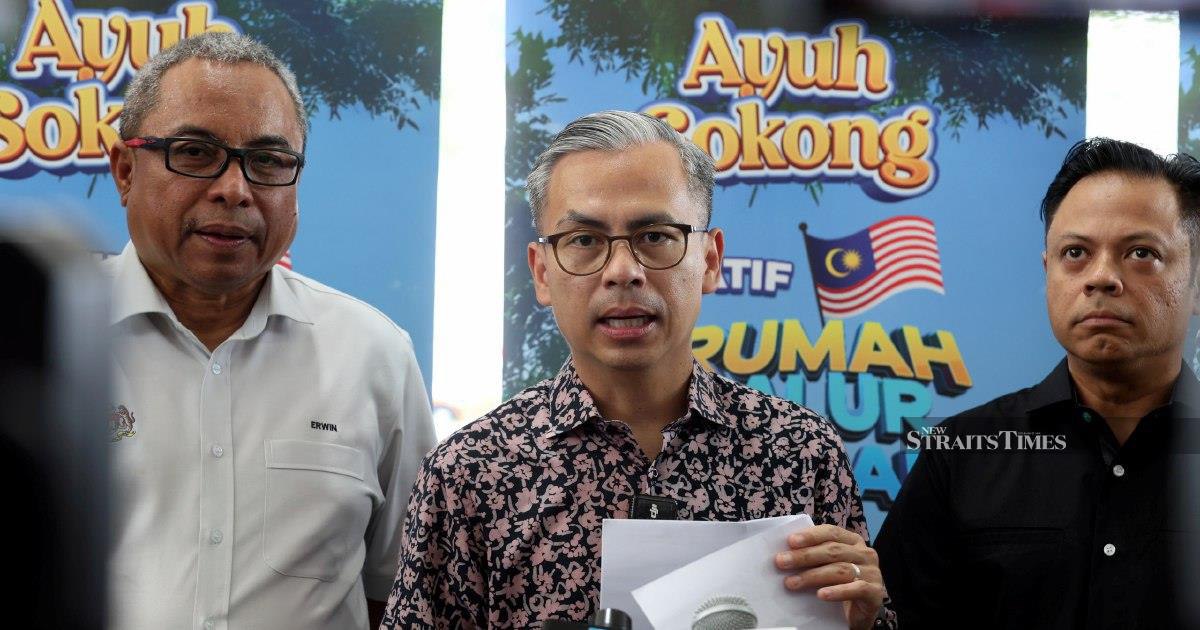
The Election Commission has been tasked with delivering a comprehensive updated assessment of Sarawak's proposal to establish 17 additional state assembly seats, following directions from Prime Minister Datuk Seri Anwar Ibrahim. Government spokesman Datuk Seri Fahmi Fadzil confirmed the instruction, signalling that the administration intends to conduct a fresh and thorough examination of the legislative expansion initiative.
Sarawak's application to increase its parliamentary representation represents one of the most significant boundary and seat restructuring exercises in the state's recent political history. The proposed expansion would substantially alter the composition of the state assembly, with implications extending far beyond Sarawak itself. Such an expansion typically involves complex considerations regarding demographic distribution, electoral equity, and administrative boundaries that require meticulous analysis by electoral authorities.
The Election Commission's role in scrutinising this proposal is crucial, as the organisation functions as Malaysia's independent arbiter on electoral matters. The commission must evaluate whether the expansion aligns with established constitutional principles and electoral frameworks governing how parliamentary and state assembly seats are apportioned across Malaysia's constituent states. An updated report would suggest that initial assessments may have required refinement or that circumstances have evolved since earlier evaluations.
For Sarawak specifically, the addition of 17 seats would represent a meaningful shift in legislative representation. The state has historically negotiated its constitutional position regarding the allocation of parliamentary and state assembly constituencies as a key component of the Malaysia Agreement. Any expansion must therefore respect Sarawak's unique constitutional standing and the principles governing inter-state equity in representation.
The timing of this directive carries political significance in the broader context of Malaysian federalism. Sarawak, along with Sabah, maintains distinct constitutional arrangements that acknowledge their particular circumstances as founding members of the Malaysian federation. Expanding legislative representation requires balancing Sarawak's developmental needs and population distribution with principles of fairness across the federation.
The updated report will likely examine several technical dimensions. Electoral distribution patterns, population density variations across Sarawak's divisions, and administrative practicality all factor into determining whether 17 seats represents an appropriate expansion quantum. The commission must also consider whether proposed constituency boundaries reflect genuine community boundaries and economic relationships within each area.
From a Malaysian standpoint, Sarawak's expansion proposal affects the overall configuration of parliamentary seats nationally. Any increase in state assembly representation may eventually prompt discussions about corresponding adjustments to federal constituency allocations, creating cascading implications for electoral mathematics across the nation. This interconnectedness explains why even state-level boundary matters warrant careful examination by federal electoral authorities.
The fresh directive from the Prime Minister suggests that initial analysis of Sarawak's proposal may have lacked sufficient completeness for definitive decision-making. Government institutions sometimes commission updated assessments when emerging data, revised demographic information, or changed circumstances warrant reconsideration of previous findings. The instruction to prepare an updated report indicates that stakeholders sought greater clarity before proceeding.
For governance observers across Southeast Asia, Malaysia's approach to managing electoral expansion within a federal framework offers instructive lessons. The devolution of considerable autonomy to states like Sarawak creates space for localised determination of representation structures, yet simultaneously requires coordination with federal electoral principles. The Election Commission's independent role in assessing expansion proposals reflects institutional mechanisms designed to ensure that political interests do not overwhelm electoral fairness.
The implications for Sarawak's constituencies extend beyond mere numbers. Additional seats potentially enable more granular representation by reducing average constituency populations, theoretically allowing elected representatives greater capacity to serve constituents. However, the expansion also requires establishing viable constituency boundaries that reflect geographic and demographic realities across Sarawak's diverse landscape, encompassing urban centres, rural areas, and interior regions with varying population densities.
The updated report will presumably address previous concerns or gaps that stakeholders identified. Whether those concerned gerrymandering risks, insufficient representation in high-growth areas, or administrative feasibility, the Election Commission's renewed analysis should provide greater confidence that any expansion serves legitimate representation objectives rather than partisan interests.
As Sarawak anticipates this updated assessment, the state's political leadership and civil society remain focused on ensuring that the expansion process serves constituents' interests. The Election Commission's thoroughness in evaluating the proposal reflects Malaysia's commitment to maintaining electoral integrity even when accommodating reasonable requests for representation adjustment from constituent states.
The outcome of this process will likely influence how Malaysia approaches similar boundary and representation questions across other states. Sarawak's expansion proposal thus transcends parochial interests, establishing potential precedents for how federal structures accommodate growth and change while maintaining electoral principles that underpin democratic governance across the federation.

