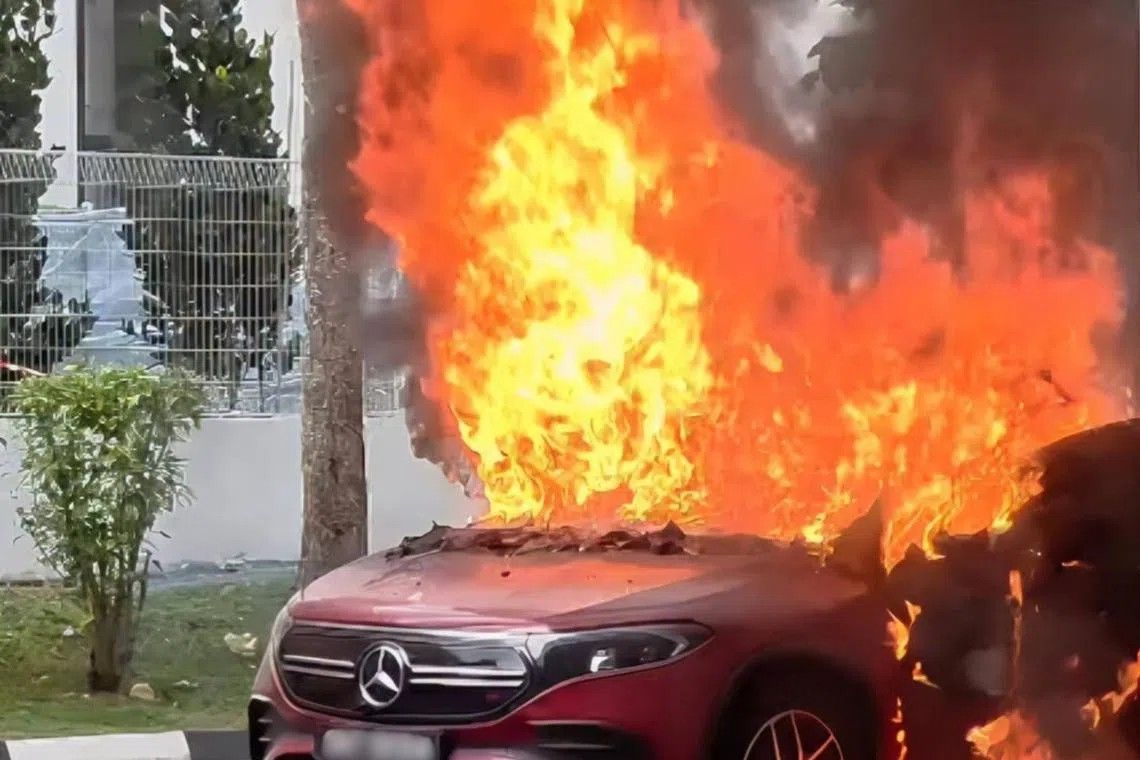
A vehicle battery fire at Block 548 Woodlands Drive 44 has renewed focus on electric vehicle safety in Singapore after flames engulfed the interior of a car parked near a multi-storey carpark entrance in the early morning of July 21. The Singapore Civil Defence Force responded to an alert at approximately 10.10am and contained the blaze within minutes using a single water jet, leaving no casualties but prompting investigators to examine what triggered the sudden ignition.
The incident unfolded as the vehicle's owner was exiting the carpark when she detected an acrid burning odour emanating from the engine compartment. Upon stopping the car, she noticed thick smoke billowing from beneath the dashboard—a concerning sign that proved prophetic. She identified the source as originating in the confined space between the driver's seat and front passenger position, directly above where the vehicle's lithium battery pack sits. This location is critical to understanding the danger posed by battery failures, as it places the power cell in close proximity to the vehicle's cabin and occupants.
The driver's account, shared with Shin Min Daily News, paints a vivid picture of escalating panic as the situation deteriorated beyond immediate control. After pulling over safely, she appealed to security personnel stationed near the carpark for assistance. The guards made a valiant attempt to extinguish the flames using portable fire extinguishers, a standard first-response measure at many public facilities. However, their efforts proved futile against the intensity of the battery fire, which burns far hotter and spreads more aggressively than conventional vehicle fires due to the chemical nature of lithium-ion cells.
Recognising that the fire was spreading uncontrollably and fearing potential explosion—a genuine risk when battery cells rupture—the driver and security personnel wisely evacuated the vicinity and summoned professional firefighting assistance. This decision likely prevented injuries and property damage to surrounding vehicles. The SCDF team arrived promptly and deployed what appears to be a proportionate response given the contained nature of the fire, extinguishing it with a single directed water stream rather than the larger-scale suppression sometimes required for battery-related incidents.
Photographic evidence from the aftermath reveals the catastrophic damage confined within the vehicle's cabin. The entire interior, from dashboard to seat framework, bore heavy charring consistent with intense thermal exposure. Dashboard components were visibly warped and deformed by extreme heat, whilst the structural supports underlying the seats lay exposed. The vehicle was ultimately removed from the scene by tow truck at approximately 12.15pm, marking the conclusion of an incident that lasted just over two hours from initial alert to recovery.
The SCDF has indicated that investigators are examining root causes, a process essential for understanding whether this fire resulted from manufacturing defect, battery degradation, mechanical malfunction, or external damage. Such inquiries carry implications beyond this single incident, as EV adoption accelerates across Southeast Asia and carpark facilities increasingly accommodate electric vehicles alongside conventional cars. The proximity of the battery to occupants and the intensity of lithium-ion fires present distinct challenges compared to petrol or diesel vehicle fires that emergency responders have managed for decades.
Singapore's HDB carpark network hosts hundreds of thousands of vehicles daily, and many residents and visitors now use electric or hybrid vehicles. This incident raises practical questions about carpark management procedures, adequate spacing for EV charging facilities, ventilation standards, and firefighting protocols specifically designed for battery-related emergencies. First responders like security guards may require specialised training in handling EV fires, as traditional extinguishing methods prove insufficient and can sometimes worsen battery fires by increasing oxygen flow or causing thermal runaway cascades.
The broader regional context matters significantly for Malaysia and other ASEAN nations pursuing aggressive electric vehicle adoption targets. Singapore's early experience with EV infrastructure challenges and emergency response scenarios provides valuable case studies. Malaysian authorities overseeing shopping mall carparks, residential complexes, and commercial facilities may benefit from examining how Singapore manages these incidents and what preventive measures prove most effective.
Whilst this particular incident resulted in no injuries—a fortunate outcome attributable to the driver's alertness and sensible decision-making—it underscores the need for continued refinement of safety systems. Battery management electronics, thermal monitoring, and emergency venting mechanisms represent areas where vehicle manufacturers and regulators must maintain focus. Additionally, public education campaigns should encourage EV owners to recognise warning signs such as unusual odours or smoke and establish safe procedures for carpark operators and emergency services.
The investigation's findings, once released, will likely inform future safety standards and operational guidelines across Singapore and potentially influence regional policies. As electric vehicles transition from novelty to mainstream transportation, societies must simultaneously develop the institutional knowledge, infrastructure design, and emergency preparedness necessary to manage them safely alongside millions of conventional vehicles in shared facilities. This Woodlands incident, though contained without injury, serves as a reminder that this transition period demands continuous vigilance and adaptation from manufacturers, authorities, and the driving public alike.

