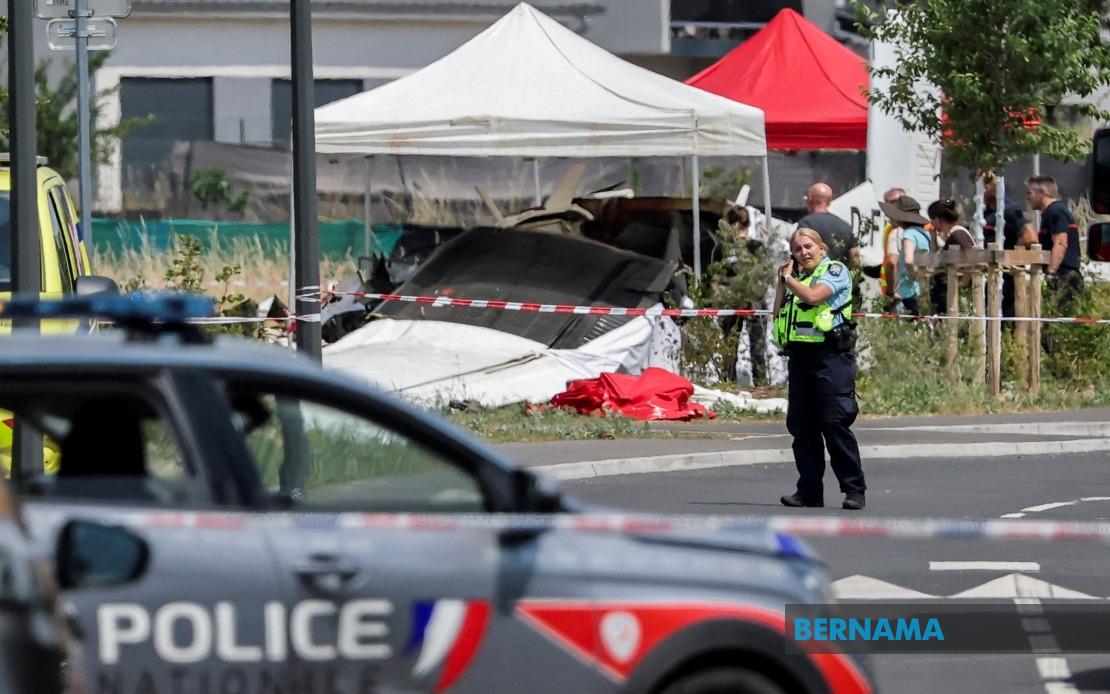
A civilian aircraft plummeted to earth near the eastern French city of Nancy on Sunday, resulting in the deaths of all eleven individuals aboard, according to statements from local authorities and regional media outlets. The accident represents a significant tragedy in France's aviation sector and has prompted an immediate response from senior government officials and emergency services across the Meurthe-et-Moselle region.
The aircraft departed from Nancy-Essey Airport and went down in the town of Tomblaine, located within the Meurthe-et-Moselle department, moments after leaving the runway. The timing of the crash—shortly following takeoff—suggests the aircraft encountered catastrophic difficulties during a critical phase of flight when recovery options are typically most limited. Emergency responders converged on the crash site as authorities worked to secure the area and begin investigating the circumstances surrounding the incident.
Among the deceased were the aircraft's pilot along with ten passengers who represented two distinct groups aboard the flight. The passenger manifest included a team of five skydiving instructors and another group of five individuals participating in a parachuting activity. The presence of these specialised personnel indicates the flight had been organised specifically to facilitate aerial recreational activities, a common practice in aviation across Europe.
Thierry Pechey, a prominent figure in the local healthcare community as head of the Meurthe-et-Moselle branch of the Order of Independent Nurses, provided additional context suggesting the victims included members of the nursing profession. According to Pechey's account to regional broadcaster BFMTV, the deceased nurses appeared to be participating in an initiation or team-building event that incorporated skydiving alongside the instructional staff. This detail suggests the flight represented a professional or social gathering rather than a routine commercial service.
The crash site in Tomblaine became the focal point of an extensive emergency and investigative operation. Meurthe-et-Moselle Prefect Yves Seguy immediately activated the departmental operational centre, a coordinating body designed to mobilise and direct the full spectrum of emergency services during major incidents. This activation protocol ensures real-time monitoring and coordination among firefighting units, medical responders, law enforcement, and other agencies involved in both immediate rescue operations and subsequent investigation efforts.
French Interior Minister Laurent Nunez announced his intention to visit the crash site on the day of the incident, underscoring the gravity with which the national government was treating the aviation disaster. The minister's planned presence at Tomblaine reflected the severity of the event and the government's commitment to overseeing the official response and subsequent inquiry into what caused the aircraft to fail so catastrophically.
Local authorities issued explicit guidance to the public, urging residents to maintain distance from the crash vicinity, particularly around Rue Salvador Allende in Tomblaine. This advisory was designed to establish a secure perimeter that would allow emergency responders and law enforcement personnel unrestricted access to the wreckage and surrounding areas without obstruction from curious onlookers or press activity. Maintaining such cordons is essential both for the safety of the general population and for the integrity of crash site investigations.
For Malaysian and Southeast Asian readers, this incident underscores the ongoing risks associated with recreational aviation activities, even when conducted by licensed operators in developed nations with robust safety regulations. While aviation remains statistically safe, accidents involving small aircraft used for specialised purposes such as skydiving demonstrate that comprehensive safety protocols and equipment maintenance remain essential across all sectors of the aviation industry. The involvement of healthcare professionals in a team-building exercise that culminated in tragedy also raises questions about risk assessment and duty of care in professional settings.
The investigation into the crash will likely examine multiple factors including mechanical failure, pilot error, weather conditions, and maintenance records. French aviation authorities will coordinate with international bodies to determine the root cause, with findings potentially influencing safety practices across European skydiving operations and recreational aviation more broadly. For families of the victims and colleagues in the nursing and skydiving communities, the coming weeks will bring the difficult process of grief alongside efforts to understand how such a complete loss of life could occur during what was intended as a celebratory professional gathering.

