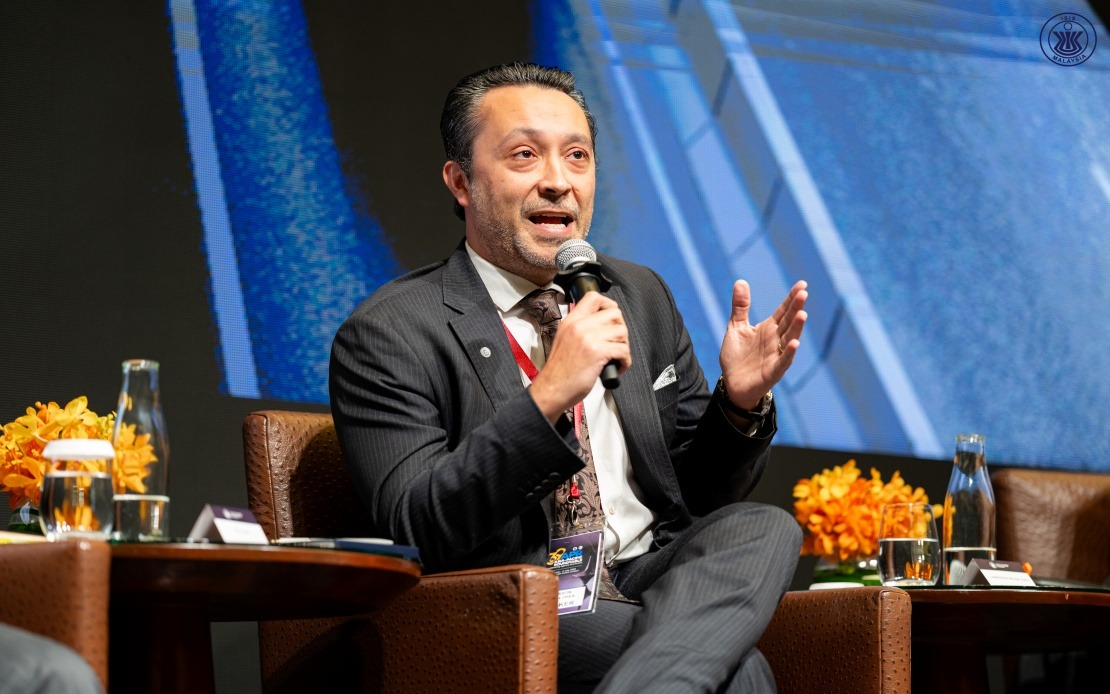
As the international system undergoes fundamental transformation, emerging middle powers from the Global South—including Malaysia, Brazil, India, Indonesia, Turkiye, and Mexico—face a pivotal choice: follow the blueprints of established powers or forge their own path according to their distinct priorities and capabilities. This distinction became a central theme at the 39th Asia-Pacific Roundtable in Kuala Lumpur, where scholars and former policymakers argued that lumping emerging and established middle powers into a single category obscures crucial political and strategic differences that should shape how these nations navigate an increasingly uncertain world.
Dr Dawisson Belém-Lopes, Professor of International and Comparative Politics at Federal University of Minas Gerais in Brazil, emphasised that emerging and established middle powers inhabit fundamentally different political realities and operate from divergent historical vantage points. Speaking during the roundtable's session on "Rogue World Order: Power, Principles, and Pragmatism," he argued that treating these groups monolithically misses the essential point that countries like Malaysia and Brazil have never fully embraced the post-1945 liberal international order that Western powers constructed and continue to champion. For decades, these nations have openly advocated for comprehensive reforms to global institutions and power dynamics, reflecting their experience of being marginalised in systems designed without their input or consent.
The timing of this assertion carries particular weight. Emerging middle powers now possess resources and institutional platforms that were unavailable to their predecessors, yet they often face pressure to align with strategies developed by more established regional and global actors. This structural change in capacity has not, however, translated into commensurate influence over global rules and norms. The countries of the Global South have become increasingly aware that the resources available to them—whether through new development banks, alternative trade arrangements, or strengthened South-South cooperation mechanisms—create space for genuine strategic autonomy if these nations choose to exercise it decisively.
Peter Varghese, Chancellor of the University of Queensland and former secretary of Australia's Department of Foreign Affairs and Trade, painted a picture of a world in acute transition. He characterised the current moment as suspended between international orders, with the American-led post-war system gradually disintegrating under pressures that extend far beyond the preferences of any single administration. The erosion stems instead from long-term structural forces: China's remarkable economic and military ascent, the shift toward a multipolar distribution of power, the declining relevance of Western-centred consensus on economic management, and the resurgence of identity-based politics that cuts across traditional geopolitical alignments. This decomposition creates both danger and opportunity for middle powers, yet Varghese cautioned that simply possessing agency—the capacity to act independently—remains insufficient for constructing a new stable international architecture.
Varghese's counsel to prioritise regional and cross-regional cooperation reflects a pragmatic assessment that any new multilateral framework will require considerable time to develop. Rather than wait for a comprehensive global settlement that may never materialise, countries should invest in building durable cooperative structures at the regional level and among like-minded partners across regions. For Malaysia and other Southeast Asian nations, this suggests strengthening institutions like ASEAN while simultaneously deepening ties with major powers willing to respect the region's centrality and autonomy. The approach acknowledges that middle powers cannot single-handedly rewrite global rules, but they can shape outcomes in their immediate strategic neighbourhoods and through selective partnerships.
Dr Ken Jimbo, Professor of International Relations at Keio University in Japan, offered a regional perspective that underscores Asia's continued centrality to any reconfigured global order. Despite shifts in American foreign policy direction, the United States retains structural incentives to maintain partnerships across the Asia-Pacific region to advance its strategic aims. Even under an "America First" doctrine that emphasises national interest above institutional commitments, Washington will require cooperative relationships with regional allies and partners. This creates negotiating room for countries like Japan, which depends fundamentally on a rules-based international order for both security and economic wellbeing. The implication for other Asian nations, particularly those in Southeast Asia, is that American power and influence will not simply evaporate from the region—rather, it will be recalibrated in ways that may create opportunities for middle powers to extract concessions and shape the terms of regional engagement.
The Institute of Strategic and International Studies Malaysia, which organised the two-day roundtable under the theme "Accelerating Agency and Action," convened these discussions at a moment of genuine flux in international relations. The gathering brought together academics, former government officials, and analysts to grapple with questions that directly affect how Malaysia and the broader region navigate an era of competing great powers, shifting alliances, and contested rules. The emphasis on "agency"—the capacity and willingness of nations to shape their own futures—reflects recognition that middle powers need not be passive recipients of international arrangements dictated by others.
For Malaysia specifically, the implications are substantial. As a country with significant economic interests, strategic location, and respected voice in regional affairs, Malaysia possesses genuine capacity to advance its interests through independent strategic choice. This might include strengthening relationships with China while maintaining security ties to the United States, deepening South-South cooperation through forums like BRICS, and championing ASEAN's collective voice in regional disputes. Rather than adopting wholesale the approaches of either established Western middle powers or established Asian powers, Malaysia can articulate positions grounded in its own development priorities, security requirements, and regional stability needs.
The broader message from the roundtable is that the Global South collectively occupies a stronger bargaining position than it has enjoyed in decades, yet this advantage will dissipate unless these nations demonstrate unity of purpose and willingness to pursue independent courses. The old post-war order, with its concentration of power in Western hands and its insistence on liberal democratic and market principles as universal goods, has lost much of its capacity to compel adherence through legitimacy alone. Yet the new order remains undefined. In this interregnum, emerging middle powers must resist the temptation to simply substitute one hegemonic framework for another, whether that be centred on China, Russia, or any other power. Instead, they should use the current flux as an opportunity to build institutions and partnerships that reflect their values, priorities, and vision of a more equitable international system.

