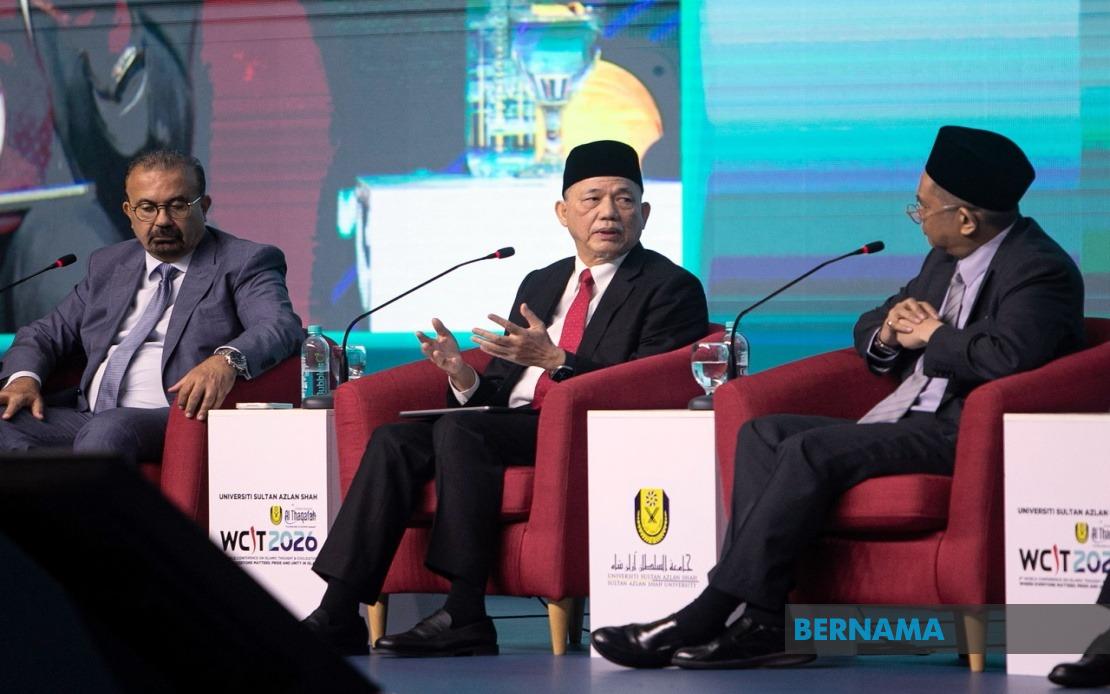
The boundaries separating energy security from maritime stability have become increasingly blurred in an era of volatile international relations, according to Deputy Prime Minister Datuk Seri Fadillah Yusof. Speaking at the 8th World Conference on Islamic Thought and Civilisation in Ipoh on July 21, Fadillah, who simultaneously holds the portfolio of Energy Transition and Water Transformation Minister, drew attention to how recent confrontations between major powers—particularly escalating tensions between the United States and Iran—demonstrate the profound interconnectedness of these once-compartmentalised security concerns.
The implications of this convergence extend far beyond the realm of international relations specialists and energy traders. Fadillah underscored that distant geopolitical crises now cascade through global supply chains with remarkable speed, ultimately reaching the wallets and utility bills of ordinary households. When tensions flare in faraway regions, the consequences manifest in electricity tariffs, retail fuel prices, shipping costs, and the availability of essential goods across shelves in Malaysian supermarkets. This transmission mechanism—from political crisis to household impact—represents a fundamental shift in how modern economies experience international instability.
The Strait of Hormuz has emerged as a particular flashpoint in this interconnected system. Fadillah identified the strategic waterway as a critical juncture where energy supplies and international commerce converge, making it vulnerable to disruption. The recent developments affecting this vital corridor have rippled outward, impacting not merely Malaysia but the entire apparatus of global trade and production. The domino effect operates across multiple dimensions simultaneously: crude oil and liquefied natural gas flows diminish, international shipping routes become hazardous, and the confidence that underpins global commerce begins to erode.
Beyond the immediate shock to energy markets, the secondary consequences deserve careful examination. Insurance premiums for vessels navigating troubled waters escalate sharply, embedding heightened risk premiums throughout the logistics chain. Energy costs climb not only at the wholesale level but filter downward through every link in the supply network. These cascading expenses ultimately burden importers, manufacturers, retailers, and consumers alike. What begins as a geopolitical incident metamorphoses into measurable economic pain felt across multiple sectors and income levels. For a trade-dependent economy like Malaysia, such developments represent concrete threats to competitiveness and cost-of-living stability.
Malaysia's own geographic position amplifies the relevance of these observations. The country straddles the Strait of Melaka, one of the world's most crucial maritime passages, through which trillions of dollars in commerce flows annually. The strategic significance of this location means that any disruption to regional maritime stability directly threatens Malaysian prosperity. Unlike landlocked nations that might observe international shipping disruptions with detachment, Malaysia confronts the reality that its own shipping lanes, port operations, and transshipment businesses face immediate exposure to regional volatility. The government's interests in maintaining freedom of navigation and stable passage are not abstract diplomatic concerns but concrete economic imperatives.
Fadillah's statement reflects Malaysia's deliberate approach to navigating these treacherous international waters. Rather than adopting confrontational stances or aligning exclusively with particular power blocs, the government has opted for a measured diplomatic posture grounded in calm, responsibility, and dialogue. This orientation stems from Malaysia's century-long reliance on open, rules-based international trading systems that have historically enabled its prosperity. Any disruption to the liberal international order that permits free trade carries disproportionate consequences for small-to-medium economies lacking the self-sufficiency or market power of larger nations.
The principle of friendship toward all nations, which Fadillah articulated, represents more than rhetorical positioning. It encapsulates a recognition that Malaysia's security and prosperity depend fundamentally on maintaining stable relationships with multiple global actors rather than betting its future on any single geopolitical coalition. This non-aligned instinct has deep roots in Malaysian diplomatic tradition and reflects pragmatic self-interest: neutrality in great-power conflicts preserves maximum flexibility and reduces vulnerability to external pressures.
The contemporary challenge, however, extends beyond traditional diplomatic maneuvering. When energy markets and maritime routes become weaponised or disrupted by geopolitical actors, the insulation that diplomacy once provided has become increasingly porous. Malaysia cannot simply remain neutral if critical shipping lanes serving its ports face interference or if energy prices spike due to distant conflicts. The interconnected nature of modern supply chains means that geographic distance offers limited protection against transmitted shocks.
For Malaysian policymakers and business leaders, the implication is clear: energy diversification and supply-chain resilience have evolved from efficiency concerns into strategic necessities. Over-dependence on hydrocarbon supplies from any single region, or reliance on traditional maritime routes without alternative options, now carries heightened geopolitical risk. The government's emphasis on energy transition and water transformation, which Fadillah's ministerial role represents, appears increasingly positioned as not merely an environmental imperative but a security strategy designed to reduce external vulnerabilities.
The WCIT platform proved an apt venue for articulating these interconnections, as the conference theme of "Everyone Matters" resonates with the universality of supply-chain exposure. Geopolitical crises in the Middle East or elsewhere do not remain isolated events; they matter to Malaysian consumers, manufacturers, and traders through mechanisms that operate with mathematical precision across the global economy. Recognising this interconnection represents the prerequisite for developing policies that can navigate the increasingly complex terrain where energy security, maritime stability, and national prosperity converge.

