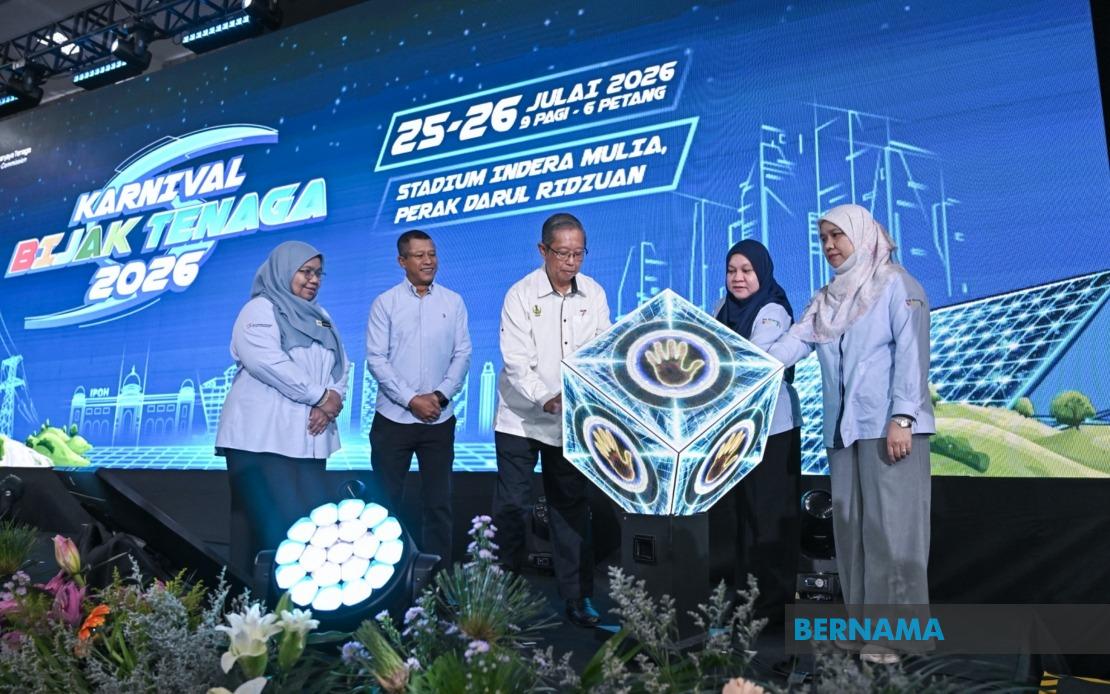
The Energy Commission marked a significant milestone in its community outreach efforts by launching the Energy Smart Carnival 2026 at Stadium Indera Mulia in Ipoh on July 26. Held across two days, the event represented the regulator's concerted push to deepen public understanding of energy sustainability and the nation's evolving electricity and gas infrastructure. The carnival's success—drawing more than 10,000 visitors against an initial target of 5,000—demonstrated widespread public appetite for information about energy management and the country's transition toward cleaner power sources.
Energy Commission chairman Datuk Seri Asri Hamidon framed the carnival as a strategic platform for narrowing the gap between regulator and citizen. He emphasised that the event served multiple objectives simultaneously: familiarising the public with the Commission's regulatory mandate over electricity and piped gas sectors, showcasing recent industry developments, and demystifying the agency's core functions. By creating a family-friendly environment focused on education rather than enforcement, the Energy Commission sought to reposition itself in public perception as an accessible institution invested in the communities it serves.
The carnival's programming deliberately addressed three interconnected themes central to Malaysia's energy future. Educational components concentrated on practical household measures for reducing electricity consumption, helping visitors understand how behavioural change and informed purchasing decisions could yield measurable savings. Simultaneously, interactive demonstrations highlighted the significance of energy efficiency labelling systems—particularly the four and five-star Energy Efficiency Labels—enabling consumers to make appliance choices aligned with both environmental and financial interests. A third strand addressed safety protocols, with exhibits explaining ST-SIRIM Safety Labels and their role in protecting Malaysian households from electrical hazards.
The broader context for this initiative lies in Malaysia's commitment to energy transition. The carnival, timed to coincide with the Energy Commission's Silver Jubilee celebrations, functioned as a public-facing component of this strategic agenda. Rather than approaching energy transition purely through policy announcements or regulatory notices, the Commission chose to embed transition messaging within an accessible, celebratory framework. This approach recognises that sustainable energy uptake depends not merely on regulatory frameworks but on grassroots understanding and voluntary adoption of efficiency practices by consumers across the country.
Visitor demographics revealed encouraging geographic reach. While the carnival was anchored in Perak, attendees travelled from Kuala Lumpur, Johor Bahru, and other regions, suggesting that energy awareness messaging resonates across the nation's urban and semi-urban populations. This geographic diversity also validated the Energy Commission's announced expansion plans. According to Strategic Communications Section head Veliana Ruslan, the positive reception in Perak has prompted the Commission to replicate the carnival format across additional states beginning in 2027, potentially creating a recurring national engagement mechanism.
The presence of prominent state officials underscored political backing for the initiative. Perak Infrastructure, Energy, Water and Public Transport Committee chairman Datuk Seri Mohammad Nizar Jamaluddin's attendance signalled state government alignment with federal energy objectives. This intergovernmental coordination is operationally significant, as successful energy transitions require coordination across multiple administrative levels. Perak's participation also reflects the state's position as a significant energy producer and consumer, making it a logical location for inaugural outreach efforts.
From a regulatory perspective, the carnival exemplified modern approaches to public engagement by agencies tasked with oversight responsibilities. Rather than relying solely on compliance mechanisms and penalties, the Energy Commission invested in proactive education aimed at creating informed, willing participants in the transition process. This philosophy aligns with contemporary governance trends favouring co-regulation and stakeholder collaboration over purely top-down approaches. By demonstrating the Commission's role beyond rule enforcement—positioning it as educator and enabler—the carnival potentially strengthens the agency's social licence to operate.
For Malaysian consumers, the carnival's messaging on appliance selection and household efficiency carries immediate practical value. Electricity costs represent significant household expenses across Malaysian demographics, and information about efficiency standards enables consumers to balance purchase prices against long-term operational costs. The emphasis on safety labels addresses a frequently overlooked dimension of consumer choice, as electrical safety remains a public health concern in both residential and commercial settings. These practical takeaways distinguish the carnival from generic awareness campaigns, offering visitors concrete knowledge applicable to immediate purchasing and usage decisions.
The event's competitive elements—though not detailed in official communications—likely served pedagogical purposes by gamifying energy concepts for younger visitors. This multigenerational programming approach recognises that energy transition requires cultivating long-term awareness among children who will navigate energy choices across decades of rapidly evolving technology and climate imperatives. By introducing efficient practices and transition concepts during formative years, the Commission seeks to normalise sustainability considerations within decision-making frameworks.
Looking forward, the planned national expansion of the carnival concept establishes a potential template for ongoing public engagement on energy matters. As Malaysia accelerates renewable energy adoption and manages the complexities of grid transformation, maintaining public understanding and support becomes increasingly critical. The carnival model—combining entertainment, education, and regulatory transparency—offers a scalable approach to bridging the information gap between technical experts and general populations. Subsequent iterations across different states may be adapted to regional contexts, acknowledging that energy challenges and consumer priorities vary between heavily industrialised areas, agricultural regions, and rapid urbanisation zones.
The Energy Commission's investment in direct public communication also reflects recognition that energy transition involves multiple stakeholders with different interests and concerns. Businesses worry about operational costs; households focus on affordability and reliability; environmentally conscious citizens prioritise carbon reduction. By creating spaces where these diverse perspectives can encounter information about efficiency, safety, and transition simultaneously, the Commission positions itself as a neutral convener invested in outcomes serving multiple constituencies. This stakeholder-inclusive approach may prove essential for sustaining political and public support as Malaysia navigates the complex technical and economic dimensions of its energy future.

