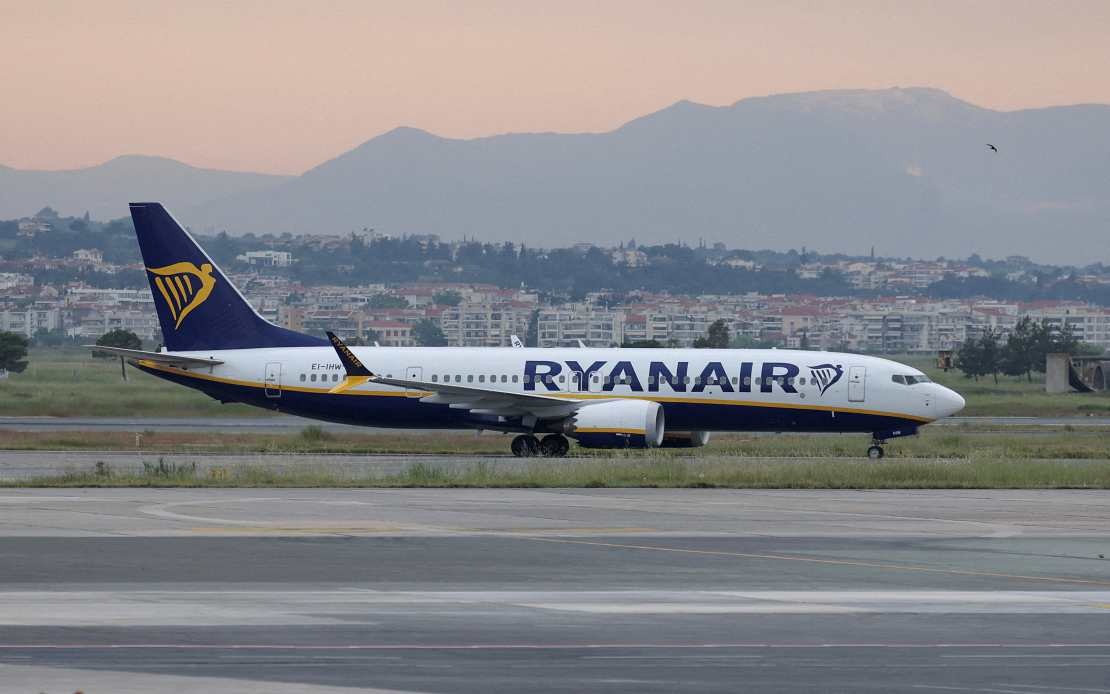
A Ryanair aircraft operating between Thessaloniki and Munich narrowly avoided tragedy when a malfunctioning engine sent fragments crashing through the fuselage, breaching the pressurised cabin and partially expelling a passenger through the destroyed window. The Malta Air flight, which belongs to the Ryanair group, suffered what investigators determined was a catastrophic fan blade failure during the climbing phase immediately after departing Thessaloniki International Airport in Greece last July. The incident underscores the critical vulnerability of modern aircraft to mechanical failure and highlights the life-saving interventions that crew and passengers can provide in emergency moments.
According to findings released by the US National Transportation Safety Board, the structural damage was extensive and precisely targeted. When the fan blade separated from the right engine, it fragmented into multiple pieces that penetrated not only the pressurised passenger cabin but also the aircraft's lower fuselage and structural elements below the wing. The investigation revealed two distinct breach points: the window at row 11 suffered a direct impact that removed it entirely from its frame, while additional damage occurred to the fuselage skin in the area behind the right wing-to-body fairing. This multi-point breach compromised the integrity of the cabin's pressurisation system, creating the aerodynamic forces that threatened the passenger's life.
The passenger seated at window position 11F bore the brunt of the catastrophic breach. Investigators found that this individual became partially lodged in the damaged window opening as the extreme pressure differential inside and outside the aircraft created powerful suction forces. Had the passenger been fully expelled into the atmosphere at that altitude, survival would have been impossible. The escape was prevented only through the immediate and determined action of other passengers who physically pulled their fellow traveller back into the cabin against the tremendous forces acting upon them. This collective intervention represents an extraordinary example of human cooperation under extreme duress and almost certainly saved a life that physics alone would have claimed.
The investigation also uncovered an unexpected contributing factor that raises fresh questions about airport safety protocols in European hubs. Examiners discovered bird remains, including feathers, embedded in multiple sections of the engine's internal structure. This evidence suggests that a bird strike may have precipitated or accelerated the fan blade failure, introducing foreign object damage into a system already under tremendous rotational stress. The presence of avian remains indicates that the aircraft may have ingested birds during the initial climb-out phase, a phenomenon known as bird ingestion, which remains a persistent hazard despite decades of efforts to mitigate it through improved airport wildlife management.
The recovery of the aircraft occurred without further incident, as pilots regained control and managed to return the damaged Ryanair flight safely back to Thessaloniki International Airport. This successful emergency return, executed despite the loss of pressurisation and structural compromise, reflects the skill and training of the flight crew and the aircraft's inherent structural redundancy. However, the scenario raises uncomfortable questions about what might have transpired if the breach had occurred at a different location or if the passenger had been physically unable to resist the suction forces that threatened to expel them from the aircraft.
The injured passenger received treatment for wounds sustained in the incident, though detailed information about the severity and long-term consequences of those injuries remains limited. The trauma of partial decompression at altitude, combined with impact injuries from the fractured window frame and surrounding debris, would have subjected the individual to multiple simultaneous life-threatening stresses. Recovery from such injuries typically involves not only physical rehabilitation but also addressing the profound psychological consequences of a near-death experience at 30,000 feet.
This incident belongs to a rare but historically significant category of aviation accidents that involve rapid decompression and cabin breaches. Earlier precedents include the famous 2018 Southwest Airlines incident in which a fan blade failure similarly resulted in a cabin window failure and rapid decompression, though in that case the outcome proved fatal for one passenger. The repetition of mechanically similar failures, separated by years and affecting different airlines, suggests that deeper systemic challenges may exist in engine maintenance protocols, blade material specifications, or inspection regimens across the industry.
For Malaysian and Southeast Asian aviation safety oversight authorities, this incident reinforces the importance of rigorous maintenance standards and independent investigation capabilities. The Ryanair incident demonstrates why robust certification requirements for aircraft engines, coupled with mandatory reporting of engine anomalies and blade condition assessments, remain critical safeguards. Regional airlines operating similar aircraft and engine types should review their own maintenance documentation to ensure that fan blade inspections meet or exceed standards established by manufacturer recommendations and international aviation authorities.
The involvement of the US National Transportation Safety Board, rather than European authorities, reflects international protocols governing accident investigations. When an aircraft registered in one jurisdiction involves components manufactured by a US company and occurs in international airspace, coordination between multiple national safety agencies becomes necessary. This multi-jurisdictional approach, while sometimes cumbersome, ensures that investigations incorporate expertise from the country where the aircraft is registered, where the incident occurs, and where the manufacturer is based—in this case, a coordination involving Malta, Greece, and the United States.
Beyond the immediate technical findings, this case illustrates the sometimes-invisible margin between catastrophe and survival in commercial aviation. The passengers who physically prevented their fellow traveller from being expelled into the atmosphere became unwitting heroes in an emergency that lasted only seconds. Their actions occur against a backdrop of extraordinary engineering that kept the aircraft intact and controllable despite massive structural damage. The combination of aircraft design philosophy emphasising redundancy, crew training, passenger awareness, and human courage transformed what could have been a mass casualty event into a survivable incident with a single injured passenger.
The broader implications for commercial aviation suggest that despite the rarity of such incidents, the consequences remain severe enough to warrant continuous improvement in engine design, material science, and maintenance protocols. Modern aviation has achieved statistical safety records that make flying safer than driving, yet individual incidents like the Ryanair window breach remind us that the systems carrying hundreds of millions of passengers annually operate at engineering margins that demand constant vigilance and incremental improvement.

