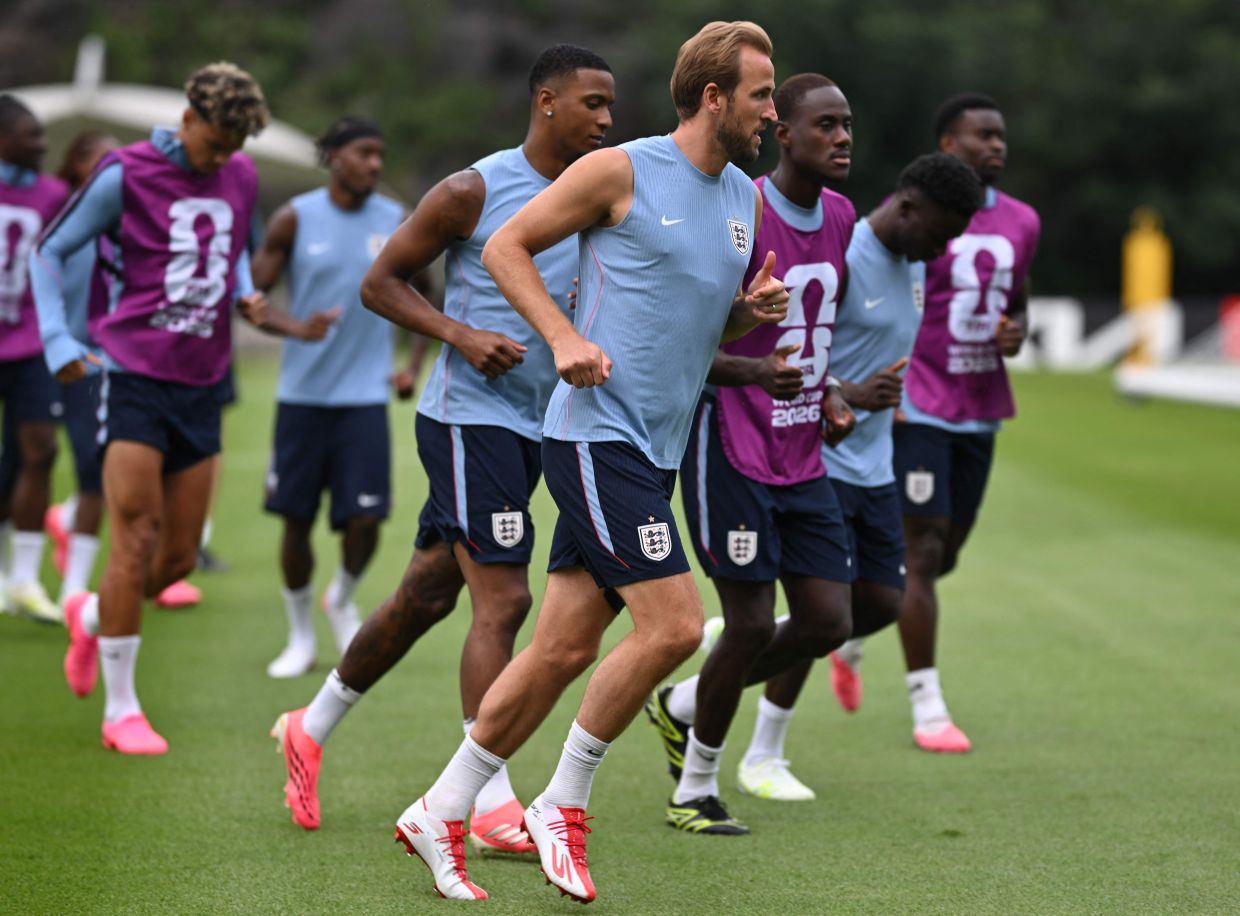
The Estadio Azteca in Mexico City will host one of the tournament's most compelling encounters on Sunday as England seek to overcome their hosts and advance to the quarter-finals of the World Cup. The fixture carries particular resonance for English supporters, marking the Three Lions' return to the iconic venue four decades after their contentious 1986 encounter with Argentina, when Diego Maradona's infamous 'Hand of God' goal eliminated them from the tournament. This time, England arrives as fourth-ranked side in the FIFA standings, but their pathway through the group phase raised considerable doubts about their ability to challenge for the title.
Thomas Tuchel's squad has managed only to stumble into the knockout round, requiring a dramatic late intervention from captain Harry Kane to secure a 2-1 victory over the Democratic Republic of Congo and keep their tournament alive. When England entered the competition, the expectation was straightforward: end a 60-year drought without winning a major international title. Yet the team has struggled to demonstrate the attacking prowess and defensive stability required to mount a genuine challenge, with particular vulnerability evident on the right flank where pace-oriented opponents have repeatedly found space. The concerns about England's defensive solidity will loom large in Mexico City, where they face an opponent that has proven far more convincing thus far.
Mexico have emerged as the tournament's most impressive home performers, compiling a perfect record of four victories without conceding a single goal on their own soil. Their advancement to the last 16 came courtesy of a commanding 2-0 dismissal of Ecuador, representing Mexico's first knockout-stage victory at a World Cup in four decades. The prospect of extending that sequence against England in front of a vociferous home crowd presents an opportunity that carries profound symbolic weight for Mexican football. Coach Javier Aguirre has acknowledged the magnitude of the challenge posed by England's roster of internationally recognised talent, yet has framed the encounter in refreshingly straightforward terms: victory would require his team to execute a near-perfect performance across all aspects of the match.
The physical environment presents a complicating factor that England cannot dismiss. The Estadio Azteca sits at an elevation of approximately 2,240 metres above sea level, and Tuchel has been candid about the disadvantage this creates for visiting teams arriving in the days immediately preceding the match. The England manager noted that physiological adaptation to altitude is impossible within such a compressed timeframe, though he also recognised the intangible qualities that define the venue—the emotional intensity, the historical resonance, and the undeniable theatre that surrounds football played at the Azteca. Weather considerations have also demanded attention, with FIFA initially deliberating whether to shift the 6pm local start time (4am Monday Malaysian time) to circumvent predicted thunderstorms, ultimately deciding to maintain the scheduled kick-off despite forecasts indicating substantial rainfall.
The intensity of Sunday's encounter will be matched in New Jersey, where Norway's Erling Haaland presents a genuine threat to Brazil's World Cup aspirations. The Manchester City striker has delivered an extraordinary tournament performance, accumulating five goals across three appearances and establishing himself as one of the competition's standout individual talents. Haaland will confront a Brazilian defensive partnership intimately familiar with his methods and movement patterns—Gabriel Magalhaes faces him regularly in Premier League competition for Arsenal, while Marquinhos has encountered him through his Paris Saint-Germain commitments. Brazil coach Carlo Ancelotti projected confidence regarding his defenders' capacity to manage Haaland's threat, suggesting that experience alone would provide sufficient foundation for effective marking.
Norway approach their fixture against Brazil as significant underdogs, yet coach Stale Solbakken has attempted to recalibrate expectations by emphasising that the five-time world champions no longer command the overwhelming superiority they possessed in previous eras. His perspective reflects a broader reality about modern international football: the gap between established powerhouses and emerging challengers has narrowed considerably, and tactical discipline combined with clinical finishing can disrupt even the most formidable opponents. Solbakken's instruction to his players to focus on executing their system rather than being overawed by occasion reflects pragmatic coaching wisdom that acknowledges the psychological dimensions of knockout football.
These simultaneous matches represent the decisive moment where tournament narratives crystallise. France and Morocco advanced on the previous day, claiming the first two quarter-final spots and setting the stage for this double-header to determine the remaining participants in the final eight. The stakes are unambiguous: victory secures progression to Miami for the winners of the England-Mexico encounter, where they will face either Brazil or Norway in the subsequent knockout stage. For England, overcoming Mexico at the Azteca would represent the kind of challenging away victory that characterises genuine tournament contenders, transforming their campaign from one marked by narrow escapes into something more substantial.
Mexico's domestic advantage provides tangible benefits beyond mere atmospheric support. The altitude factor, the familiarity of their surroundings, and the psychological boost of undefeated performances on home turf all accumulate in Aguirre's favour. Yet England's technical quality and depth of talent in world-class positions cannot be underestimated, regardless of their indifferent group-stage showings. Tuchel has demonstrated throughout his managerial career an ability to refine tactical approaches under pressure, and the two-day preparation window may prove sufficient for implementing defensive adjustments that shore up their problematic right side. The match may ultimately be determined by which team executes their gameplan with greater precision during moments of intensity and decision-making.
For Malaysian and regional audiences, these encounters hold broader significance within the wider Asian football context. Norway's performance, should they progress, would represent a non-traditional power penetrating the World Cup's final stages, challenging the established hierarchy that has typically privileged European and South American nations. Haaland's contributions have attracted particular attention given his status as a future generational talent, and his performances in Mexico have captured global imagination in ways that elevate the prestige of the tournament itself. Conversely, Mexico's advancement would affirm the sophistication and tactical evolution within CONCACAF football, potentially influencing regional approaches to international competition across Central and North America.
The weather forecasts for both matches introduce an element of unpredictability that could reshape tactical approaches and physical capabilities. The predicted thunderstorms in Mexico City and New Jersey may create playing conditions favouring certain styles over others—constant, heavy rain typically benefits teams organised in defensive structure and clinical on the counter-attack, while dry conditions reward sustained possession and intricate passing sequences. These meteorological considerations add another layer to already complex strategic calculations. The 21-degree Celsius temperature forecast for Mexico City represents significantly cooler conditions than the near-record 38 degrees experienced when France defeated Paraguay on Saturday, suggesting the Azteca match will be played in relatively comfortable climatic circumstances.
The outcomes of these matches will reshape the tournament's remaining trajectory profoundly. Should Norway eliminate Brazil, the quarter-final draw would transform dramatically, with Haaland potentially entering European football's elite club as a player who has reached the final stages of international football's grandest tournament. Conversely, Brazil's expected progression would reaffirm their status as tournament favourites, though the competitive nature of their encounter with Norway would test the narrative of their invulnerability. England's advancement would vindicate Tuchel's appointment and suggest their group-stage struggles reflected tactical adjustment rather than fundamental limitations, while Mexico's victory would represent one of the tournament's genuinely remarkable outcomes, achieving what few home nations have managed—a genuine quarter-final run from the Azteca.

