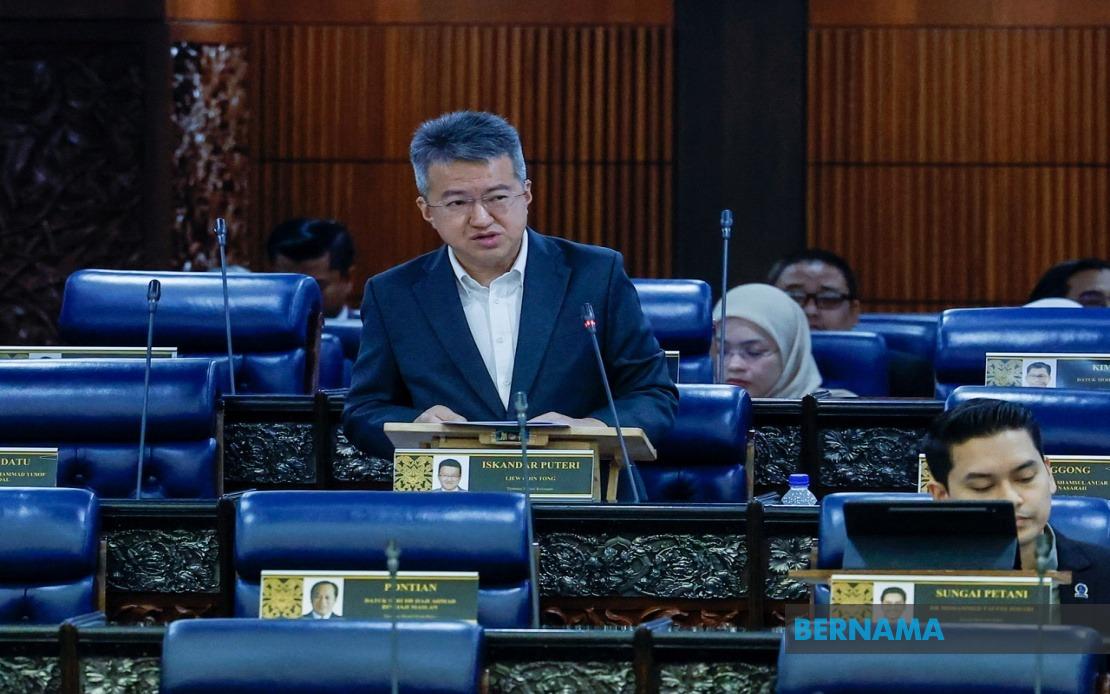
Malaysia's Employees Provident Fund (EPF) has successfully transferred RM46.3 million in retirement savings through its i-Legasi initiative to 86 beneficiaries across 63 approved applications since the scheme's launch in February 2025. Deputy Finance Minister Liew Chin Tong disclosed these figures during parliamentary questioning, highlighting how the programme is functioning as a targeted tool to strengthen household savings among older Malaysians and their families.
The i-Legasi initiative permits EPF members aged 55 and above who have accumulated retirement savings beyond the Adequate Savings threshold of RM650,000 to redirect portions of their nest eggs to eligible immediate family members' EPF accounts. This flexible mechanism addresses a pressing national challenge: ensuring sufficient retirement income as Malaysia's demographic profile shifts dramatically towards an ageing population by 2030. The scheme effectively enables wealth transfers within families whilst maintaining the original savings framework, allowing members to benefit their relatives without losing the protective structure of the pension system.
Liew's comments emerged during parliamentary debate on broader retirement security concerns raised by Datuk Seri Aminuddin Harun, who highlighted the squeeze on household budgets caused by rising living costs alongside Malaysia's demographic transition. The deputy minister's response demonstrated government acknowledgment that existing retirement adequacy remains insufficient for many workers, necessitating innovative policy responses. The i-Legasi scheme represents one such response, functioning as both a family wealth-transfer mechanism and a psychological incentive for older savers who wish to see their accumulated capital benefit relatives during their lifetime.
Progress towards the EPF's Basic Savings target—a key metric for measuring retirement readiness—shows measurable improvement. As of May 31, 2025, approximately 3.04 million active Malaysian EPF members aged 18 to 60 had achieved the Basic Savings target for their respective age cohorts, equating to 38.3 per cent of the total 7.94 million members in that age bracket. This baseline achievement—RM390,000 by age 60—represents the minimum deemed necessary for basic retirement security. The figure itself reflects how challenging adequacy targets remain for ordinary Malaysian workers, many of whom struggle with competing financial demands.
The trajectory of improvement merits careful examination. Liew noted that the May 2025 achievement rate of 38.3 per cent represented growth from the 35 per cent rate recorded in the previous year, suggesting that approximately 330,000 additional members reached their age-appropriate savings targets within twelve months. Whilst this progression appears modest in percentage terms, it underscores how many Malaysians remain significantly below their retirement adequacy benchmarks, dependent on either extended work years, additional voluntary contributions, or support from family networks. For Malaysian policymakers and citizens, these statistics illuminate the structural challenges facing retirement security in an economy where wage growth often lags inflation and many workers interrupt their careers for family or health reasons.
The government and the EPF have committed to deepening collaborative efforts aimed at comprehensive retirement savings enhancement. Liew outlined plans to strengthen contribution incentives—potentially through tax mechanisms or matching programmes—alongside expanded social protection frameworks. These policy directions acknowledge that voluntary behaviour change alone proves insufficient; structural economic supports must accompany any successful retirement adequacy strategy. Malaysia's transition towards an ageing society demands such holistic approaches, particularly given the nation's relatively young social safety net infrastructure compared to developed economies with established elderly care systems.
Contextually, Malaysia's demographic shift towards an aged population by 2030 creates unprecedented policy pressure. Unlike some developed nations that implemented retirement systems across stable, developed economies, Malaysia must navigate this transition within a middle-income framework where income inequality remains substantial. Younger workers in lower-wage sectors face particular challenges achieving adequacy targets, whilst self-employed and informal economy participants often lack access to systematic pension arrangements. The i-Legasi scheme, whilst innovative, addresses only those members who have succeeded in accumulating excess savings—a privileged minority within the broader worker population.
Family-centred wealth transfer mechanisms like i-Legasi reflect broader Malaysian cultural values emphasizing intergenerational support and extended family networks. By formalizing these transfers within the EPF framework, the government acknowledges how household financial strategies increasingly depend on intra-family resource flows. However, this approach also risks embedding inequality: members with substantial savings can transfer wealth to relatives, whilst lower-income workers possess no excess to share, potentially widening generational wealth gaps. The scheme's modest uptake—63 approved applications across Malaysia's millions of eligible members—suggests significant awareness and accessibility challenges requiring attention.
The parliamentary debate context matters significantly for understanding policy direction. Aminuddin's questioning specifically linked retirement adequacy concerns to the rising cost of living, a pressing electoral concern affecting voter sentiment across Malaysia. Government responses emphasizing measurable progress and enhanced policy frameworks attempt to demonstrate responsiveness to economic pressures faced by ordinary Malaysians. Simultaneously, the targeted nature of i-Legasi—benefiting only members with excess savings—somewhat sidesteps the more difficult problem of ensuring baseline adequacy for lower-income workers who may never achieve the RM650,000 threshold, regardless of policy interventions.
Looking forward, Malaysia's retirement security trajectory depends on whether emerging policy frameworks can address structural economic challenges alongside scheme-level innovations. The combination of rising living costs, inadequate wage growth, volatile employment patterns, and demographic ageing creates a complex policy environment. Whilst i-Legasi and similar initiatives demonstrate government engagement with retirement challenges, deeper interventions addressing wage adequacy, employment stability, and healthcare cost containment may ultimately determine whether most Malaysians achieve retirement security. The current 38.3 per cent adequacy rate, even if improving annually, suggests that without more ambitious structural reforms, the majority of Malaysian workers will face their retirement years financially vulnerable.

