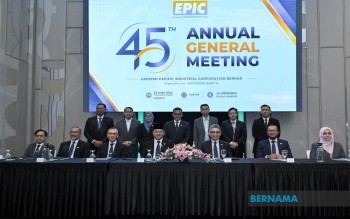
Eastern Pacific Industrial Corp Bhd (EPIC) has unveiled a comprehensive growth blueprint aimed at substantially elevating its financial footprint over the next five years. The integrated oil and gas solutions provider is targeting annual revenue of RM700 million and a net asset value of RM1 billion by 2030, anchored by its newly articulated EPIC Strategic Business Plan 2025-2030. This ambitious agenda represents a significant leap from the company's current operations, reflecting confidence in both domestic market opportunities and regional expansion prospects that span the energy transition landscape.
The targets announced by Group Chief Executive Officer Dr Ts Muhtar Suhaili emerge from a foundation of robust recent performance. EPIC delivered a net profit of RM20.6 million in the year ended December 31, 2025, representing a 24 percent increase from RM16.6 million in the prior year. Revenue climbed to RM411.9 million from RM403.8 million, continuing an upward trajectory the company has sustained since 2022. These results demonstrate that EPIC has moved beyond cyclical volatility that once characterised the oil and gas sector, establishing itself as a stable performer capable of generating consistent shareholder returns even as the industry undergoes structural shifts.
The company's revenue growth has been underpinned by several strategic acquisitions and contract wins that have broadened its operational capabilities. The acquisition of Rahar Niaga Sdn Bhd proved instrumental in expanding EPIC's service offerings, whilst newly secured contracts with Petronas for Pan Malaysia Maintenance, Commissioning and Modification, and Hook-Up and Commissioning work opened fresh revenue streams. Additionally, increased offshore rig activity and growing cargo volumes through EPIC's port operations contributed meaningfully to overall performance. These developments suggest that the company is successfully diversifying its income sources beyond traditional oil and gas support services.
Looking ahead to 2026, Muhtar projected another record-breaking year for the group, supported by a substantial pipeline of contracted work. EPIC's approved contract value for its oil and gas operations currently ranges between RM1.3 billion and RM1.5 billion, though actual realisation depends on the issuance of work orders and purchase orders by clients. This substantial backlog provides visibility and confidence in near-term revenue generation, particularly as the company has successfully penetrated multiple geographic markets within Malaysia. Recent contract awards span Terengganu, where EPIC maintains its operational hub, through to southern Peninsular Malaysia including Pengerang and Melaka, whilst a significant breakthrough into Sabah signals the company's ability to compete nationally.
Petronas remains a cornerstone client relationship for EPIC, with the national oil company providing contracts across multiple regions and operational scopes. For Malaysian readers, this dependency on Petronas underscores the ongoing importance of upstream energy activity to the national economy, even as the world transitions towards cleaner energy sources. EPIC's success in capturing market share across different Petronas operational areas suggests the company possesses the technical expertise and operational reliability that Malaysia's energy sector demands, positioning it favourably for sustained engagement regardless of commodity price cycles.
Beyond traditional hydrocarbon sectors, EPIC is strategically positioning itself within Malaysia's renewable energy transition. The company is actively bidding for a hybrid hydro-solar project at Kenyir alongside its parent company Terengganu Inc, demonstrating management commitment to diversifying the revenue base away from fossil fuel dependency. Such initiatives carry particular significance for Malaysian investors concerned about long-term energy sector sustainability and regulatory trajectory. Should EPIC successfully capture renewable energy contracts, it would substantially improve the durability of future earnings and reduce vulnerability to oil and gas market downturns.
Regional expansion represents another pillar of EPIC's 2030 strategy. The board has mandated management to pursue growth opportunities across neighbouring Asian markets, broadening the company's geographic footprint beyond Malaysia's borders. This expansion aligns with broader regional economic integration trends and allows EPIC to tap into higher-growth markets where infrastructure development and industrial support services remain in strong demand. Simultaneously, the company continues assessing West Asian opportunities despite acknowledged geopolitical uncertainties in that region, suggesting pragmatic risk management alongside growth ambition.
A concrete manifestation of this regional strategy materialised in February 2026, when EPIC's subsidiary EPIC OG Sdn Bhd established a collaboration agreement with Begas Energy Sdn Bhd to provide project management services for Terminal Turnaround, Maintenance and Modification operations in Sabah. This partnership strengthens EPIC's footprint in Sabah and Sarawak, two regions where energy infrastructure development continues apace. Such arrangements also reflect industry trends towards specialised partnership models rather than wholly-owned operations, allowing companies to access market opportunities with reduced capital commitment and shared risk profiles.
The strategic significance of EPIC's expansion plans extends beyond mere financial metrics. For Southeast Asian readers, EPIC's trajectory illustrates how Malaysian industrial companies can successfully navigate the global energy transition by maintaining relevance in traditional sectors whilst simultaneously building capabilities in emerging clean energy domains. The company's success in securing contracts from major clients, combined with management's disciplined approach to expansion, suggests a business model capable of generating sustainable returns through cyclical energy markets.
EPIC's announced targets, whilst ambitious, remain anchored in identifiable pathways and existing market opportunities rather than speculative projections. The near-doubling of revenue to RM700 million by 2030 requires compound annual growth of approximately 11 percent, a pace consistent with EPIC's recent performance trajectory and supported by visible contract pipelines. Similarly, the NAV target reflects reasonable assumptions about profitability and capital accumulation given the company's demonstrated earnings power and apparent commitment to shareholder distributions.
Investors monitoring EPIC should track several key performance indicators over the forthcoming period. Execution of the Kenyir renewable energy project bid would validate management's renewable energy strategy and potentially catalyse margin expansion. Contract value realisation rates and the pace of international revenue contribution will indicate whether regional expansion translates from ambition to commercial reality. Additionally, given Petronas's centrality to current operations, any significant changes to the national oil company's capital expenditure trajectory would carry implications for EPIC's near-term growth prospects.
The company's 2030 vision ultimately reflects broader confidence in Malaysia's continued energy sector relevance and infrastructure investment appetite. Whilst global energy markets undoubtedly face structural headwinds, EPIC's strategy of maintaining core competencies in traditional sectors whilst building renewable energy credentials positions it defensively against longer-term energy transition dynamics. For Malaysian investors seeking exposure to both energy sector resilience and clean energy transition themes, EPIC presents a compelling case study in strategic business model evolution during a period of profound industry transformation.

