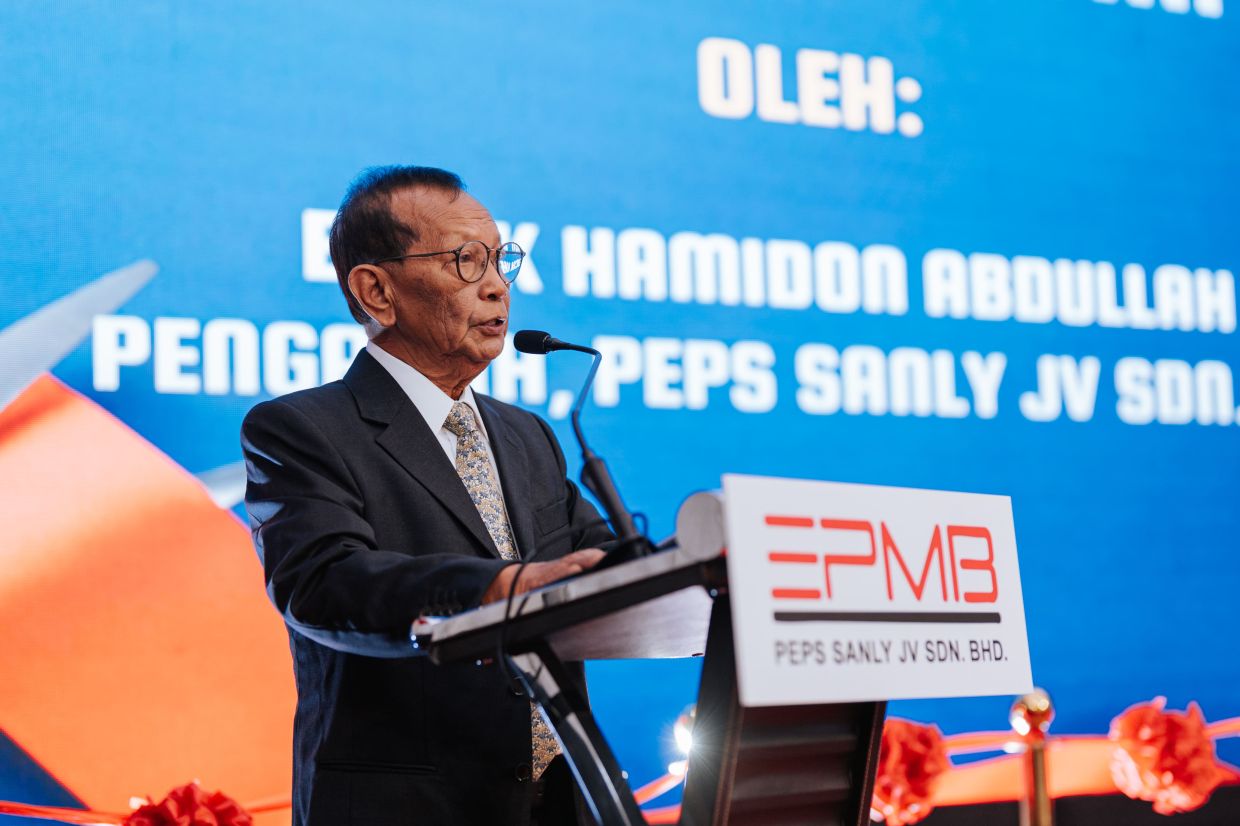
Malaysia's automotive supply chain has received a significant boost with the opening of a major new production facility in Tanjong Malim, Perak, marking an important step in deepening the country's ties to China's automotive manufacturing expertise. The facility, operated through Peps Sanly JV Sdn Bhd, represents a strategic collaboration between EPMB and Sanly Auto Parts Co Ltd, a partnership that was formally established in February 2025 with the explicit goal of bringing advanced chassis component manufacturing onshore. The location within the Automotive High Technology Valley underscores the government's continued emphasis on clustering automotive suppliers and manufacturers in strategically designated zones to enhance competitiveness and operational efficiency.
The newly operational plant, which commenced production in October 2025, spans 9,909 square metres and has been engineered to handle substantial volume commitments from Proton Holdings. With a monthly capacity of 40,000 vehicle sets and an annual production ceiling of 480,000 sets, the facility represents a material scaling-up of component localisation that could reduce Proton's dependence on imported parts and strengthen the automotive ecosystem across the Klang Valley and beyond. For Malaysia's automotive sector, which has faced ongoing pressure from regional competition and the global shift toward electric vehicles, such investments signal confidence in the domestic market's ability to support higher-value manufacturing operations.
The components produced at the Tanjong Malim site address critical vehicle assembly needs across Proton's current and future model range. Front corner modules, subframe modules, and rear axle module assemblies will be manufactured for the Proton AMA01, Persona, and Iriz models, establishing a supply foundation for vehicles that represent the bulk of Proton's domestic sales. Equally significant is the facility's role in supporting Proton's upcoming AMA02 and AMA05 models, suggesting that the partnership has been designed with forward visibility into Proton's product roadmap and its anticipated market launch schedules over the coming years. This alignment between supplier capacity and new model introduction is crucial for avoiding supply bottlenecks that could undermine production targets.
The partnership between EPMB and Sanly Auto Parts reflects a calculated strategy to access China's advanced manufacturing ecosystem without requiring a wholly foreign-owned facility. Sanly Auto Parts brings credentials earned through longstanding relationships with Geely and other major Chinese original equipment manufacturers, granting the joint venture exposure to metalworking and assembly technologies that have been refined and tested across millions of vehicles globally. Executive chairman Hamidon Abdullah articulated the competitive advantage embedded in this arrangement, noting that the collaboration directly taps into China's competitive cost structures while simultaneously establishing quality assurance protocols aligned with international standards. For EPMB, a company with nearly four decades of history supplying Proton, this evolution allows the firm to refresh its capabilities and remain indispensable to the national carmaker's operations.
The timing of the facility's launch carries particular significance given Proton's strategic imperatives in the current automotive landscape. The company has been pursuing aggressive regional expansion targets while simultaneously developing and rolling out an electric vehicle roadmap aimed at positioning Malaysia as a credible player in the energy transition. A reliable, cost-competitive supply of chassis components manufactured domestically provides Proton with the operational flexibility and margin profile necessary to compete against regional rivals, particularly Thai and Indonesian manufacturers, while investing heavily in EV development. For Malaysian supply chain participants, the facility demonstrates that localisation of complex components remains viable and attractive, especially when buttressed by technology transfer and cost advantages from international partners.
The AHTV location where the facility operates reflects Malaysia's broader push to establish integrated automotive clusters capable of supporting end-to-end vehicle development and manufacturing. By concentrating suppliers, component manufacturers, and logistics providers in designated valleys or zones, the government and private sector aim to reduce logistics costs, facilitate just-in-time delivery, and create ecosystem efficiencies that benefit all participants. The Tanjong Malim site, situated in Perak's industrial corridor, positions EPMB and its joint venture partner to serve not only Proton but potentially other automotive players exploring manufacturing or assembly operations in the region. This geographic advantage compounds the partnership's strategic value.
From a trade and investment perspective, the EPMB-Sanly collaboration exemplifies the deeper integration occurring between Malaysian and Chinese automotive industries. Rather than a simple import of finished components, the arrangement involves knowledge transfer, local employment, and the establishment of manufacturing expertise within Malaysia's borders. Such partnerships have become essential as developing economies compete to retain and expand their automotive manufacturing bases amid globalisation and technological disruption. The fact that Sanly Auto Parts is willing to commit capital and operational oversight to a Malaysian facility suggests confidence in both Proton's market prospects and Malaysia's manufacturing environment, including labour availability, logistics, and regulatory stability.
The localisation of chassis component production also carries implications for Malaysia's trade balance and automotive sector competitiveness metrics. By reducing the import content of Proton vehicles, the facility directly contributes to improving the automotive industry's local content ratio, a key performance indicator monitored by the government as it assesses the sector's contribution to national economic development. Higher local content can strengthen Proton's positioning in international markets, where buyers increasingly scrutinise the origin and supply chain transparency of manufactured goods. Additionally, the facility's creation of manufacturing employment in Perak, a state with significant automotive sector presence, contributes to regional economic diversification and skills development in a critical industrial domain.
Looking forward, the success of this facility will likely influence whether EPMB and Sanly Auto Parts pursue additional expansions or whether other Malaysian suppliers consider similar joint ventures with foreign technology partners. The 480,000 annual unit capacity, while substantial, will require consistent demand from Proton and potentially other customers to operate at optimal efficiency. As Proton navigates the transition to electric vehicles and manages its product portfolio evolution, the facility's relevance will depend on its ability to adapt to changing chassis architectures and manufacturing requirements inherent to battery electric vehicles and hybrid systems. The partnership's durability and flexibility will ultimately determine whether it becomes a template for future localisation initiatives or remains a singular achievement of particular strategic value to Proton's operations.

