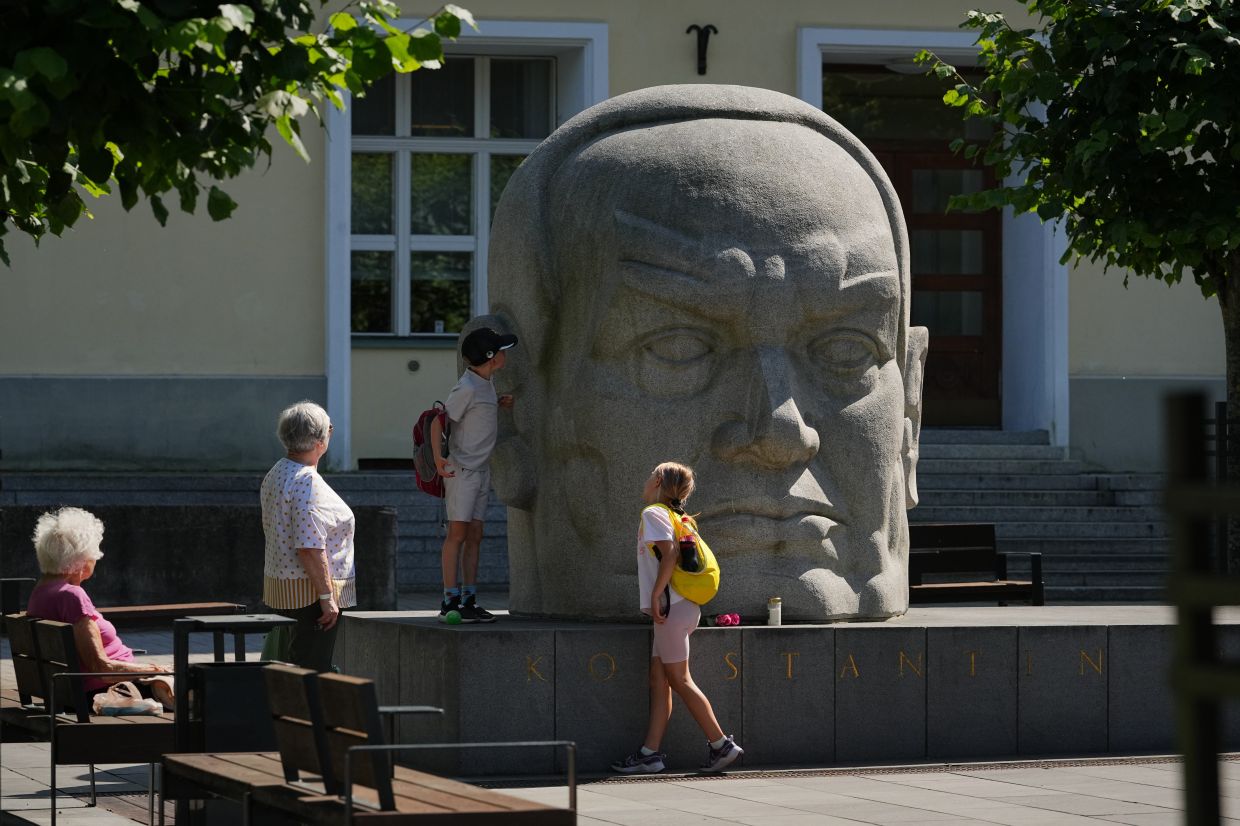
An unassuming etching of a glassblower hanging in a rural Estonian bar has emerged as an unexpected symbol of national identity, drawing attention as university students embark on an ambitious project to catalogue and assess the artistic legacy left behind by five decades of Soviet occupation. The 1963 work by graphic artist Olev Soans exemplifies hundreds of Soviet-era pieces—murals, mosaics, frescoes, and stained glass installations—scattered throughout Estonia, persistent reminders of a period the country has struggled to reconcile since declaring independence in 1991. These artworks represent far more than mere remnants of communist rule; they embody the creative output of Estonian artists working within an oppressive political system, raising complex questions about how a modern European nation should remember and preserve works inextricably linked to its traumatic past.
The tension between historical memory and national identity runs deep in Estonia, a NATO and European Union member state that has deliberately distanced itself from the Soviet era since regaining sovereignty. Yet the recognition that many of these contested artworks were created by Estonian artists themselves has forced a fundamental reconsideration of their cultural meaning and value. As Siiri-Liis Huttunen, a coordinator of the heritage project, explains, the Soviet occupation was undeniably part of Estonian history, but life and artistic production continued regardless. This realization has prompted a shift from outright rejection toward a more nuanced understanding that acknowledges the creative contributions made by Estonian artists during a difficult historical period, even as the country grapples with the trauma of occupation.
The systematic inventory project, commissioned by Estonia's Board of Heritage and jointly organized by the Estonian Academy of Arts and Tallinn University, represents the nation's first comprehensive effort to map, document, and evaluate its Soviet-era monumental and decorative art. The months-long undertaking sends students fanning across the country to identify and record works in schools, former factories, abandoned collective farms, and historic buildings. This methodical approach aims to establish a clear baseline of what remains, what has been destroyed, and what deserves preservation—a crucial prerequisite for informed decision-making about Estonia's artistic heritage moving forward. The project underscores a growing recognition that understanding the past requires more than simply erasing inconvenient symbols; it demands careful documentation and honest engagement with complex historical realities.
Estonia's approach to Soviet heritage must be understood against the backdrop of heightened tensions with Russia since Moscow's 2022 invasion of Ukraine. The Baltic nation, which shares a 294-kilometer border with Russia, has positioned itself as a staunch defender of Ukrainian sovereignty while simultaneously confronting the existential threat posed by its powerful neighbour. This geopolitical context has intensified Estonia's efforts to remove Soviet-era monuments and symbols of domination from public spaces, including military installations and Red Army graves. Yet even as the government addresses overtly propagandistic monuments, the treatment of artistic works remains more complicated, reflecting genuine uncertainty about how to distinguish between art created in a Soviet context and art designed primarily to glorify the Soviet regime.
For generations of Estonians born after 1991, the artistic output of the Soviet period offers a different perspective than that held by those who lived through occupation. Rather than viewing these works solely as symbols of oppression, younger Estonians increasingly see them as opportunities to examine their country's creative heritage and recognize the agency of artists who worked within significant constraints. Huttunen's observation that Soviet-era artists "are not at fault for being born during Soviet time" captures this generational shift, acknowledging that artistic creation and political circumstance were not always synonymous. This perspective opens possibilities for preserving and studying works not despite their Soviet context, but because of what they reveal about artistic resilience and cultural continuity during difficult periods.
The practical challenges of the inventory project are substantial. Many Soviet-era artworks have already vanished as buildings were demolished or repurposed, necessitating archival research, newspaper investigation, and conversations with local residents who remember lost works. This detective work reveals how comprehensively some communities have attempted to erase visible reminders of the occupation, even as it recovers pieces of cultural memory that might otherwise disappear entirely. The Tallinn University students and professional coordinators engaged in this work serve as intermediaries between past and present, preserving not only images and documentation of artworks but also the oral histories and memories associated with them.
The question of which works merit preservation versus removal has become a central preoccupation for Estonia's heritage officials. Hilkka Hiiop, rector of the Academy of Arts, emphasizes that the inventory process will inform crucial decisions about cultural priorities—determining which artworks possess sufficient artistic or historical value to warrant preservation and which require urgent conservation intervention. This ranking process reflects deeper questions about what counts as worthy heritage and what should be actively forgotten or removed from public consciousness. The government's working group has already recommended that approximately 240 "ideologically charged" monuments be removed or substantially altered to neutralize their propagandistic messaging, though implementing these recommendations remains contentious.
Defining "ideological" art proves far more difficult in practice than policy statements suggest. Maria Leemet, a doctoral student and project coordinator, points out that even ostensibly apolitical works—those featuring industrial motifs ubiquitous in socialist realist art throughout the former Soviet bloc—carry implicit ideological baggage reflecting official priorities like five-year plans and labor as a central organizing principle. The artistic style itself becomes inseparable from the system that produced it, complicating efforts to separate artistic merit from political content. This interpretive challenge suggests that Estonia cannot simply sort works into "propaganda" and "art" categories; rather, careful analysis of individual pieces is required to understand what messages they conveyed and what purposes they served.
Investigations by project participants reveal subtle complexity beneath apparently straightforward Soviet artistic conventions. Martin Danilas, a 23-year-old Tallinn University student examining the glassblower etching, notes possible traces of cultural resistance embedded within the work—a folk motif that might be deliberately emphasized in ways that earlier authorities failed to detect or suppress. This interpretive possibility—that artists may have encoded Estonian identity markers into works created under Soviet supervision—adds another interpretative layer. If such subtle resistance exists in these artworks, then their preservation and study becomes not merely about acknowledging art created during occupation, but about recognizing acts of cultural assertion by artists navigating oppressive constraints.
Estonia's approach to Soviet-era heritage thus reflects a broader European challenge: how post-communist nations can acknowledge their traumatic histories while avoiding either nostalgic rehabilitation or complete erasure of cultural production. The inventory project sidesteps simplistic either-or choices by insisting on detailed examination of individual works. Rather than establishing blanket policies, it creates space for nuanced judgment about artistic value, historical importance, and contemporary relevance. This methodology may serve as a model for other nations wrestling with similarly fraught legacies, suggesting that genuine historical reckoning requires patient documentation, honest engagement with complexity, and willingness to recognize artistic achievement even when created under political circumstances we now reject.
As Estonia continues grappling with its Soviet past while managing present security threats, the quiet work of students documenting rural murals and forgotten mosaics proceeds. These efforts represent a maturation of national memory—a recognition that comprehensive understanding of history requires preserving and studying difficult artifacts, not simply removing them from sight. The glassblower etching, preserved behind a rural bar, now carries new significance as a symbol of this more complex approach to heritage, embodying both the reality of occupation and the persistent creativity of those who lived through it.

