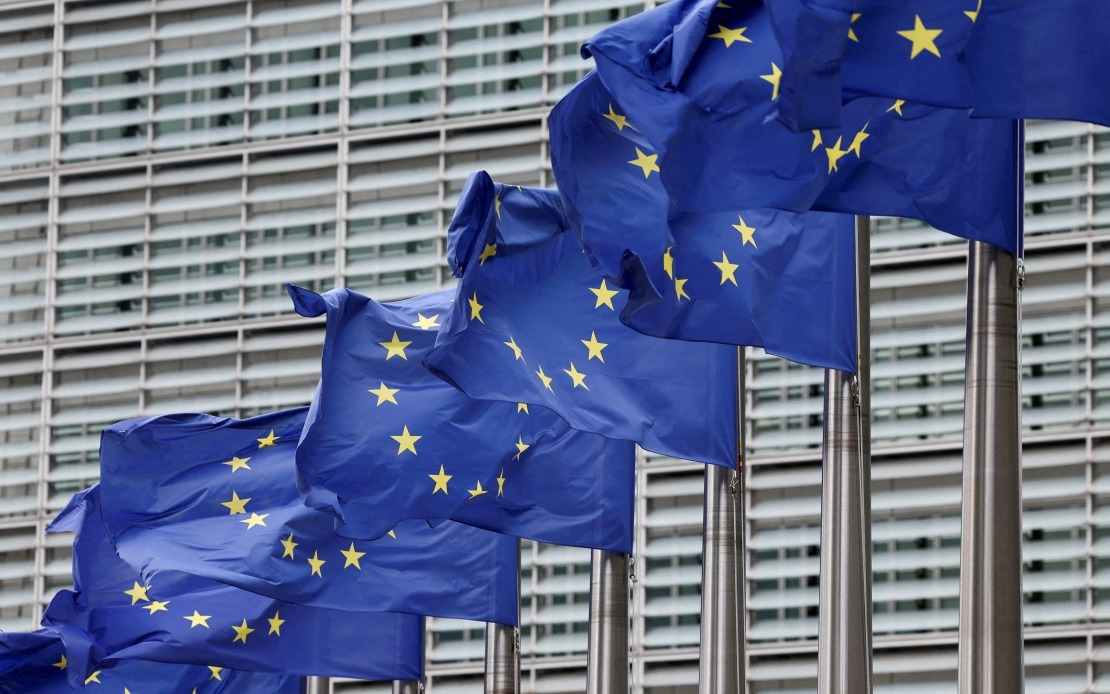
The European Union's top diplomats convened in Brussels on Monday to navigate one of the bloc's most contentious geopolitical questions: whether to tighten economic pressure on Israel over its ongoing settlement expansion in the occupied West Bank. The meeting represented a critical juncture for European foreign policy in the Middle East, as Brussels grapples with balancing its stated commitment to international law with the practical challenges of achieving consensus among its 27 diverse members on such a polarising issue.
The European Commission had prepared a comprehensive menu of potential measures ahead of the discussions, ranging from targeted import restrictions to outright bans on products originating from Israeli settlements. These options represent an escalation from previous EU statements criticising settlement expansion, which has long been considered illegal under international law by the UN and most world capitals. The commission's preparatory work underscores Brussels' recognition that substantive action requires concrete proposals rather than rhetorical positions alone.
However, the prospect of unanimous EU action appeared remote even before ministers entered the chamber. Spain, Ireland, and Belgium have emerged as vocal advocates for stringent sanctions, reflecting their governments' more assertive stance on Palestinian rights and international humanitarian concerns. These nations view settlement expansion as fundamentally incompatible with any viable two-state solution and believe economic consequences are necessary to deter further Israeli actions. Their position resonates with significant domestic constituencies in each country and aligns with growing public concern across Europe over civilian suffering in Gaza and the West Bank.
Germany's reticence on the matter illustrates the complexity of European decision-making on Middle Eastern affairs. Berlin's historical responsibility toward Israel, combined with substantial economic and security ties, has made the German government reluctant to endorse what it characterises as punitive measures. This fundamental disagreement between major EU powers has created a structural obstacle to the unanimous decision-making required for comprehensive sanctions architecture.
The technical rules governing EU sanctions explain much of the institutional frustration driving these debates. Should member states classify trade restrictions as foreign policy sanctions—the most natural categorisation—unanimous consent from all 27 nations becomes mandatory. This requirement effectively grants veto power to any single dissenting state, a mechanism designed to preserve national sovereignty but often resulting in gridlock on controversial issues. Alternatively, if restrictions are classified merely as trade measures rather than sanctions proper, they require only qualified majority support: backing from 15 member states representing at least 65 percent of the EU's combined population would suffice.
This procedural distinction carries profound implications for European strategic autonomy. A qualified-majority pathway would enable the EU to act decisively without waiting for consensus, potentially setting important precedents for how the bloc responds to international law concerns. Yet it also risks fragmenting the EU's external posture by creating different legal regimes across member states, with some enforcing restrictions while others maintain business as usual. The choice between these routes thus reflects deeper questions about European integration and decision-making efficiency that extend far beyond the Israeli settlement question.
The settlement issue arrives amid an already crowded agenda preoccupying EU ministers. Developments surrounding what the commission characterised as the Iran war commanded attention, though the precise nature of recent escalations remained contested. More prominently, discussions centred on the ongoing Russian invasion of Ukraine, where ministers anticipated agreement on additional sanctions targeting Russian individuals, entities, and organisations. Yet even on Ukraine—arguably the issue commanding broadest EU consensus—uncertainty persisted regarding whether a comprehensive new sanctions package incorporating substantial trade restrictions could enter into force.
Ukrainian Foreign Minister Andrii Sybiha's invitation to participate in informal consultations underscored Ukraine's continuing importance to European strategic thinking and the integration of Eastern European security concerns into broader EU foreign policy frameworks. His presence signalled that while the EU deliberates on Middle Eastern questions, the existential challenge posed by Russian aggression remains central to European strategic calculations. This backdrop inevitably shapes how member states approach other geopolitical questions, including those involving Israeli policy.
For Southeast Asian observers and policymakers, EU divisions on Israeli settlements carry instructive implications about multilateral coalition-building on contentious international law matters. Malaysia and other regional governments have consistently advocated for Palestinian statehood and opposed settlement expansion, positioning themselves alongside Spain, Ireland, and Belgium within global opinion. Yet the EU's paralysis despite significant member-state support for sanctions demonstrates how economic interdependence, historical relationships, and procedural barriers can obstruct principled action even within integrated regional blocs.
The Brussels meeting illustrated the fundamental tension between asserting normative commitments and maintaining cohesion within diverse membership. The EU's struggle to fashion a unified response to Israeli settlements reflects broader challenges confronting multilateral organisations in an era when geopolitical alignments, rather than ideological solidarity, increasingly shape state behaviour. Member nations must reconcile domestic pressures, historical allegiances, and economic interests with collective European identity and international legal principles—a balancing act that frequently tilts toward the status quo.
Further, the procedural complexities exposed during these discussions highlight why the EU rarely acts as the unified force its architects envisioned on matters outside its core interests. While the bloc commands immense economic leverage through its market size and regulatory influence, converting that potential into coordinated action requires either consensus or willingness to restructure decision-making rules. Neither appears imminent on the Israeli-Palestinian question, suggesting that European policy will continue reflecting the sum of 27 distinct national interests rather than a coherent strategic vision.

