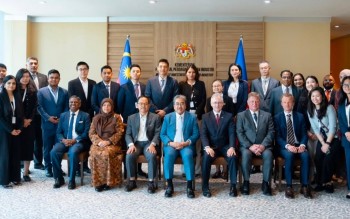
A high-level European business delegation concluded a three-day engagement with Malaysian government agencies this week, signalling strengthening commercial and diplomatic ties between the region and Europe. The visit by the EU-ASEAN Business Council, which brought together more than 70 delegates representing over 25 European companies, reflects deepening interest in Malaysia as a strategic investment destination and highlights the bilateral relationship's momentum ahead of a comprehensive free trade agreement expected by 2027.
The delegation's itinerary underscores the breadth of economic cooperation being pursued. According to Chris Humphrey, executive director of the EU-ASEAN Business Council, the three-day visit from August 4-6 was designed to give European business leaders direct access to senior Malaysian policymakers. This approach allowed delegation members to gain clarity on regulatory frameworks, signal backing for Malaysia's development agenda, and identify concrete investment prospects across multiple sectors. The timing proved fortuitous, as Malaysian government officials were receptive and forthcoming in their discussions about the country's strategic direction.
Economic reform emerged as a central theme during the delegation's engagement with Malaysia's ministerial hierarchy. When meeting with the Economy Ministry, European business representatives received detailed briefings on ongoing reform packages and expressed enthusiasm for Malaysia's commitment to the green transition. The discussions extended beyond environmental concerns to encompass the development of circular economy frameworks and the digital transformation of business processes. These conversations reflected European investors' recognition that Malaysia's reform agenda aligns with global trends toward sustainability and technological advancement, creating opportunities for companies positioned to support these transitions.
Financial matters and investment climate conditions formed another pillar of the discussions. During meetings at the Finance Ministry, the delegation explored financing mechanisms, taxation frameworks, government procurement processes, and broader assessments of Malaysia's investment climate. European financial and industrial leaders reported an overwhelmingly positive atmosphere during these conversations, suggesting receptiveness from Malaysian authorities to European capital inflows and business partnerships. The constructive tone indicated potential for expanded cooperation in infrastructure financing, technology transfer, and capacity-building initiatives.
Humphrey emphasised Malaysia's inherent advantages as an investment destination, positioning the country as uniquely well-suited to attract European capital. Malaysia's geographical position along critical trade corridors, combined with its modern infrastructure and established connectivity networks, creates competitive advantages. The nation's available skilled workforce and natural resource endowment further enhance its appeal, particularly for European companies seeking to diversify production beyond traditional manufacturing hubs or develop regional headquarters for Asian operations.
The delegation's engagement schedule reveals the granular nature of commercial dialogue being pursued. Beyond initial ministerial meetings with Bank Negara Malaysia's governor and the ministers of investment, trade and industry and the economy, subsequent sessions addressed environmental sustainability and energy transition priorities. This comprehensive approach ensures that European businesses gain insights across regulatory, financial, and sectoral dimensions, enabling more informed investment decision-making.
Customs and trade facilitation emerged as a practical focus area with direct implications for business operations. The delegation plans to meet officials from the Malaysian Investment Development Authority and the Royal Malaysian Customs Department to discuss streamlining procedures, accelerating customs clearance processes, and advancing customs digitalisation. Alongside these logistical improvements, discussions will address tackling illicit trade flows, particularly in tobacco products where Malaysia has experienced significant smuggling challenges. European companies view stronger enforcement mechanisms and digital customs infrastructure as foundational to reliable supply chains and market protection.
Sectoral cooperation opportunities span healthcare, agriculture, transport, digital infrastructure, and tourism. In the healthcare domain, European businesses are positioning themselves to support Malaysia's evolving medical needs through innovative financing structures, ensuring reliable medicine supplies, and promoting preventive self-care approaches. These discussions reflect broader recognition that Malaysia's ageing population and rising healthcare consumption will require expanded capacity and new service delivery models. European companies bring accumulated expertise in health systems management and pharmaceutical innovation that Malaysia is actively seeking.
The Malaysia-EU Free Trade Agreement represents a landmark achievement toward deepening economic integration. Both parties have completed four negotiation rounds and are targeting finalisation by 2027, with the fifth round scheduled for September 21-25 in Brussels. European business leaders expressed confidence that momentum is sufficient to achieve an agreement by mid-2026, ahead of the formal 2027 deadline. This optimism reflects recognition that both sides have identified compatible interests and are moving toward convergence on major sticking points. A successfully concluded FTA would substantially reduce tariff barriers, harmonise regulatory standards, and provide European investors with enhanced market access and legal certainty.
The economic dimensions of the EU-Malaysia relationship underscore the stakes involved in these negotiations. The European Union ranks among Malaysia's five largest trading partners, with bilateral goods trade reaching €48.9 billion in 2025. Malaysian exports to Europe, valued at €30.3 billion, predominantly comprise palm oil, natural gas, semiconductors, and refined petroleum products. European exports to Malaysia, totalling €18.6 billion, include machinery, chemicals, vehicles, and high-value industrial equipment. Beyond merchandise trade, European direct investment in Malaysia has accumulated to €33.1 billion as of 2024, positioning Europe as a substantial source of foreign capital and demonstrating long-term confidence in Malaysia's economic fundamentals.
For Malaysia, cultivating European partnerships addresses multiple policy objectives simultaneously. Deepening trade and investment ties with a developed economy bloc provides diversification benefits, reduces exposure to any single market, and facilitates technology transfer and skills development. European companies bring not merely capital but also operational expertise, supply chain integration capabilities, and access to advanced technologies essential for Malaysia's own transition toward higher-value manufacturing and service provision. The green transition discussions particularly highlight how Malaysia seeks European partnership to develop renewable energy infrastructure, establish sustainable agriculture practices, and position itself as a regional hub for environmental technology.
The delegation's activities also reflect European strategic positioning in Southeast Asia amid broader geopolitical shifts. The European Union recognises ASEAN's economic importance and seeks to maintain substantive economic presence and influence in the region. Malaysia, as the ASEAN chair for 2025, carries particular significance in these regional engagement efforts. By investing in high-level business delegation visits and advancing trade negotiations, European stakeholders are signalling commitment to long-term partnership rather than transactional commercial relationships.
Looking ahead, the momentum generated during this week's engagement will be tested through the September Brussels negotiations and subsequent ministerial discussions. The positive reception Malaysian officials accorded the delegation suggests receptiveness to European interests, though substantive agreement on regulations, market access, and investment protection mechanisms remains forthcoming. For Malaysian policymakers, the demonstrated European interest reinforces the benefits of the reform agenda and confirms that external capital is attentive and responsive to policy improvements. For European companies, clearer regulatory frameworks and confirmed investment climate improvements warrant expanded commitment to Malaysian market entry and expansion.

