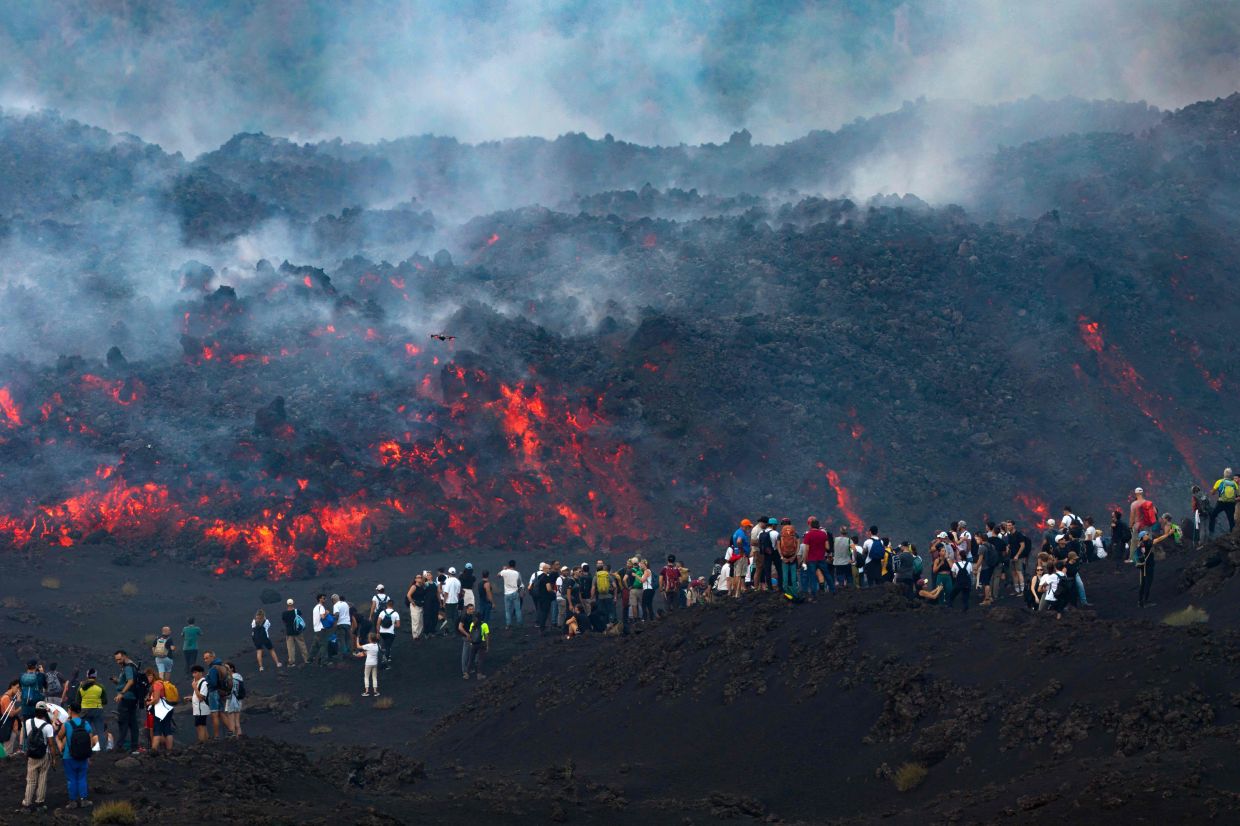
Mount Etna's ongoing eruption has transformed the Italian volcano into an unexpected tourism magnet, with breathtaking images of molten lava cascading down its slopes circulating widely and fuelling global interest in witnessing the spectacle firsthand. The 41-year-old guide Daniele Perricelli, who operates Guide Etna, reported that his company typically handles around 100 visitor requests during peak summer tourism season, a figure that has tripled to approximately 300 daily inquiries since the eruption intensified. This surge reflects the powerful draw of natural phenomena and the appetite among international travellers to experience dramatic geological events in person, transforming what might ordinarily be a routine summer tourism season into an extraordinary convergence of sightseers.
The volcanic activity has created unexpected complications for Sicily's tourism infrastructure, particularly at Catania International Airport, which serves roughly 12 million passengers annually and represents a critical entry point for visitors to the island. The airport has been forced to suspend operations repeatedly over recent days due to heavy ash emissions, resulting in the cancellation of hundreds of flights since Saturday. This disruption underscores how a natural event can ripple through economic systems, affecting not only those attempting to reach Mount Etna but also countless other travellers whose plans intersect with Sicilian transportation networks. The airport closure has forced airlines to reroute passengers and created substantial operational challenges for the travel industry throughout the region.
Local guides characterise the current phenomenon as a "touristic eruption," a term reflecting the particular appeal that accessible volcanic activity holds for contemporary visitors seeking adventure and extraordinary experiences. Ernesto Maria Magri, another experienced guide working in the area, notes that the eruption's relatively manageable nature—occurring in a location where observers can maintain reasonable safety margins—has broadened its appeal considerably. The ability to witness genuine geological power while remaining at a calculable distance from danger creates a compelling narrative for tourism marketing, even as such narratives sometimes obscure the genuine hazards involved.
The enthusiastic response from visitors, however, has created substantial management challenges for both professional guides and local authorities. Perricelli estimates that between 1,500 and 2,000 individuals attempt to ascend the volcano each evening, creating congestion along established pathways and foottrails that were never designed to accommodate such volume. The composition of this crowd presents particular concern: many visitors arrive unprepared or under-equipped, with documented instances of individuals wearing casual footwear such as flip-flops on a mountain where unstable terrain and extreme heat pose constant hazards. Local guides emphasise that successful volcano navigation requires intimate familiarity with the mountain's moods and conditions—knowledge that casual climbers inevitably lack.
Safety protocols currently permit independent climbing up to approximately 2,400 metres altitude, beyond which visitors must engage a professional guide. This regulatory framework assumes a baseline level of preparedness and judgement among visitors, assumptions that the current surge has demonstrated may be unrealistic. The Italian television personality Diletta Leotta attracted social media criticism after sharing photographs apparently taken at uncomfortably close proximity to active lava flows, a incident that illustrates how viral social media content can incentivise increasingly risky behaviour among followers seeking comparable dramatic images. Professional guides worry that such high-profile examples normalise dangerous approaches and encourage others to push safety boundaries in pursuit of compelling visual documentation.
Despite these concerns, guides acknowledge that encounters with cooled or slowly-moving lava at lower elevations do permit approach within a few metres under proper supervision, and that the eruption itself poses manageable risks when approached methodically. The distinction between calculated observation and reckless exposure has, nonetheless, become increasingly difficult for unprepared visitors to maintain. Perricelli's call for enhanced vigilance from authorities reflects a growing recognition that current management frameworks may require revision to accommodate the new reality of mass interest in volcanic tourism.
The Italian civil protection agency has designated Mount Etna as operating under a yellow alert status, the second-most severe rating on a four-tier scale that progresses from green to red. This classification acknowledges the volcano's active state while suggesting that eruptions and minor explosions should be anticipated but managed. Europe's tallest active volcano has erupted persistently for days, maintaining the ash and lava emissions that initially captured international attention and continue driving tourism demand. The volcano's consistent activity means that the current surge reflects not a momentary novelty but rather a sustained phenomenon likely to persist across the coming weeks.
Local residents themselves have contributed to the crowding phenomenon, with many residents choosing to ascend the volcano themselves to observe the eruption's progress. However, guides note that residents sometimes congregate in disorderly arrangements that reflect excitement rather than systematic appreciation, creating additional management complications. This convergence of international tourists, regional visitors, and local spectators has transformed the immediate area surrounding accessible sections of the volcano into an impromptu social gathering rather than a carefully managed observation site.
The situation facing Mount Etna's guides and Sicily's tourism authorities reflects broader tensions in contemporary tourism—the desire to provide authentic access to natural wonders versus the practical realities of managing large crowds in hazardous environments. The eruption has exposed gaps between regulatory frameworks developed for ordinary conditions and the requirements of genuinely exceptional circumstances. Whether authorities will implement additional restrictions, increase guide availability, or enhance safety infrastructure remains uncertain, though the convergence of significant demand, documented safety lapses, and infrastructure strain suggests that some response will prove necessary before the eruption's attraction inevitably diminishes.

