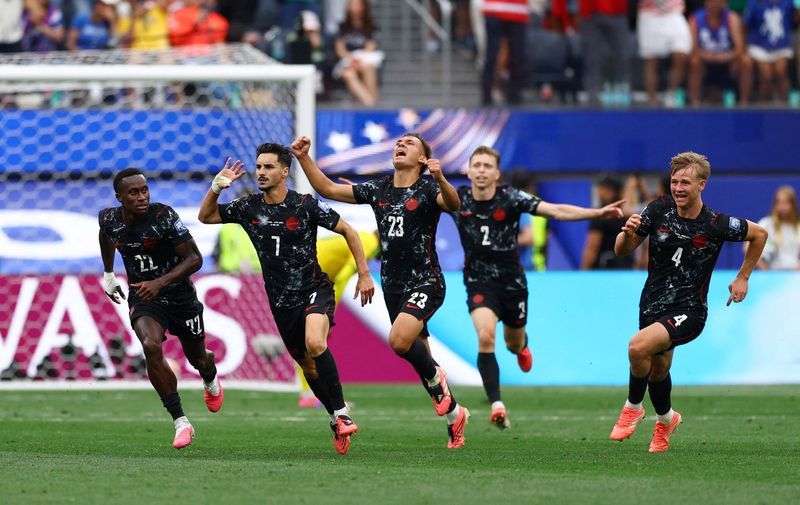
Canada has broken through a significant barrier in international football competition, advancing to the knockout stage's second phase for the first time in their World Cup history. Stephen Eustaquio delivered the decisive moment in the 92nd minute at Los Angeles Stadium on Sunday, striking a powerful shot from the edge of the penalty area that found the back of the net past diving goalkeeper Ronwen Williams. The 1-0 victory over South Africa represented a watershed moment for the North American nation, which had previously struggled to progress beyond their opening matches in three prior World Cup campaigns.
The match itself unfolded as a tightly contested affair between two nations making their debut appearances in the knockout rounds. For much of the contest, South Africa appeared content to maintain their defensive shape and extend the match into extra time, where fortune could swing either way. Canada, meanwhile, created opportunities throughout the ninety minutes but lacked the clinical finishing that separates champions from pretenders at this level of competition. The breakthrough finally arrived when Eustaquio capitalised on space in a crowded penalty area, unleashing a shot that carried enough power and precision to defeat Williams and send the Canadian contingent in the stands into celebration.
For Malaysian and Southeast Asian observers, Canada's progression carries particular significance as it underscores the unpredictability of modern football tournaments. The team arrived in Los Angeles having endured a gruelling preparation, with only three days of rest following a disappointing 2-1 group-stage defeat to Switzerland on Wednesday. Furthermore, as co-hosts of the tournament, Canada faced the unusual disadvantage of playing their first knockout match outside their home country—a logistical and psychological hurdle that the squad ultimately overcame through resilience and tactical discipline.
Canada's best opportunities emerged in the opening half, when a corner kick created chaos in the South African box. Moise Bombito directed a header that Aubrey Modiba cleared from the goal line, while Tajon Buchanan followed with a close-range effort that struck Williams directly in the chest. Shortly afterwards, Richie Laryea went to ground in the penalty area under a challenge, prompting vociferous appeals for a penalty kick. The Video Assistant Referee review upheld the original decision to deny the spot kick, triggering an angry response from Canadian supporters and prompting coach Jesse Marsch to voice his frustration as the teams departed for halftime.
The second forty-five minutes saw South Africa adopt an even more cautious approach, essentially inviting Canada to break them down through sustained attacking. An opportunity emerged just before the second-half hydration break when Jonathan David failed to capitalise on a goalkeeper rebound following Tani Oluwaseyi's shot, with Mbekezeli Mbokazi producing crucial defensive intervention. As the contest wore on, South Africa's reluctance to take the initiative created mounting pressure that found release in Eustaquio's dramatic intervention deep in stoppage time. The moment embodied everything Canada had sought throughout the encounter—a burst of quality finishing when it mattered most.
Eustaquio's own reflection on the goal emphasised the collective contribution of his team. He described feeling as though every player had channelled their energy into that single strike, a sentiment that captured Canada's determined approach throughout the competition. Coach Jesse Marsch acknowledged that his side had created sufficient chances but had not been sufficiently ruthless in execution. Yet he also recognised the moment when it arrived, noting that Eustaquio delivered when the opportunity fell to him. Marsch's post-match comments elevated the players to the status of national heroes, a designation that reflected both the historical significance of the result and the emotional investment of Canadian supporters.
Canada will next face either the Netherlands or Morocco on July 4 in Houston, with a quarter-final berth at stake. The opponent will likely present a considerable step up in quality, given that both European and African representatives possess substantially deeper reserves of tournament experience at this stage of the competition. However, Canada's capacity to overcome adversity and capitalise on crucial moments suggests that they possess the mental fortitude to compete with elite sides. Their journey thus far has defied historical precedent and generated momentum that could carry them deeper into the tournament than any Canadian team before them.
South Africa, conversely, can take modest encouragement from reaching the knockout rounds for the first time at their fourth World Cup appearance. The team's defensive solidity throughout the tournament demonstrated improvement in structure and organisation. However, their inability to create sustained attacking pressure and their apparent resignation to a penalty shootout raised questions about their ambitions and tactical approach. The match represented a missed opportunity for the Africans to announce themselves as serious contenders on the global stage.
A significant question mark surrounds the future of South Africa's 74-year-old coach Hugo Broos, who indicated that this tournament would mark his final World Cup in charge. Broos stated that he would assess his future plans in the coming days, suggesting that his tenure with the national team may conclude following their exit. The decision to depart after achieving a historic qualification milestone reflects the cyclical nature of football management, where even progress can prompt reflection on legacy and appropriate timing for succession.
Canada's breakthrough also carries implications for the broader North American football landscape. The result bolsters the reputation of the continent as a host region capable of producing competitive national teams, particularly following the tournaments hosted by the United States and Mexico. For Malaysian and regional readers following global football developments, Canada's advancement demonstrates that consistency in development pathways and sustained investment in player development can yield dividends over time. The nation's emergence as a World Cup contender signals a shifting balance in international football, where established hierarchies face constant pressure from developing programmes that combine ambition with tactical sophistication.

