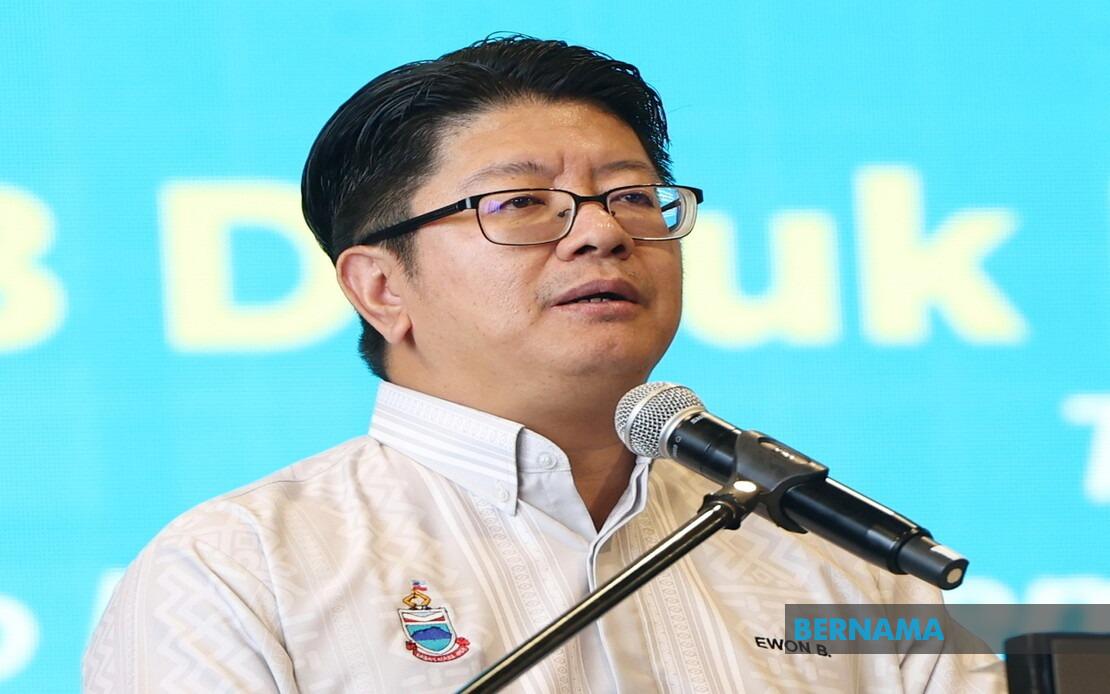
Datuk Ewon Benedick and Datuk Donald Peter Mojuntin have consolidated their hold on United Progressive Kinabalu Organisation (UPKO) following the party's triennial delegates conference in Penampang, where both leaders emerged unchallenged in elections determining the party's direction through 2029. The uncontested nature of the top two positions reflects broader stability within UPKO's upper echelons, as the party navigates an important phase of Sabah politics under the Gabungan Rakyat Sabah (GRS) coalition framework.
Accompanying Ewon and Mojuntin in retaining their offices are five vice-presidents who likewise faced no opposition: Jairaiaz Joseph, Datuk Wong Thien Fook, Datuk Pangiran Lalung, Datuk Basari Sarikun, and Datuk Dr Laurentius Nayan Ambu. This wholesale continuity at the senior leadership table underscores what party officials characterise as internal cohesion, though it also raises questions about succession planning and the depth of competitive democratic engagement within the party structure. The lack of contested races for principal posts stands in contrast to patterns observed in other Malaysian political formations, where internal competition frequently generates vigorous campaigns.
In his closing remarks to the assembled delegates, Ewon emphasised the importance of democratic values whilst framing the electoral outcome as a mandate for unity rather than dominance. He articulated a vision of UPKO as a cohesive family unit, suggesting that electoral processes should buttress rather than fracture party solidarity. This rhetorical positioning appears calculated to pre-empt potential criticism regarding the absence of contested races at the apex of party hierarchy, redefining unanimity as strength rather than stasis.
A significant dimension of Ewon's address concerned the party's relationship with broader GRS structures and Sabah's state government. By referencing Chief Minister Datuk Seri Hajiji Noor explicitly and identifying him as GRS chairman, Ewon positioned UPKO as an integrated component of the coalition apparatus. This framing carries implications for how UPKO will articulate its interests and negotiate its portfolio within the GRS framework over the coming four years, particularly as state politics potentially shift and evolve.
The new leadership's stated responsibilities extend beyond internal party management to encompassing the articulation of UPKO resolutions to senior government figures and their expression during parliamentary and state legislative debates. This envisages UPKO members functioning as advocates for party positions through formal channels, whether in the Dewan Rakyat or the Sabah legislative assembly. For Malaysian readers, this reflects the conventional role of component parties within coalitions, where subsidiary organisations maintain formal policy positions whilst operating within broader coalition discipline.
Beyond the executive tier, UPKO experienced notable transitions in its functional wings. The party's youth section acquired new leadership with Carlye Lajimin assuming the chief's position and Newbaxter Tibin taking the deputy role. These appointments suggest generational renewal in at least one segment of the party structure, potentially injecting different perspectives and engagement strategies oriented toward younger demographics.
Meanwhile, UPKO's women's wing experienced partial continuity as Mohina Sidom successfully defended her position as chief, though the appointment of Lomiti Jahan as deputy chief represents a change in that supporting role. The women's wing constitutes a significant organisational component in Malaysian politics, and transitions in its leadership frequently signal shifts in how parties address gender-specific policy concerns and women's political participation.
Additionally, Emmanuel Atin was elevated to lead UPKO's Young Generation component, with Alison Chan serving as deputy. The distinction between youth and young generation divisions, often maintained by Malaysian political parties, typically reflects differing age bands and organisational purposes, allowing parties to segment their engagement across the broader spectrum of younger voters and members.
These leadership appointments collectively paint a picture of a party in the midst of subtle generational transition whilst maintaining continuity at its apex. For observers of Sabah politics, the composition of UPKO's hierarchy matters significantly given the party's positioning within GRS and its historical importance in East Malaysian political calculations. The Sabah political landscape has proven volatile and fluid, with coalition dynamics shifting in response to personality clashes, resource distribution disputes, and local concerns that transcend peninsular Malaysian political narratives.
The timing of UPKO's conference and elections occurs within a broader context of Sabah governance that warrants attention from regional stakeholders. Political stability in East Malaysia carries implications for federal coalition sustainability and resource allocation patterns affecting Malaysian regions beyond the peninsula. UPKO's internal stability and cohesiveness potentially contributes positively to overall GRS coherence, though the party's capacity to represent constituent interests and maintain internal legitimacy will continue to require demonstrable policy achievements and equitable benefits distribution.
Looking forward, the unopposed election of Ewon and Mojuntin provides these leaders with several years of institutional authority to pursue their strategic vision without immediately confronting internal challenges to their positions. This respite, however, will be tested by their capacity to deliver tangible outcomes for party members and the constituencies they represent, as well as by their effectiveness in negotiating UPKO's interests within the GRS coalition context.

