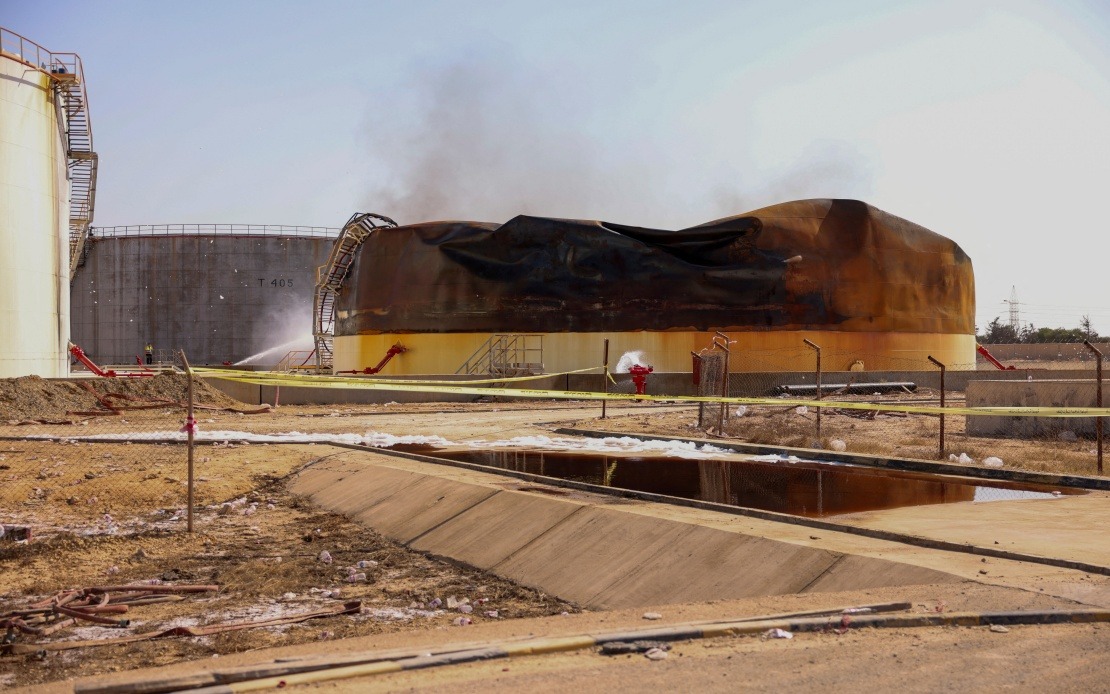
Western Libya's energy infrastructure suffered a significant blow on Saturday when an explosion near the Zawiya power plant forced the shutdown of multiple electricity generation units, intensifying concerns about the fragility of the country's utilities and security apparatus. The General Electricity Company of Libya (GECOL) confirmed the incident and immediately deployed teams to assess the damage and determine what triggered the explosion in proximity to this vital facility.
The timing of this latest incident is particularly troubling given the pattern of attacks that have beset the region over the preceding week. Just days earlier, Zawiya faced a coordinated assault on its infrastructure through drone strikes that targeted oil storage facilities, desalination plants responsible for freshwater production, and the electrical grid itself. The confluence of these incidents suggests either escalating instability in the region or a deliberate campaign to undermine the city's operational capacity, though no group has publicly claimed responsibility for the attacks or the explosion.
GECOL's immediate response involved initiating investigation protocols to establish the technical circumstances surrounding the explosion. The company acknowledged that determining whether the incident was mechanical failure, sabotage, or collateral damage from external action would be crucial to preventing recurrence. Engineers began the painstaking work of assessing structural integrity at the facility and conducting systems analysis on affected generation units to understand which equipment could be restored and on what timeline.
The loss of generation capacity at Zawiya represents a meaningful reduction in Libya's overall electricity supply, particularly for the western regions that depend on this plant. Power outages rippled through residential areas, commercial districts, and essential services as the grid struggled to compensate for the lost output. GECOL issued a public apology for the disruptions and committed to working continuously until full service restoration, acknowledging the hardship imposed on citizens already contending with chronic infrastructure deficits.
Restoration efforts proceeded on a gradual basis as technicians worked to bring offline units back into operation. The company expressed cautious optimism that normalcy would return soon, though the timeline remained uncertain pending the completion of damage assessments. For a nation already grappling with years of civil conflict and economic dysfunction, even temporary power losses create cascading problems across healthcare, water treatment, communications, and commerce.
The broader context of Libya's infrastructure vulnerability deserves scrutiny. The country has struggled to maintain and upgrade its utilities following the 2011 conflict and subsequent civil instability. The Zawiya region, located west of Tripoli, holds particular strategic importance as a hub for energy production and export. Repeated targeting of facilities in this area suggests either deliberate efforts to cripple Libya's economic capacity or symptoms of lawlessness and fragmentation that allow armed groups to operate with relative impunity.
From a regional perspective, the incidents at Zawiya carry implications for North African stability and energy security. Libya's oil and gas resources are critical to global markets and Mediterranean geopolitics. Infrastructure disruptions that impede production or exports can have ripple effects across neighbouring economies and international commodity markets. Southeast Asian nations with investments in or dependence on Libyan energy resources should monitor developments closely.
The investigative process undertaken by authorities will be revealing. If the explosion resulted from sabotage coordinated with the drone attacks, it suggests organized opposition to the current government or efforts by rival factions to destabilize specific regions. If mechanical failure is confirmed, it underscores the dangers of operating aging infrastructure without adequate maintenance investment. Either diagnosis points to governance challenges that Libya must address to restore investor confidence and public trust.
Security implications extend beyond the immediate power sector. If critical infrastructure can be targeted repeatedly with minimal consequence, it signals that Libya's security forces lack either the capacity or territorial control to protect vital installations. This vulnerability attracts non-state actors, foreign proxies, and criminal organizations seeking to exploit ungoverned or poorly-governed space. The accumulation of such incidents gradually erodes state authority and pushes Libya toward greater fragmentation.
Citizen response to the power outages will shape political dynamics in coming weeks. Repeated disruptions to essential services generate public frustration and erode confidence in government competence. In Libya's fractious political environment, each infrastructure failure becomes ammunition for rival factions to claim they could manage the country more effectively. This dynamic creates pressure on authorities to respond decisively, whether through enhanced security measures or infrastructure hardening.
The path forward requires both immediate technical solutions and longer-term strategic thinking. GECOL must accelerate restoration of damaged units while implementing protective measures to prevent future incidents. Simultaneously, Libya's political leadership must strengthen its security apparatus to deter and respond to attacks on critical infrastructure. International assistance in securing these facilities and training security personnel could prove valuable, though any foreign involvement in Libya remains politically sensitive.
For regional observers and international stakeholders, the Zawiya incidents illustrate why Libya's stabilization matters beyond its borders. A country with significant energy resources but dysfunctional infrastructure and weak security ultimately serves neither its own citizens nor international interests. The path to resolution requires sustained political will, security sector reform, and economic investment—none of which appear imminent given Libya's current trajectory.

