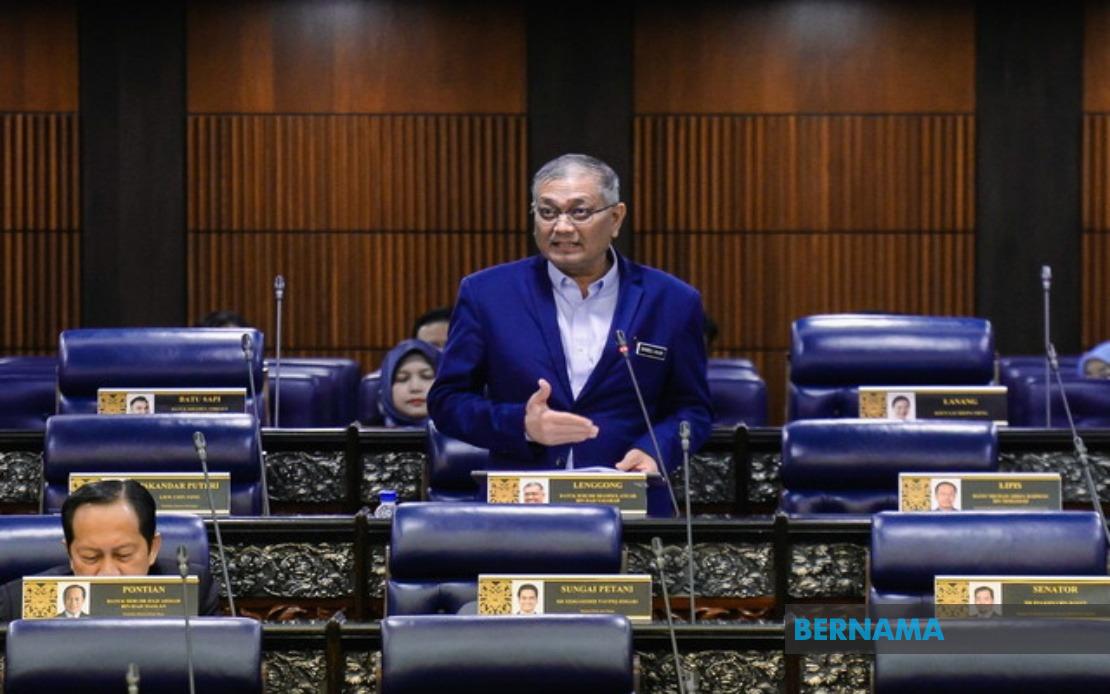
The Home Ministry has moved to defend the practice of assigning extra drills and field duties to police officers, characterising the measure as a structured disciplinary tool designed to encourage behavioural improvement rather than inflict harm. Deputy Minister Datuk Seri Dr Shamsul Anuar Nasarah made the clarification during parliamentary proceedings, addressing mounting scrutiny over the practice following the death of a policeman in Sepang in May. The statement comes amid broader questions about occupational safety and the appropriate use of disciplinary mechanisms within Malaysia's law enforcement hierarchy.
According to Shamsul Anuar, the deployment of extra drills and field duties falls under Paragraph 32 of the Inspector-General of Police's Standing Orders, specifically document PT KPN A110, which outlines procedures for handling minor disciplinary infractions. The government position frames these duties as component parts of a broader institutional approach to maintaining order and professionalism within the Royal Malaysia Police rather than as punitive measures intended to cause physical distress. This framing reflects an attempt to reconcile public health concerns with the police force's operational requirements for maintaining internal discipline.
The Home Ministry's response acknowledges that the May incident prompted institutional review. The PDRM Integrity and Standards Compliance Department issued a new administrative directive dated June 29 that introduces additional safeguards, specifically requiring personnel to undergo health assessment procedures before participating in field duties. This procedural enhancement represents a recognition that existing frameworks required reinforcement, particularly concerning occupational health and safety protocols. The addition of health screening mechanisms reflects evolving best practices in occupational safety management across government agencies.
Existing regulations establish specific parameters governing how field duties may be administered. Personnel assigned to extra drills cannot be required to work more than four hours daily, nor can such duties extend beyond five consecutive days. Supervising officers bear explicit responsibility for ensuring that assignments are executed prudently and with appropriate safeguards, requiring them to evaluate each individual's physical condition, existing health concerns, environmental factors, and any other considerations that might compromise officer wellbeing. These thresholds and supervisory obligations establish a framework intended to prevent excessive or dangerous application of the disciplinary mechanism.
Questions have emerged regarding whether the discipline system operates equitably across police ranks. Parliamentary members sought clarification on whether standardised procedures apply uniformly to officers of all ranks, or whether lower-ranking personnel bear disproportionate exposure to these disciplinary measures. Shamsul Anuar explained that Paragraph 32 was expressly designed as an alternative to formal disciplinary proceedings for junior police officers, reflecting recognition that entry-level personnel require differentiated treatment within the broader disciplinary apparatus. This targeted approach acknowledges the distinct career stages and vulnerability levels within the force.
However, the deputy minister rejected suggestions that the system operates with systematic bias based on rank. He clarified that disciplinary action against senior police officers follows distinct legal provisions tailored to their respective service categories, establishing a differentiated rather than uniform disciplinary framework. This explanation attempts to distinguish between rank-specific approaches and allegations of favouritism, contending that different rules apply by design rather than through arbitrary implementation. The distinction between intentional differentiation and discriminatory application remains contested among observers.
Parliamentary concern extended to broader questions of institutional culture and potential abuse. Datuk Awang Hashim raised specific concerns about whether extra drills might constitute bullying or ragging within the police force, reflecting anxieties about hierarchical power dynamics and occupational culture. The deputy minister responded by emphasising that disciplinary measures cannot be imposed at the sole discretion of supervising officers, insisting instead that strict procedural requirements govern all applications. This assertion of procedural rigour is intended to address concerns that individual commanders might weaponise disciplinary authority against subordinates.
The Home Ministry's position reflects tension between institutional discipline requirements and contemporary occupational safety standards. Police forces worldwide utilise physical conditioning and field exercises as disciplinary and developmental tools, yet public sensitivity to officer welfare has intensified following the Sepang incident. The ministry's rhetorical framing emphasises distinction between legitimate discipline and harmful punishment, though this distinction may not fully address underlying concerns about the intensity and application of such measures.
For Malaysian readers and regional observers, this parliamentary exchange illuminates evolving governance questions about internal police administration. Southeast Asian police forces increasingly face scrutiny regarding occupational health, hierarchical fairness, and the boundaries between legitimate discipline and harmful practices. Malaysia's public engagement with these issues through parliamentary questions and ministerial responses represents an attempt to address institutional accountability through democratic channels, though scepticism remains regarding whether procedural frameworks adequately protect vulnerable personnel.
The broader context includes international focus on police welfare and organisational culture across the region. Thailand, Indonesia, and other Southeast Asian nations have experienced similar debates regarding police disciplinary practices. Malaysia's approach, emphasising procedure and health assessment over outright prohibition, represents a middle-ground position that attempts to preserve institutional discipline while implementing protective measures. Whether the June 29 administrative directive and existing regulatory parameters sufficiently safeguard personnel remains a point of substantive contention.
Moving forward, implementation and enforcement of these protective mechanisms will determine whether the Home Ministry's assurances translate into genuine change. The addition of health assessment requirements represents measurable institutional response, yet critics may question whether such measures address systemic issues regarding hierarchical culture and disciplinary discretion. Continued parliamentary oversight and potential institutional audits may be necessary to establish whether the framework operates as designed or whether enforcement gaps permit abuse despite official parameters.
The Home Ministry's parliamentary statement establishes the government's official position that extra drills serve disciplinary rather than punitive purposes, that procedural safeguards govern implementation, and that rank-based differentiation reflects intentional policy rather than systematic bias. Whether this institutional framing adequately addresses public concern remains to be determined through subsequent oversight and implementation evidence.

