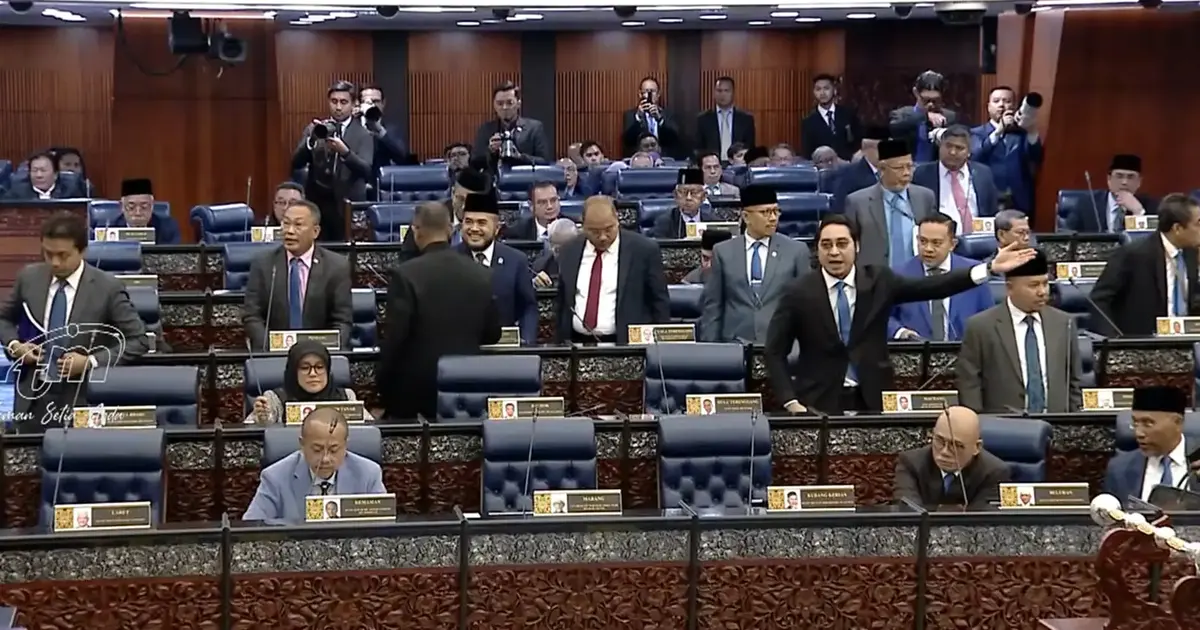
Communications Minister Fahmi Fadzil has publicly acknowledged the participation of Bersatu members of parliament in hearings before the Tabung Haji Royal Commission of Inquiry, using the occasion to highlight what he characterises as a contrast in commitment to accountability between different components of the opposition Perikatan Nasional coalition. The minister's remarks underscores broader fractures within the PN alliance and signal differing approaches to engaging with official investigative processes, a distinction that carries implications for parliamentary conduct and coalition cohesion heading into the next general election cycle.
The Tabung Haji Royal Commission of Inquiry represents one of the most significant investigations into the pilgrimage fund's governance in recent years, examining operational decisions and management practices that have drawn sustained public scrutiny. The proceedings require testimony from multiple political figures and officials, making attendance a matter of both legal obligation and political messaging. By choosing to participate rather than protest through absence, the Bersatu contingent has positioned itself differently from other PN members who organised a coordinated walkout, a divergence that carries symbolic weight within Malaysia's fractious coalition politics.
Fahmi's commendation serves multiple functions in the current political landscape. On the surface, it appears to praise good governance and cooperation with institutional processes. However, the implicit criticism of other PN MPs—those who absented themselves—constitutes a public rebuke that exposes tensions simmering within the coalition. Since the 2023 general election, Perikatan Nasional has struggled to maintain internal unity while serving as the primary opposition force, with disagreements over strategy and messaging becoming increasingly visible. This latest incident demonstrates that the coalition lacks consensus even on seemingly straightforward matters of parliamentary conduct.
The Tabung Haji fund itself remains a subject of intense political and public concern. As Malaysia's dedicated savings scheme for pilgrims undertaking the Hajj, the institution handles billions in depositor funds and occupies a special place in the national consciousness. Recent years have witnessed declining returns to depositors, investment portfolio concerns, and questions about management efficacy. A Royal Commission of Inquiry represents the formal institutional response to these mounting concerns, making cooperation with the process a test of commitment to transparency and public accountability. The decision by some PN MPs to boycott the proceedings invites legitimate questions about their willingness to confront potentially uncomfortable findings that might implicate their allies or predecessors.
For Bersatu specifically, the decision to participate may reflect calculations about party positioning within PN and broader parliamentary strategy. As the largest component of the opposition alliance by certain measures, Bersatu has incentives to demonstrate reasonableness and engagement with institutional processes. This approach potentially positions the party as the more responsible and reform-minded faction within PN, a distinction that could prove valuable in attracting centrist voters who value institutional stability and proper governance. The contrast drawn by Fahmi—though he expressed it diplomatically—reinforces this perception at the expense of other coalition members.
The broader context of parliamentary boycotts and walkouts in Malaysia has evolved considerably over recent years. Opposition parties have occasionally employed such tactics as protest mechanisms against government actions or procedures deemed unfair. However, boycotting a Royal Commission of Inquiry into an institution affecting millions of Malaysian savers presents different considerations. The Tabung Haji fund touches the lives of ordinary citizens across economic classes and religious backgrounds, giving the inquiry a legitimacy that transcends partisan divisions. Refusing to participate risks appearing obstructionist to the public, particularly to the religiously observant Muslim demographic that forms the core of PN's voter base.
The walkout by other PN MPs likely reflected strategic decisions made at coalition level, though the apparent lack of unified messaging suggests incomplete coordination. Some opposition figures may have interpreted the RCI process as insufficiently vigorous or objectively designed, viewing cooperation as tacit endorsement of a compromised investigation. Others may have sought to register protest against government control of the inquiry's parameters and terms of reference. Without clear public explanation, however, such boycotts risk appearing petulant or evasive, particularly when directed at investigations concerning citizen savings.
Fahmi's intervention in praising Bersatu participants carries implications beyond the immediate inquiry. As Communications Minister within the unity government framework, his remarks implicitly critique opposition coalition partners, a move that requires careful political calibration. Such comments risk further straining PN's internal coherence at a time when the coalition must present unified positions to credibly challenge government policies. Yet Fahmi, speaking from the government benches, faces no obligation to maintain opposition unity, and may actually benefit politically from highlighting PN dysfunction to Malaysian voters concerned about institutional governance.
The incident reflects broader Southeast Asian patterns of coalition politics and parliamentary dysfunction. Across the region, opposition alliances frequently struggle with internal discipline and message consistency, weakening their capacity to hold governments accountable. When key accountability mechanisms like royal commissions proceed with partial participation from opposition lawmakers, the effectiveness of the inquiry may suffer. Malaysian parliamentary observers note that the institutional health of legislatures depends on consistent opposition engagement with oversight functions, regardless of partisan disagreement with specific government decisions.
Moving forward, Fahmi's comments will likely circulate within opposition circles, potentially intensifying existing disputes between PN factions. Bersatu may use the minister's acknowledgment to strengthen its position within coalition negotiations, while other PN components might bristle at what they perceive as external interference in coalition matters. The Communications Minister's remarks, whether deliberately calculated or spontaneously offered, have the effect of weaponising institutional participation as a partisan dividing line—a development that ultimately disadvantages parliamentary effectiveness and public confidence in oversight processes.
For Malaysian citizens invested in Tabung Haji, the competing positioning around RCI participation matters less than the inquiry's ultimate findings and recommendations. Nevertheless, the political dynamics surrounding the proceedings illuminate deeper questions about how Malaysia's complex coalition system can support robust institutional accountability. The tension between partisan interest and governance obligation remains unresolved, with implications extending far beyond this single inquiry.

