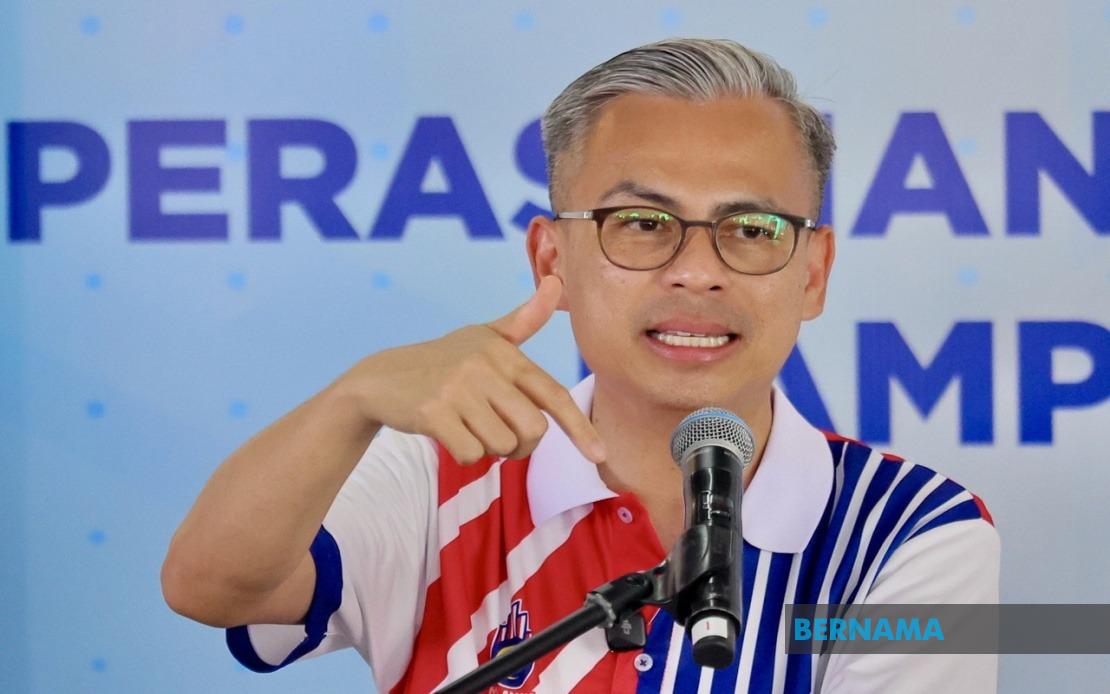
Communications Minister Datuk Fahmi Fadzil has delivered a sharp rebuke to those operating a fraudulent WhatsApp account masquerading as Pakatan Harapan candidate Saiful Nizam Samat in the Endau state seat contest, characterising the deception as a reckless attempt to manipulate voters during the ongoing Johor state election. The minister's condemnation underscores growing concerns about the weaponisation of digital platforms in Malaysian electoral campaigns, where unscrupulous actors exploit social media to impersonate legitimate candidates and spread misinformation to the voting public.
Saiful Nizam categorically denied any association with the fraudulent account, stating in a Facebook post that the profile operating under his name and utilising his photograph bore no connection to him or his official campaign apparatus, Team SS. The false account had been actively engaging with members of the public for election purposes, creating a direct channel for spreading misleading information while leveraging the candidate's established reputation and voter trust. This deceptive practice represents a particularly insidious form of electoral interference because it operates under the guise of legitimate campaign communication, potentially influencing voter decisions based on fabricated messages and false pledges.
Screenshots shared by Saiful Nizam revealed the extent of the impersonation, with the fake account claiming "I am Saiful Samad, the future Endau assemblyman" — a statement that demonstrates the fraudster's intent to not only impersonate but actively campaign on behalf of a false identity. The use of the candidate's personal photograph added a veneer of authenticity that could easily deceive casual social media users unfamiliar with proper verification procedures. Such tactics exploit the inherent trust citizens place in direct communications from their political representatives, turning digital platforms into vehicles for electoral manipulation rather than legitimate democratic discourse.
Fahmi's public intervention reflects the severity with which the government views such electoral misconduct. In his comments beneath Saiful Nizam's official Facebook announcement, the Communications Minister explicitly stated that those responsible demonstrated a willingness to engage in unethical behaviour for electoral advantage, framing the incident as symptomatic of a broader problem where certain political actors prioritise victory over integrity. This characterisation positions the fake account controversy within a larger narrative about the standards of political conduct expected during an election period, sending a signal that such activities will face public scrutiny and ministerial condemnation.
The Endau seat election presents a complex political landscape that renders such fraudulent tactics particularly consequential. The contest features four competing candidates representing Barisan Nasional, Pakatan Harapan, Perikatan Nasional, and Parti Orang Asli Malaysia, creating a multi-cornered battle where even narrow margins could determine victory. In such a closely contested environment, the circulation of misleading information through fraudulent accounts could conceivably sway undecided voters or suppress turnout among supporters who become confused about legitimate campaign channels. The proliferation of fake accounts therefore threatens to undermine the fundamental principle of informed electoral choice.
Saiful Nizam's response strategy included clear public guidance advising voters to remain cautious about unfamiliar digital communications and to verify campaign information through official channels. By explicitly warning the public to refrain from sharing personal data with unknown accounts and directing people to contact Team SS through legitimate platforms for verification, the candidate attempted to mitigate potential damage while educating voters about digital security risks during election season. This defensive posture reflects the reality that candidates must now defend themselves not only against political opponents but also against malicious actors seeking to exploit their identities for various purposes.
The incident raises fundamental questions about digital governance and electoral integrity in Malaysia. As social media platforms become increasingly central to campaign strategies, the regulatory framework for managing impersonation and misinformation remains inadequately developed in many jurisdictions. While WhatsApp offers reporting mechanisms for fake accounts, the lag time between fraudulent activity and platform response can allow considerable damage to occur, particularly during high-stakes electoral periods when information spreads rapidly and voters make critical decisions. The reliance on individual candidates to detect and publicly dispute fake accounts places responsibility on victims rather than platform operators or regulators.
For Malaysian voters navigating the information landscape during election season, the Endau incident serves as a cautionary reminder about digital literacy and verification procedures. The proliferation of platforms enabling rapid communication also creates multiple vectors for deception, requiring citizens to develop more sophisticated approaches to validating political information. As elections grow increasingly digitalised, the ability to distinguish authentic communications from fraudulent imposters becomes an essential civic skill, yet many voters lack adequate training or resources to make such distinctions confidently.
The broader implications extend beyond this single Johor election. Each instance of successful impersonation or misinformation establishes a precedent that encourages further attempts, creating an escalating cycle of electoral manipulation that gradually corrodes public confidence in political institutions. When voters cannot trust that a message purporting to come from a candidate actually originates from their campaign, the entire digital ecosystem becomes suspect, pushing political discourse back toward traditional in-person channels and potentially disadvantaging candidates who rely on innovative digital strategies to reach voters.
The incident also highlights asymmetries in campaign resources and technical sophistication. Established candidates with adequate funding can invest in digital security infrastructure, staff training, and rapid response teams to identify and counter fraudulent accounts. Newer or less well-resourced candidates may lack these capabilities, creating an uneven playing field where electoral integrity becomes partly dependent on financial capacity rather than regulatory fairness. This disparity could gradually entrench advantages for incumbent or well-funded parties, potentially distorting electoral competition in ways that marginalise challengers with limited technical resources.
Moving forward, the Endau case underscores the necessity for Malaysian election authorities to develop more proactive approaches to electoral fraud prevention. Rather than relying on individual candidates to identify and publicise fake accounts, election management bodies could establish dedicated monitoring systems, work cooperatively with social media platforms to accelerate fraudulent account removal, and establish clear public guidance about reporting mechanisms and verification procedures. Education campaigns preceding elections could train voters in digital literacy and encourage them to develop habits of critical information evaluation that protect against manipulation regardless of the deception method employed.

