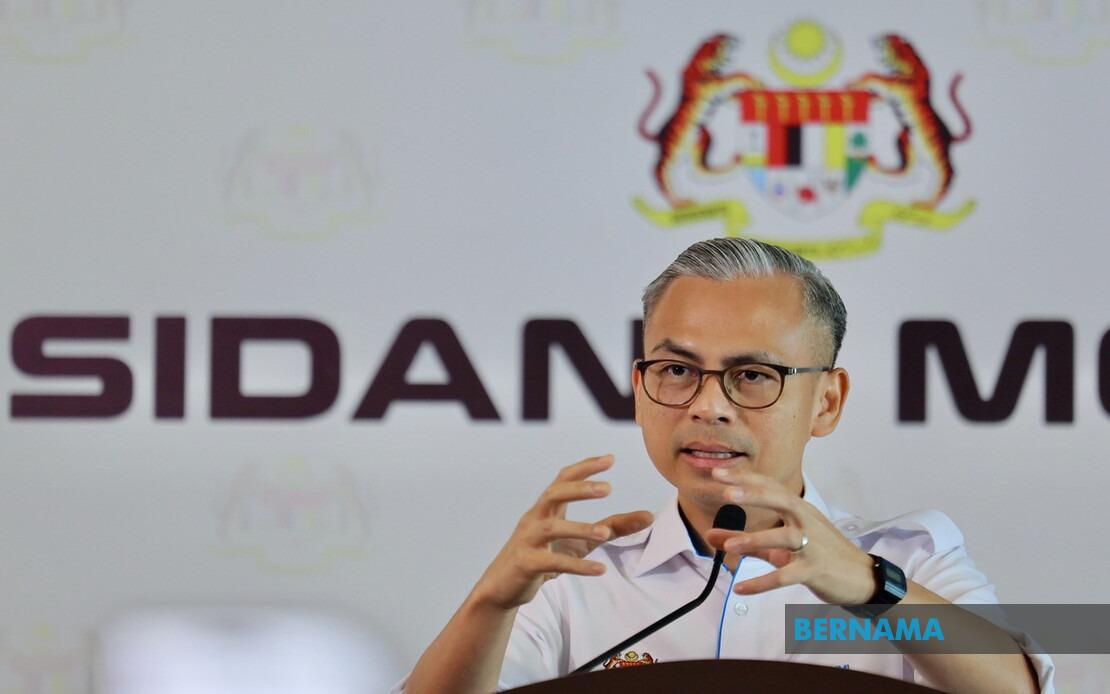
Communications Minister Datuk Seri Fahmi Fadzil has emphasised that Malaysia's hard-won independence represents the accumulated sacrifices of previous generations, whose contributions must be honoured through sustained commitment to national unity. In a message marking the 2026 National Day and Malaysia Day celebrations, Fahmi stressed that contemporary Malaysians have an obligation to preserve and build upon this foundational legacy, ensuring that the values for which independence was achieved remain relevant and vibrant in modern times.
The minister's call comes at a moment when Malaysia continues to navigate the complexities of maintaining social cohesion amid rapid economic transformation and evolving demographic shifts. Fahmi articulated a vision of national belonging that transcends traditional demographic boundaries, urging all citizens—irrespective of ethnicity, faith, cultural heritage or socioeconomic standing—to actively participate in reinforcing the institutional and social structures that hold the nation together. This inclusive framework reflects a deliberate political positioning that seeks to address contemporary concerns about fragmentation while affirming shared national purpose.
Fahmi's statement explicitly connects patriotism with tangible governance outcomes, particularly in how development benefits are distributed. The minister framed prosperity not as a zero-sum competition between communities but as an achievable collective outcome dependent on mutual respect and coordinated effort. This framing carries significant implications for Malaysia's ongoing efforts to implement inclusive growth policies, suggesting that official messaging increasingly recognises the link between equitable distribution of economic gains and maintenance of interethnic harmony.
The 2026 theme, Malaysia MADANI: Kesejahteraan Dinikmati—which translates roughly as "Malaysia MADANI: Welfare Enjoyed by All"—serves as the rhetorical scaffolding for this vision of shared prosperity. The MADANI framework, introduced by the current administration, represents an attempt to reorient national development discourse toward more explicit consideration of citizen wellbeing across all segments of society. Fahmi's invocation of this theme suggests that celebrating national occasions is being increasingly leveraged to advance specific policy narratives about how government aims to deliver tangible improvements in quality of life for ordinary Malaysians.
By emphasising that "the country's progress and prosperity should be a shared responsibility," Fahmi positioned developmental gains as something requiring collective stewardship rather than top-down distribution. This rhetorical move has practical significance for Malaysia's political economy, as it potentially frames policy challenges—such as disparities in urban-rural development, educational access, or healthcare provision—as matters requiring broad-based buy-in rather than purely technocratic solutions. The implicit message is that citizens themselves bear responsibility for ensuring equitable outcomes, not merely government agencies.
The minister's hope that Malaysia would "continue to progress as a united nation and command respect on the global stage" adds an external dimension to his message. This phrasing acknowledges that national unity constitutes a competitive advantage in an increasingly multipolar world where soft power and international standing depend partly on perceptions of internal stability. For Malaysia—a nation that has historically positioned itself as a bridge between the Islamic world and Western institutions—maintaining this image of harmonious diversity carries diplomatic weight. Challenges to internal cohesion risk damaging Malaysia's ability to project influence regionally and globally.
The emphasis on "spirit of togetherness and shared responsibility" reflects an understanding that patriotism in contemporary Malaysia cannot be purely ceremonial. Rather, it must connect to tangible commitments to mutual progress and acceptance of interdependence across community lines. This framing acknowledges that in pluralistic societies, national pride and patriotic sentiment require active cultivation and renewal, particularly among younger generations who may lack direct connection to independence-era narratives.
Fahmi's invocation of "mutual respect" as a foundational principle carries practical significance for Malaysian governance. Respect, in this context, implies recognition of diverse cultural, religious and social identities as equally legitimate within the national framework, while simultaneously maintaining commitment to constitutional arrangements and secular law. This balancing act has proven persistently challenging in Malaysian politics, where competing visions of national identity frequently generate public controversy.
The timing of these messages—as Malaysia marks both National Day and Malaysia Day—provides the government an annual platform to recalibrate national messaging and reinforce institutional narratives about cohesion and shared purpose. For Malaysian readers and observers across Southeast Asia, such statements serve as indicators of how the administration perceives emerging challenges to social harmony and what policy priorities it intends to emphasise in coming months. Fahmi's emphasis on inclusive prosperity and equitable development distribution suggests the government recognises economic grievances as a potential threat to the unity it seeks to promote.
Looking forward, the success of these unity appeals will largely depend on whether government delivery on inclusive development commitments matches the rhetoric offered during national celebrations. Malaysian citizens across different communities have historically responded to patriotic appeals most positively when accompanied by demonstrable improvements in their material circumstances and genuine inclusion in national decision-making processes. The gap between aspirational messaging and practical implementation remains a critical challenge for Malaysian governance and social cohesion.

