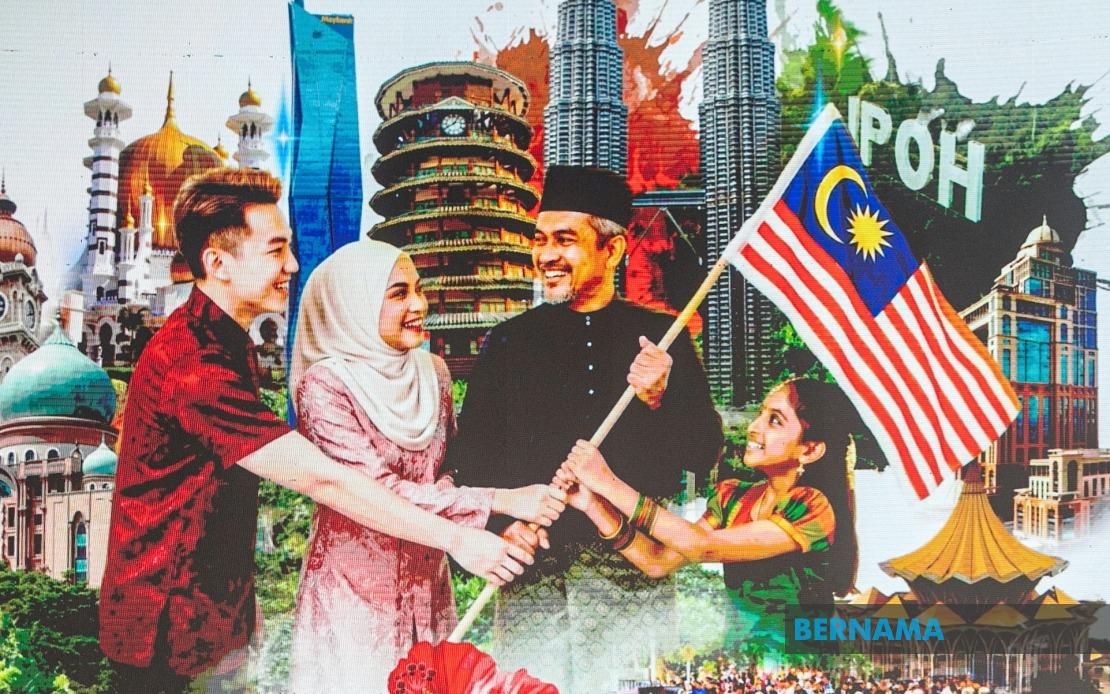
With Malaysia gearing up for its 2026 National Month celebrations, Communications Minister Datuk Seri Fahmi Fadzil has sounded a timely warning about the risks posed by artificial intelligence when creating content featuring the Jalur Gemilang. Speaking at the launch of the 2026 National Month and Fly the Jalur Gemilang campaign in Ipoh, Fahmi stressed the critical importance of ensuring that any AI-generated imagery of the national flag maintains strict adherence to the flag's authentic design specifications.
The minister's caution reflects growing concerns about the capacity of AI image generators to inadvertently distort or simplify complex visual elements. The Jalur Gemilang, with its distinctive 14 horizontal stripes representing Malaysia's 13 states and the federal government, carries profound symbolic weight as a representation of national identity and unity. When these stripes are omitted or incorrectly rendered—whether through computational shortcuts in AI systems or user error—the resulting imagery becomes historically and culturally inaccurate, potentially diminishing the reverence with which Malaysians regard their national emblem.
Fahmi's intervention addresses a relatively new phenomenon in the digital age: the democratization of content creation through AI tools has made it easier for individuals and organizations to produce polished visuals without specialist design expertise, yet this accessibility comes with risks. Content creators operating across social media, marketing campaigns, and news outlets must now navigate an additional layer of responsibility, ensuring that technological convenience does not compromise historical and constitutional accuracy. The minister's emphasis on the 14 stripes, rather than merely noting that errors exist, underscores the specific vulnerability in AI systems that may truncate or simplify repetitive design elements.
Beyond issuing warnings, Fahmi outlined a collaborative framework involving key media stakeholders. The ministry plans to work with the Malaysian Press Institute and the Malaysian Media Council to establish standards for flag representation throughout the National Month period. This partnership approach suggests recognition that a top-down regulatory stance alone would be insufficient; instead, engaging media organizations directly creates an opportunity for peer-led quality assurance and professional accountability within the industry itself. Such institutional coordination becomes especially relevant given that news organizations and content creators often set precedents that influence broader public behavior.
When asked about enforcement mechanisms, Fahmi revealed that the ministry would adopt a graduated response, beginning with advisory notices rather than immediate legal action. This pragmatic approach acknowledges the nascent nature of AI-related compliance issues and the genuine difficulty content creators may face in understanding AI system limitations. Malaysia, like many nations, possesses existing legislation governing the representation of national symbols, yet applying such laws rigidly to unintentional AI errors could prove counterproductive. The minister's preference for initial correction requests creates space for education and voluntary compliance before escalating to formal legal consequences.
The broader context of these concerns emerged during the launch event held at the Sultan Azlan Shah Ministry of Health Training Institute in Tanjung Rambutan, which was officiated by Prime Minister Datuk Seri Anwar Ibrahim. The presence of senior government figures—including National Unity Minister Datuk Aaron Ago Dagang and Perak Menteri Besar Datuk Seri Saarani Mohamad—underscored the government's commitment to meaningful National Month observances. The timing of the campaign launch, occurring well in advance of the actual celebrations, provides content creators and organizations with adequate opportunity to familiarize themselves with best practices for flag representation.
Fahmi's call for Malaysians to fly the Jalur Gemilang from the campaign launch through at least September 16 forms part of a broader patriotic initiative. By extending the flag-flying period beyond the traditional August 31 National Day date to encompass Malaysia Day on September 16, the campaign promotes sustained national consciousness across two months. This extended timeframe inevitably increases the volume of flag-related content circulating online and offline, magnifying the potential for AI-generated errors to proliferate if proper safeguards are not implemented.
For Malaysian digital natives and content creators who regularly employ AI tools for graphic design, video production, and social media content, Fahmi's guidance serves as a practical reminder to perform quality verification checks on AI outputs. The responsibility extends beyond individual creators to organizations that deploy AI systems at scale. Technology companies offering AI image generation services could themselves improve their training datasets and algorithmic approaches to better recognize and preserve culturally significant flag designs, reducing the likelihood of systematic errors across platforms.
The geographic distribution of 2026 celebrations—with National Day taking place in Putrajaya and Malaysia Day in Sarawak—also has implications for content creation. Different regions may produce diverse interpretations of patriotic imagery, and ensuring consistency in flag representation across these geographically dispersed celebrations requires clear, accessible guidelines that content creators can reference regardless of their location. This decentralization of celebration sites, while enriching national observances with regional perspectives, necessitates stronger centralized standards for core national symbols.
Fahmi's emphasis on learning proper flag etiquette reflects a cultural education dimension often overlooked in digital contexts. Beyond generating accurate imagery, understanding when, where, and how to display the Jalur Gemilang appropriately constitutes an important aspect of national consciousness. The minister's suggestion that the public take time to study these protocols suggests confidence that many Malaysians may not be entirely familiar with formal flag display standards, creating a valuable opportunity for civic education during the National Month period.
The intersection of artificial intelligence, national symbols, and public communication represents a novel governance challenge that few nations have comprehensively addressed. Malaysia's approach—combining technology awareness with collaborative industry engagement and graduated enforcement—offers a model that balances innovation with cultural preservation. As AI systems become increasingly integrated into content production workflows across Southeast Asia, other nations may observe how Malaysia navigates this terrain, particularly regarding the balance between technological progress and the protection of nationally significant symbols.

