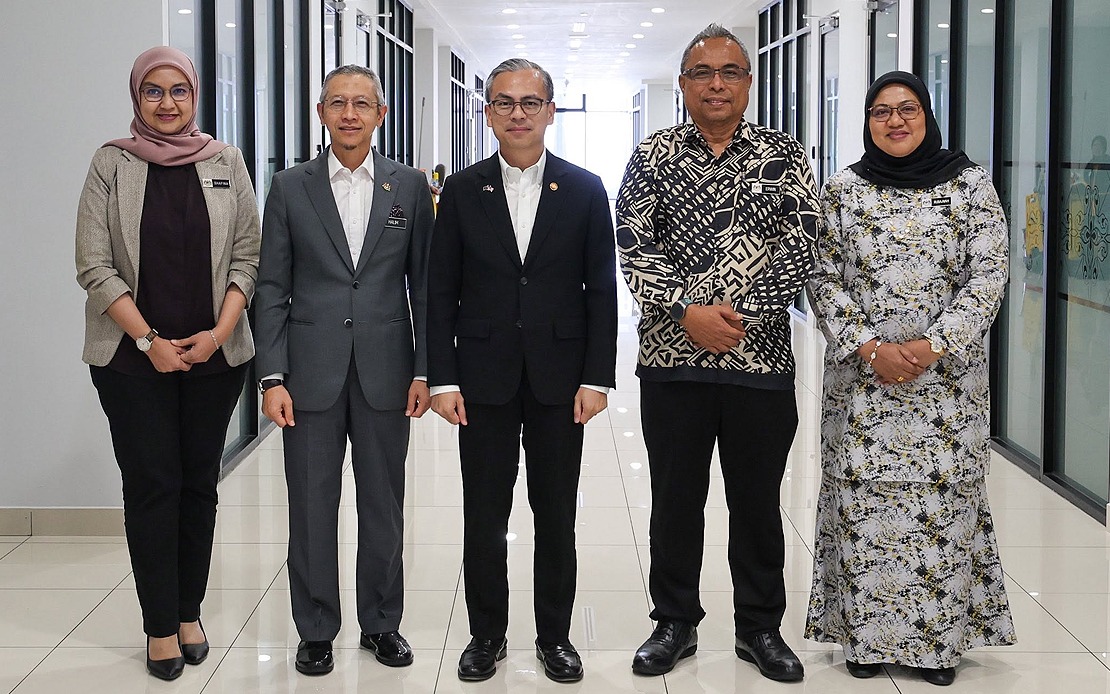
Communications Minister Datuk Fahmi Fadzil has formally welcomed the newly appointed leadership of the Information Department (JaPen), signalling a transition in stewardship of the government agency responsible for strategic communications and public information dissemination. Erwin Khairul Ahmad assumes the role of director-general, while Wan Saidatul Shafina Mohd Amin takes up the position of deputy director-general focusing on digital content operations.
The ministerial endorsement comes as the Public Service Department formally presented appointment letters to both officials, with the process overseen by Tan Sri Wan Ahmad Dahlan Abdul Aziz, the director-general of the Public Service Department. This formal presentation underscores the institutional significance of the appointments within Malaysia's civil service framework, reflecting the structured transition procedures that govern senior management changes across government agencies.
In his congratulatory remarks, Fahmi emphasised the importance of continuity and institutional commitment, urging the new leaders to maintain high standards of public service. His statement highlighted the expectation that both appointees would strengthen JaPen's operational effectiveness as the primary vehicle through which the government delivers information to citizens. The minister's language underscored three key principles guiding their tenure: dedication to duty, sound judgment, and maintaining institutional momentum.
The appointment of Wan Saidatul Shafina specifically to oversee digital content reflects a deliberate organisational emphasis on the evolving media landscape. As governments across Southeast Asia navigate the complexity of digital communication channels, Malaysia's Information Department is positioning itself to address the growing importance of online platforms in shaping public discourse. This structural choice suggests recognition within the communications ministry that digital engagement requires dedicated leadership and strategic focus.
Fahmi simultaneously acknowledged the departing director-general Julina Johan, expressing gratitude for her service and the contributions she made during her tenure. Such recognition of outgoing officials serves multiple functions within the administrative culture—it provides closure to a leadership chapter, validates the work of the departing leader, and establishes a sense of continuity despite personnel changes. The minister's explicit mention of Johan's dedication reinforces the institutional nature of the role, positioning individual leaders within a broader narrative of sustained governmental service.
The Information Department occupies a critical position within Malaysia's administrative ecosystem, serving as the interface between government policy and public understanding. As nations grapple with information fragmentation, misinformation, and competing narratives in the digital sphere, the department's role has become increasingly complex and high-stakes. The appointment of new leadership with explicit focus on digital content suggests that JaPen is adapting its operational strategy to address contemporary communication challenges that extend far beyond traditional media channels.
For Malaysian readers and regional observers, these leadership transitions merit attention because they indicate how the government is prioritising institutional responses to contemporary information challenges. The elevation of digital content to a dedicated deputy director-general position acknowledges that content creation, curation, and digital distribution now rank among the department's core functions. This reflects broader trends across the region where governments are investing in digital capabilities to maintain relevance in rapidly evolving media environments.
The Public Service Department's involvement in formalising these appointments ensures that the transitions follow established merit-based procedures and governmental protocols. This institutional formality lends legitimacy to the appointments and signals that leadership changes within strategic government agencies proceed through rigorous, standardised processes rather than through arbitrary determination. Such procedural clarity is important for maintaining public confidence in the integrity of civil service advancement.
Erwin Khairul Ahmad and Wan Saidatul Shafina now inherit responsibility for an agency facing mounting expectations from both internal stakeholders and the broader public. JaPen's effectiveness in the coming years will be measured not only by its ability to disseminate official information but also by its capacity to engage citizens authentically across diverse platforms, address information gaps, and contribute to a healthier information ecosystem. The emphasis placed by Minister Fahmi on dedication and wisdom suggests these are the qualities he believes will be essential for navigating the complex terrain of modern public communications.

