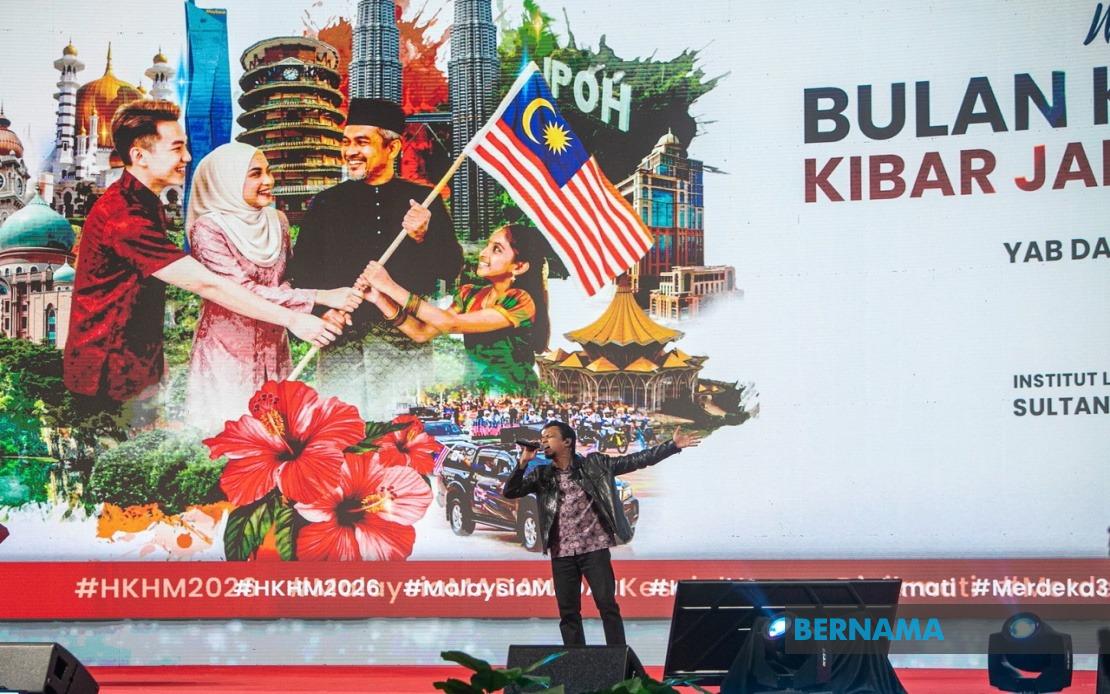
Malaysian singer-songwriter Faizal Tahir's composition 'Aku Berjanji' has been chosen as the official theme song for Malaysia's 2026 National Month and the Fly the Jalur Gemilang Campaign, marking a significant recognition of his artistic contribution to the nation's patriotic calendar. The track made its public debut at the launch ceremony held at the Sultan Azlan Shah Ministry of Health Malaysia Training Institute, representing a culmination of months of creative effort and strategic planning by the artist and his production team.
Faizal explained that the song embodies core messaging around national cohesion, social unity, and the deeper emotional connection Malaysians maintain with their homeland and its sovereignty. These thematic elements were deliberately woven into the composition to resonate with audiences across the country's diverse demographics and to serve as a unifying cultural artifact during the annual National Month observance. The artistic direction reflects a contemporary approach to patriotic songwriting, moving away from more traditional compositions to create something that appeals to modern listeners while maintaining substantive national messaging.
Speaking to Bernama after the official event, Faizal expressed his gratification at receiving this honour, particularly noting the significance of the opportunity after nearly two decades of professional involvement in Malaysia's music industry. He emphasized his belief that music represents a powerful medium through which Malaysian society can strengthen bonds of togetherness and transcend the particularities that often divide communities. The selection underscores the continued relevance of music as a policy tool for national-building exercises, a recognition that extends beyond mere entertainment into the realm of cultural diplomacy and social cohesion.
The production timeline for 'Aku Berjanji' reveals a deliberate, methodical creative process rather than rushed work. Faizal disclosed that assembling the complete two-minute-29-second composition required approximately one month of concentrated effort involving his full production team. This timeframe encompasses not merely recording and mixing but also the foundational conceptual work of translating abstract notions of national spirit into musical form. The artist indicated that preliminary discussions about crafting a song centred on themes of national pride and responsibility crystallized around May, suggesting a timeline that allowed for iterative refinement before the final selection announcement.
Faizal's trajectory to this moment illustrates the evolution of Malaysia's popular music landscape over the past two decades. His initial breakthrough came in 2006 when he competed in the reality television talent programme One In A Million, where he achieved the runner-up position. That early exposure established him as a significant voice within Malaysian contemporary music, setting the foundation for sustained professional engagement with both commercial and cultural projects. His subsequent career demonstrated resilience and creative development, qualities that likely factored into the selection committee's decision to entrust him with such a high-profile national assignment.
The choice to feature Faizal Tahir for this role signals official recognition of the evolving relationship between commercial entertainment industries and state-level cultural programming in Malaysia. Rather than commissioning an entirely new artist or relying on established figures from earlier generations, the selection reflects confidence in contemporary music creators who have proven their ability to connect with Malaysian audiences. This approach also acknowledges that National Month celebrations must maintain cultural relevance for younger demographics, who increasingly consume patriotic messaging through digital platforms and contemporary musical formats rather than traditional broadcast media.
The broader National Month and Jalur Gemilang campaign framework within which 'Aku Berjanji' is situated serves multiple governmental and social functions in Malaysia's annual calendar. These campaigns traditionally emphasize national pride, historical consciousness, and the symbolic importance of the Malaysian flag and national insignia. By anchoring the campaign around a dedicated theme song by an established Malaysian artist, organizers create multiple touchpoints through which the message can permeate society, from traditional radio and television broadcasts to social media sharing and live performance venues. The musical component offers a memorable, emotionally resonant vehicle for the campaign's core messaging.
For Malaysian listeners and the broader Southeast Asian music audience, 'Aku Berjanji' represents an attempt to create contemporary patriotic music that transcends generational divides without sacrificing artistic credibility. The challenge facing such compositions lies in balancing explicit national messaging with musical quality and emotional authenticity, avoiding the perception of propagandistic content while maintaining clear thematic purpose. Faizal's involvement suggests confidence that his established reputation as a serious musician lends credibility to the project, grounding it in artistic achievement rather than merely political directive.
The official promotion of 'Aku Berjanji' through this campaign will undoubtedly enhance its visibility and cultural penetration across Malaysia during 2026. Radio stations, television channels, and government institutions will incorporate the song into programming, while the associated campaign materials will provide extensive contextual framing for audiences encountering the composition for the first time. This institutional backing offers Malaysian artists meaningful opportunities to reach audiences at scale, a factor that distinguishes state-sponsored musical projects from purely commercial releases competing for attention within crowded digital entertainment ecosystems.
Looking forward, the success or resonance of 'Aku Berjanji' may influence how Malaysian authorities approach future national campaigns and cultural programming. Should the song achieve meaningful public engagement and become genuinely integrated into how Malaysians observe National Month, it could establish a template for future collaborations between government cultural agencies and contemporary musicians. Conversely, if public reception proves lukewarm, it might prompt reconsideration of how patriotic messaging is best delivered to increasingly sophisticated and selective modern audiences. Faizal's creative commitment and the production team's investment suggest confidence that the composition will achieve its intended cultural impact.

