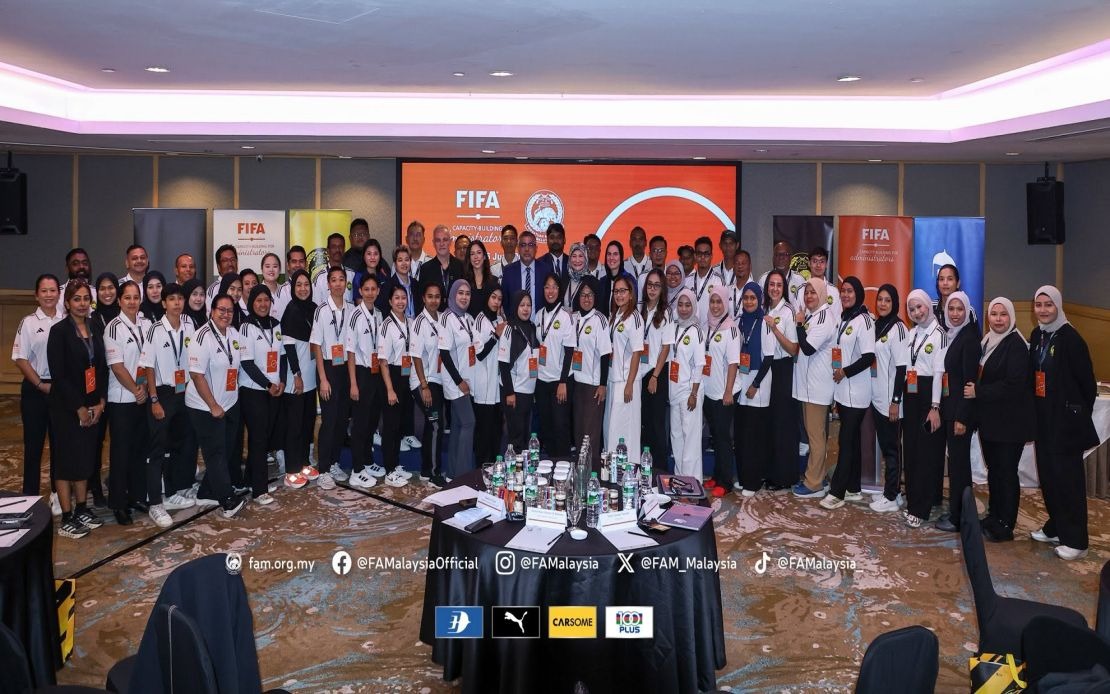
The Football Association of Malaysia is taking a strategic approach to developing its women's football ecosystem by investing in institutional capacity rather than focusing solely on on-field performance. Starting today, FAM is hosting the FIFA Capacity-Building For Administrators 2026 programme, a four-day initiative designed to elevate the management and administrative standards across the national women's football system. This initiative underscores a critical recognition within Malaysian football governance: sustainable development of women's football requires robust off-field infrastructure alongside tactical excellence.
The programme brings together two FIFA Women's Football Development Experts—Safia Abdeldayem and Pema Choden Tshering—to deliver specialised training to Malaysian administrators, team managers, and support staff. Their expertise in global women's football practices provides participants with exposure to international standards and methodologies that can be adapted to the Malaysian context. By importing knowledge from FIFA's extensive experience developing women's football across diverse football markets, FAM is positioning Malaysian administrators to implement best practices in a competitive regional landscape.
The curriculum is structured around four substantive modules that address different dimensions of professional football administration. The Women's Leadership module aims to cultivate decision-making capabilities and governance skills among participants, recognising that effective leadership is essential for driving cultural and structural change within football organisations. The Women's Competition module provides frameworks for understanding tournament structures, scheduling, and competition management—elements often overlooked in administrative development but critical for operational success at both club and national team levels.
The third module focuses on Club and Players' Rights, addressing legal and contractual dimensions that protect stakeholders within the football ecosystem. This is particularly significant in Malaysia, where formalising employment relationships and safeguarding player welfare in women's football remains an evolving concern. By ensuring that administrators understand the rights and obligations of both clubs and players, FAM is building institutional awareness of professional standards that extend beyond training grounds and match days. The final module on Strategic Planning equips participants with tools to develop coherent long-term visions for their respective organisations, moving beyond reactive management towards proactive development frameworks.
FAM's initiative reflects a broader understanding within Asian football that women's football development cannot succeed without adequate administrative foundations. The presence of high-level FAM officials—including secretary-general Datuk Noor Azman Rahman, FIFA Women's National Team Competitions Committee member Datuk Suraya Yaacob, and FAM Women's Football Technical Director Soleen Al-Zoubi—signals institutional commitment to this agenda. Their attendance demonstrates that women's football administration is no longer a peripheral concern but a strategic priority within Malaysian football governance.
The collaboration between FAM and FIFA represents a significant investment in institutional learning. FIFA's global development programmes have supported numerous nations in systematising their women's football operations, and Malaysia's participation in this capacity-building initiative positions the country alongside football associations worldwide that are professionalising their administrative structures. For a nation seeking to improve its competitive standing in women's football across Southeast Asia and Asia-Pacific regions, such administrative development often precedes on-field improvements by creating the organisational conditions necessary for sustained progress.
FAM's framing of the programme emphasises the interconnection between administrative strength and ecosystem sustainability. By increasing the pool of skilled managers, administrators, and women leaders in football, FAM argues that the sport develops greater institutional resilience and professional credibility. This creates a multiplier effect: better-trained administrators make more informed decisions about player development, competition structures, and resource allocation, which in turn creates more favourable conditions for talented players to develop their skills within structured, professional environments.
The emphasis on women's leadership deserves particular attention within the Malaysian context. Women's football in Malaysia has historically operated within constraints related to funding, visibility, and institutional support. By intentionally developing women administrators and leaders, FAM is addressing not only technical deficits in management capability but also structural barriers that have traditionally limited women's representation in football governance. This approach recognises that building a sustainable women's football ecosystem requires women to occupy decision-making positions rather than remaining confined to playing roles.
For regional observers, FAM's investment in administrative capacity-building carries implications beyond Malaysia's borders. The Association of Southeast Asian Football Federations region is experiencing varied trajectories in women's football development, with some nations advancing rapidly through coordinated investment in both playing and administrative development. Malaysia's decision to prioritise administrative development through an internationally-led programme suggests a strategic repositioning aimed at closing competitive gaps with regional rivals who have already established professional administrative infrastructure supporting their women's programmes.
The timing of this programme aligns with FIFA's broader 2026 strategic framework for women's football development. By naming it the Capacity-Building For Administrators 2026 programme, FAM is signalling alignment with FIFA's medium-term vision for the sport globally. This synchronisation with international timelines ensures that Malaysian administrators are developing skills according to globally-recognised standards and contemporary best practices, rather than operating according to outdated or locally-specific approaches that may not translate effectively to international competition.
Looking forward, the success of this initiative will depend on how thoroughly FAM embeds the learning from this four-day programme into its ongoing operations and decision-making structures. Capacity-building programmes generate value only if their lessons are institutionalised and if improved administrators are empowered to implement their learning. FAM's commitment to expanding opportunities for women in football administration will face its real test in the months following this programme, as the association determines whether it creates structural pathways for continued professional development or treats the initiative as a one-time intervention.
The broader significance of FAM's initiative lies in its recognition that women's football development requires sustained investment across multiple dimensions simultaneously. Technical coaching expertise matters, but so do managers who understand competition structures, administrators who protect players' rights, and leaders who can develop strategic visions for their organisations. By addressing these administrative dimensions through an internationally-led programme, FAM is acknowledging that Malaysia's trajectory in women's football depends not only on the talent and dedication of its players, but equally on the professionalism and capability of those who manage, administer, and lead the sport off the field.