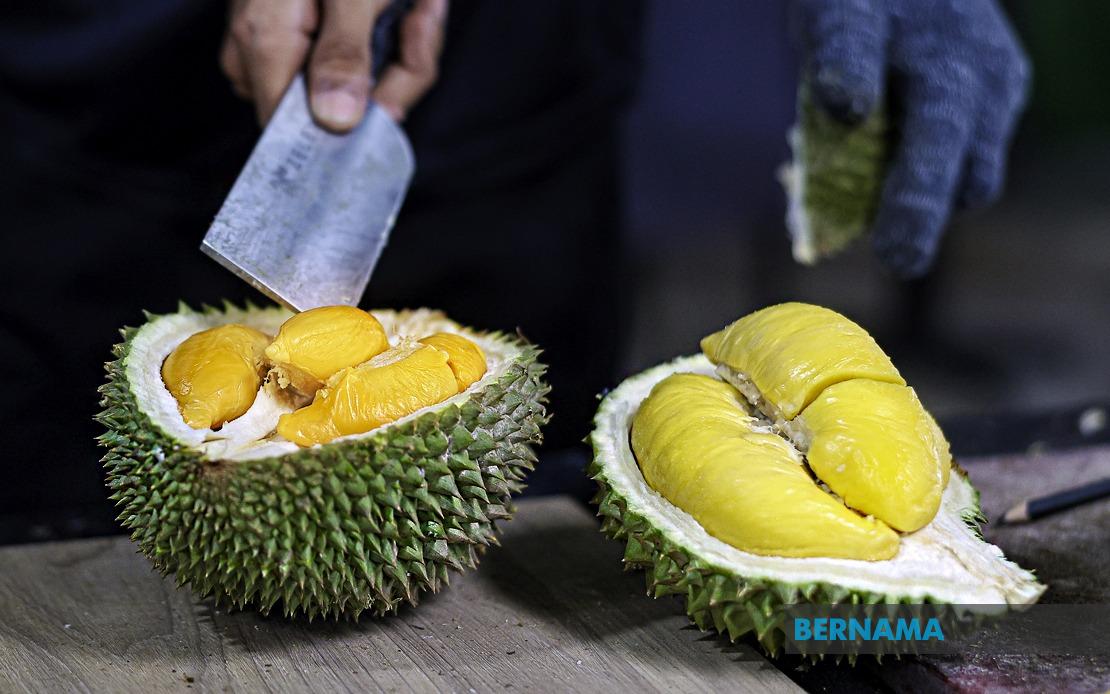
The Federal Agricultural Marketing Authority (FAMA) is moving decisively to strengthen the marketing and supply management of Penang's durian harvest as the 2026 peak season unfolds from June through August, with the state's output reaching unprecedented levels. The initiative, unveiled during the opening of the Penang Durian Festival in Nibong Tebal, represents a coordinated effort to protect farmer livelihoods and maintain consumer confidence amid rising production across Malaysia's major durian-growing regions.
Penang's durian output this year is projected to reach more than 18,000 metric tonnes, marking a notable increase from approximately 17,000 metric tonnes recorded in the previous growing season. This uptick reflects broader momentum in Southeast Asia's premium fruit sector, where Malaysian durians command premium positioning in both regional and international markets. Penang FAMA director Mohd Hafiz Nurulhuda characterised the situation as one requiring proactive management, acknowledging that while excess supply is emerging across major producing states, Penang's unique profile limits the immediate downward pressure on prices.
The resilience of Penang's durian sector stems partly from its production mix. Approximately 70 percent of the state's durian consists of premium, higher-value varieties rather than the lower-priced kampung durian that dominate other regions and bear the brunt of oversupply effects. This concentration in premium segments insulates local growers from the most severe pricing pressures that neighbouring states may experience. Nevertheless, FAMA recognises that without coordinated intervention, even modest oversupply could erode farmer margins and discourage investment in quality improvement during a critical phase when regional competition for premium fruit is intensifying.
The centrepiece of FAMA's intervention strategy is a forward purchasing agreement covering approximately 85 metric tonnes of durians, effectively creating a demand floor for growers who might otherwise face depressed pricing. More significantly, the authority has implemented a price guarantee for kampung durian varieties, committing to purchase fruit at RM2.70 per kilogramme if market prices fall below that threshold. This mechanism, combined with FAMA's existing marketing infrastructure, provides growers with certainty that their harvest will find a buyer at a minimum viable price, a crucial safeguard particularly for smaller producers who lack direct market access.
Premium varieties such as Black Thorn and Musang King, the varieties commanding the highest prices and greatest international demand, are maintaining stable pricing in the RM30 to RM40 per kilogramme range. This stability reflects both the constrained global supply of these elite cultivars and sustained demand from affluent consumers in Singapore, China, and other high-income markets. FAMA's ability to prevent price collapse in these segments while simultaneously protecting kampung durian growers demonstrates a nuanced understanding of Penang's segmented market structure and the different vulnerability levels facing producers at different price points.
On the distribution side, FAMA has operationalised two temporary collection centres in Balik Pulau and Seberang Jaya, facilities that have already channelled approximately 50 metric tonnes of durians to retail and wholesale markets this season. The strategic placement of these collection points in high-production zones reduces grower transportation costs and post-harvest losses, critical factors that improve farmer returns even before fruit reaches final consumers. Complementing this local infrastructure, FAMA has supplied 310 metric tonnes of durians to its nationwide network of marketing outlets and has expanded direct sales operations into the Klang Valley, Malaysia's largest consumer market and a historically lucrative distribution corridor for premium durians.
The expansion into the Klang Valley represents a calculated effort to capture urban demand before prices stabilise or decline during peak season. Malaysian consumers in federal territory and Selangor cities typically show strong purchasing power and willingness to pay premium prices for certified quality durians, particularly during the festival season. By securing substantial volumes for direct supply to these high-value markets, FAMA aims to absorb the current harvest surge while securing premium prices that benefit Penang growers more than would secondary markets or lower-value distribution channels.
Beyond immediate market intervention, FAMA is pursuing longer-term structural improvements designed to entrench Penang's position as Malaysia's premier premium durian destination. The authority is developing agro-tourism initiatives that leverage the state's reputation, allowing consumers to visit orchards, understand cultivation methods, and develop emotional connections to Penang durians that justify premium pricing. These projects serve a dual purpose: they provide additional revenue streams for growers through direct tourism spending and farm-gate sales, while simultaneously creating a sustainability argument around quality and terroir that resonates with increasingly conscious consumers in urban Malaysia and neighbouring regions.
Orchard facility upgrades form another dimension of FAMA's strategy, targeting improvements in cold storage, processing, and packaging infrastructure that can extend shelf life and improve product presentation for export-quality distribution. Modern orchard facilities enable growers to respond more rapidly to price signals, store fruit strategically when prices are depressed, and release inventory during higher-price windows. This capability becomes increasingly valuable as climate variability and regional production shifts create more volatile pricing patterns, a trend Malaysian agricultural professionals expect to intensify as temperatures and weather patterns shift across Southeast Asia.
The intervention framework outlined by FAMA also reflects recognition that Penang's durian sector operates within a broader Malaysian and regional context. While Penang's mix of premium varieties provides natural protection against severe oversupply, this advantage is neither permanent nor guaranteed if neighbouring states successfully develop competing premium production. Kedah, Perlis, and Terengganu have all expanded durian cultivation in recent years, and some growers in these states are investing in premium varieties that directly compete with Penang's offerings. FAMA's proactive marketing and infrastructure investment can therefore be understood as a competitive positioning exercise, one designed to deepen Penang's premium brand identity before competing regions fully capture market share in high-value export channels.
Chief Minister Chow Kon Yeow's presence at the durian festival opening, alongside the simultaneous launch of the Road to MAHA 2026 programme, underscores the political importance of the agricultural sector within state planning and development frameworks. The Malaysian Agricultural Industry Transformation (MAHA) initiative represents a comprehensive effort to modernise farming practices, improve productivity, and capture higher value in global supply chains. Penang's durian sector, as the state's flagship agricultural product, features prominently in these aspirations, and FAMA's intervention plan can be understood as alignment between federal agricultural policy and state-level economic development objectives.
The convergence of immediate market management and longer-term structural development suggests that Malaysian policymakers view the current oversupply situation not as a crisis requiring defensive intervention alone, but rather as a transition point toward a more sophisticated, branded, and resilient durian industry. By simultaneously implementing price floors, expanding distribution, and investing in brand differentiation through agro-tourism and facility upgrades, FAMA is attempting to ensure that Penang's durian growers emerge from the current high-production cycle with stronger market positions, improved profitability, and increased capacity to compete regionally and internationally. For consumers in Malaysia and across Southeast Asia, this approach promises sustained availability of premium durians at stable prices while supporting the economic viability of farming communities whose livelihoods depend on sustained demand for this emblematic Malaysian fruit.

