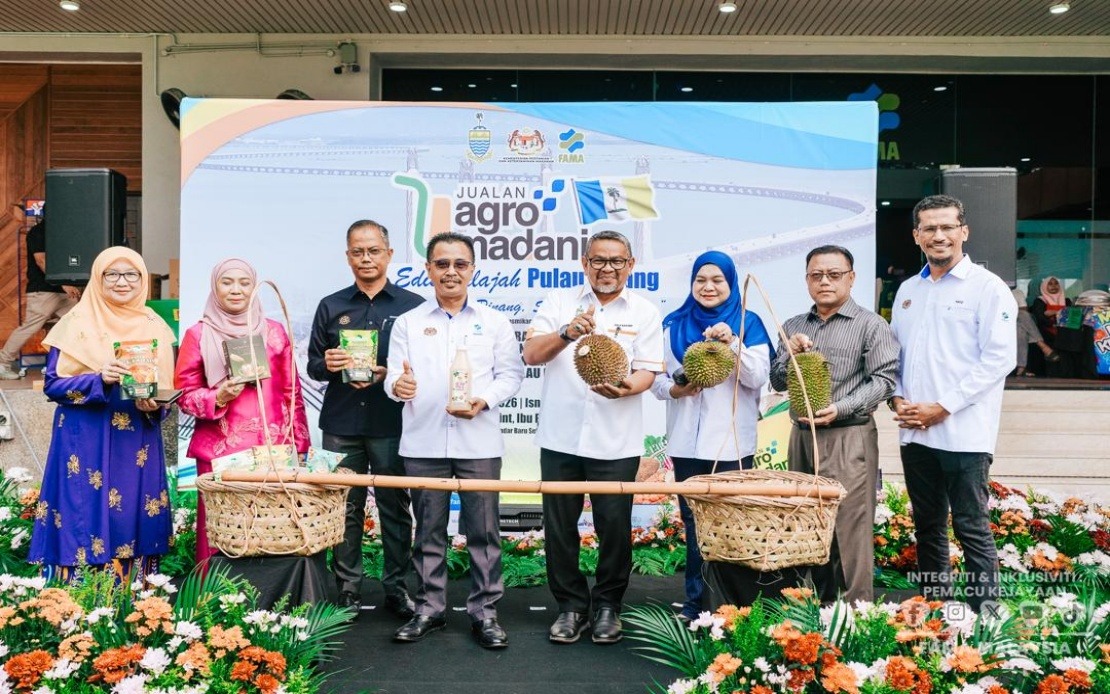
The Federal Agricultural Marketing Authority (FAMA) has achieved significant traction with its Agro MADANI Sales (JAM) programme, recording RM46.72 million in total sales during the first five months of 2024. Operating across 1,833 individual events held throughout Malaysia, the initiative demonstrates growing market appetite for direct-to-consumer agricultural commerce and reflects broader government efforts to modernise the nation's agri-food sector.
These impressive figures underscore FAMA's strategic pivot toward creating tangible market opportunities for small and medium-sized agricultural entrepreneurs. By facilitating direct sales channels that bypass traditional wholesale intermediaries, the programme addresses a persistent challenge in Malaysia's agricultural economy: the difficulty faced by farm-gate producers in accessing urban consumers at prices that remain competitive while maintaining viable profit margins. The scale of the rollout—involving hundreds of concurrent events nationwide—indicates substantial institutional commitment and logistical coordination across federal and state-level agricultural bodies.
The Penang edition of the JAM programme, launched in early July at FAMA's Selayang headquarters, serves as a microcosm of the broader initiative's approach. The event brought together 30 Penang-based agricultural entrepreneurs operating across 45 designated sales lots, with organisers projecting visitor numbers of approximately 2,000 and a sales target of RM100,000. This third instalment in the Selangor region reflects the programme's geographic expansion strategy, deliberately moving beyond the central economic corridor to include more peripheral states, thereby democratising market access across Malaysia's diverse agricultural zones.
What distinguishes the JAM programme from conventional agricultural marketing initiatives is its explicit dual mandate: simultaneously creating market pathways for producers while ensuring affordability and product quality for consumers. This balancing act proves particularly relevant in contemporary Malaysia, where inflation-driven cost pressures have eroded purchasing power across lower-income segments. By enabling direct transactions between growers and buyers, the model theoretically eliminates multiple distribution margins, potentially delivering mutual benefits. Producers gain higher returns per unit sold, while consumers access fresher produce at lower prices—a proposition that addresses real economic pain points for both constituencies.
The Penang edition underscored this diversity of agricultural output. The programme showcased premium durian varieties including Balik Pulau strains, Black Thorn, Red Prawn, and Hor Lor cultivars, alongside the distinctive Cempedak King. These specialty fruits command substantial price premiums in conventional retail channels, making direct-to-consumer sales particularly attractive for producers seeking to capture full market value. The deliberate curation of Penang-specific produce reflects a broader strategic insight: leveraging regional agricultural identity and terroir distinctiveness as marketing assets capable of commanding consumer premium and generating tourist interest.
Beyond produce sales, the programme incorporated an experiential commerce dimension through the inclusion of ready-to-eat local specialities. Offerings included signature Penang dishes such as nasi kandar, Penang laksa, char kuey teow, mee sotong, and air sarbat—transforming the sales event into a cultural and gastronomic destination. This hybrid commercial-cultural approach recognises that contemporary consumer behaviour increasingly values experience alongside product acquisition, particularly in urban markets. By combining agricultural retail with culinary tourism, the programme expands its addressable audience beyond efficiency-maximising shoppers to include leisure consumers and cultural tourists.
The initiative benefits from multi-tier governmental coordination that extends beyond FAMA's direct institutional purview. The Penang State Economic Planning Division, the Penang Rural Development committee, and the Penang Bumiputera Development Council all contributed organisational and promotional support. This architecture reflects recognition that agricultural marketing modernisation requires integrated policy coordination across multiple government agencies—a lesson particularly relevant for Malaysian policymakers seeking to improve implementation outcomes across complex cross-cutting initiatives.
FAMA's positioning of the programme emphasises its role in building sustainable marketing networks for participating entrepreneurs. The agency explicitly frames the JAM platform as an infrastructure investment designed to expand entrepreneurs' commercial reach beyond their immediate locality, generate repeat business relationships, and establish supply chain connections with established retailers. For many participating producers, particularly those from rural or peripheral regions, access to large-scale metropolitan markets traditionally required navigating Byzantine wholesale distribution systems controlled by established intermediaries. The JAM programme effectively democratises this access, reducing barriers to market entry and enabling direct price negotiation.
The scale of the achievement—RM46.72 million across five months—requires contextualisation within Malaysia's broader agricultural sector dynamics. While the figure represents a successful pilot phase, agricultural sector outputs typically involve substantially larger transaction volumes. The programme's trajectory suggests growing momentum, positioning subsequent months as critical for demonstrating scalability. If the initiative sustains momentum through the remainder of 2024, the annual run-rate could approach RM110-120 million, a meaningful though still modest contribution to Malaysia's estimated RM100 billion-plus annual agri-food market.
For regional Southeast Asian agricultural markets, the JAM programme offers potential replicability. Thailand, Vietnam, and Indonesia have similarly experimented with direct-to-consumer agricultural platforms, with varying success. Malaysia's approach, emphasising state-level coordination and cultural-gastronomic integration alongside commodity sales, represents a distinctive model that might influence broader regional agricultural modernisation strategies. The programme's success could catalyse similar initiatives across ASEAN nations seeking to simultaneously address farmer income challenges and urban consumer affordability concerns.
The programme's long-term significance extends beyond immediate sales figures. By establishing sustainable direct sales infrastructure and consumer awareness of farm-fresh purchasing options, FAMA is cultivating behavioural shifts toward consumption patterns that may benefit domestic agriculture more broadly. Consumers who experience superior product quality and competitive pricing through direct channels may increasingly question the value proposition of conventional retail distribution, potentially exerting competitive pressure on traditional intermediaries. This structural shift, if sustained, could fundamentally reshape Malaysia's agricultural commercialisation landscape, benefiting smaller producers while improving consumer outcomes—a realignment with genuine transformative potential.

