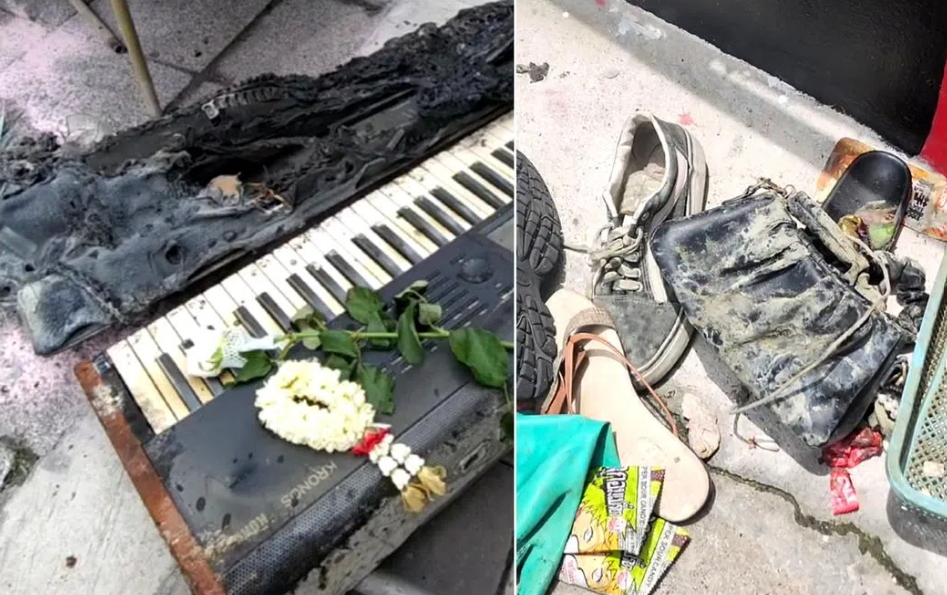
Suwanna Saeteaw's worst fears crystallised in an instant when she spotted her sister's mobile phone among belongings recovered from the Rong Beer Na Lat Phrao bar and restaurant on television news coverage. The discovery that her 25-year-old sibling Jarawee Sermsiri had likely perished in the inferno that engulfed the Bangkok establishment near midnight on July 12 left the 38-year-old struggling to contain her distress. When she rang the number, a rescue worker answered, confirming what Suwanna had dreaded most. The incident represents Thailand's deadliest fire in nearly two decades, surpassed only by the 2009 Santika club blaze that killed 67 people during New Year celebrations in the same city.
The immediate aftermath saw families fanning across Bangkok's hospitals and forensic facilities in frantic searches for missing relatives. Suwanna spent hours checking survivor lists while confronting the grim possibility that her sister might be among the unidentified deceased. Authorities collected DNA samples to assist with identification, but she was told results would require approximately three days—an agonising wait for those desperate for closure. The scene outside the charred venue told its own story of panic: abandoned shoes and personal belongings still littered the ground where patrons had fled through billowing smoke and consuming flames.
Investigators immediately focused on structural and safety factors that may have transformed what should have been a manageable evacuation into a tragedy. Bangkok Governor Chadchart Sittipunt indicated that authorities would scrutinise the building's ceiling materials and examine whether emergency exits had been blocked or made inaccessible. He highlighted that smoke appeared to be the primary cause of death rather than burns, suggesting that occupants became disoriented in darkness and thick fumes before they could locate exits. The venue, operating as a licensed single-storey concrete establishment, had passed an inspection just three months earlier in April, raising questions about the adequacy of safety checks.
Police investigations uncovered alarming details about the building's layout and emergency provisions. National Police Chief Kitrat Panphet revealed that most fatalities occurred in the toilet areas, indicating that panicking patrons had become trapped in dead ends. He disclosed that one exit door had been obstructed by a shelf, creating a bottleneck that allowed only individual passage rather than rapid evacuation. The absence of emergency lighting compounded the crisis, leaving people unable to navigate through smoke-filled corridors. The facility, built fifty years earlier, harboured additional hazards including potentially hazardous electrical wiring and combustible decorative materials, all of which received police examination.
The bar had reportedly hosted approximately 300 customers on the night of the fire, though the venue typically accommodated 600 to 700 patrons. This discrepancy raised questions about whether overcrowding during normal operations might have made emergency procedures even more chaotic. Estimates suggested the death toll could have been substantially higher had the venue operated at typical capacity. The structural engineer who examined the devastated remains, Amorn Pimanmas of the Thailand Structural Engineers Association, identified polyurethane foam decorations and the low ceiling as factors that allowed toxic smoke to accumulate rapidly throughout the space, overwhelming occupants before escape routes could be located.
Thailand's broader regulatory framework came under intensive scrutiny following the disaster. Amorn observed that while comprehensive fire safety legislation exists on paper, enforcement mechanisms remain inconsistent and inadequately resourced. The comment reflected a systemic problem affecting entertainment venues across the kingdom, where inspections appear perfunctory and violations often proceed unchallenged. This gap between statutory requirements and practical implementation has enabled repeated tragedies at bars, nightclubs, and similar establishments over preceding years.
Personal accounts from those who escaped or witnessed the crisis illuminated the nightmarish conditions inside. Chaiyo Piwisol, a 30-year-old waiter who had visited the bar previously, described it as inherently cramped and crowded, with narrow doorways that had always made him uncomfortable. The profusion of suspended decorations, lighting fixtures, and other overhead fixtures created an impression of insufficient safety consideration. Survivor Panathaporn Thongyord, only 19 years old, escaped but lost a childhood friend of fourteen years who had urged her to leave without attempting a rescue. The encounter crystallised the arbitrary nature of survival in such catastrophes.
The owner of Rong Beer Na Lat Phrao remained hospitalised in intensive care, preventing immediate questioning by investigators. Police indicated their intention to conduct thorough interviews once the proprietor's condition permitted. This delay potentially compromised early investigative momentum, though it raised ethical questions about interrogating someone suffering from serious injuries. The National Police Chief's comments suggested that several aspects of building management and emergency procedures would feature prominently in the investigation.
Prime Minister Anutin Charnvirakul visited the scene and indicated that preliminary findings had identified "blind spots" lacking visible fire escape routes. He cautioned the public to await complete investigative findings before drawing conclusions, yet promised that violations of existing regulations would face enforcement without clemency. His statement represented political acknowledgment of the disaster's severity while attempting to project governmental responsiveness to safety concerns. The apparent contradiction between passing a recent inspection and harbouring such dangerous conditions suggested that either inspection protocols were insufficient or proprietors had subsequently removed or obscured safety features.
The tragedy has inevitably reignited national debate about entertainment venue safety standards and their practical implementation across Thailand. Each incident—from Santika in 2009 to the current disaster—has prompted rhetorical commitments to reform that often fail to materialise into sustained enforcement action. For families like Suwanna's, awaiting DNA results while grappling with loss, such systemic failures represent more than administrative shortcomings; they represent the human cost of negligence permitted to persist. The incident will likely drive temporary regulatory scrutiny and inspection campaigns, though sustained commitment to fire safety culture change remains uncertain. Malaysia and other Southeast Asian nations should observe these developments closely, as similar venue safety challenges exist across the region, and Thailand's regulatory response may influence approaches elsewhere.

