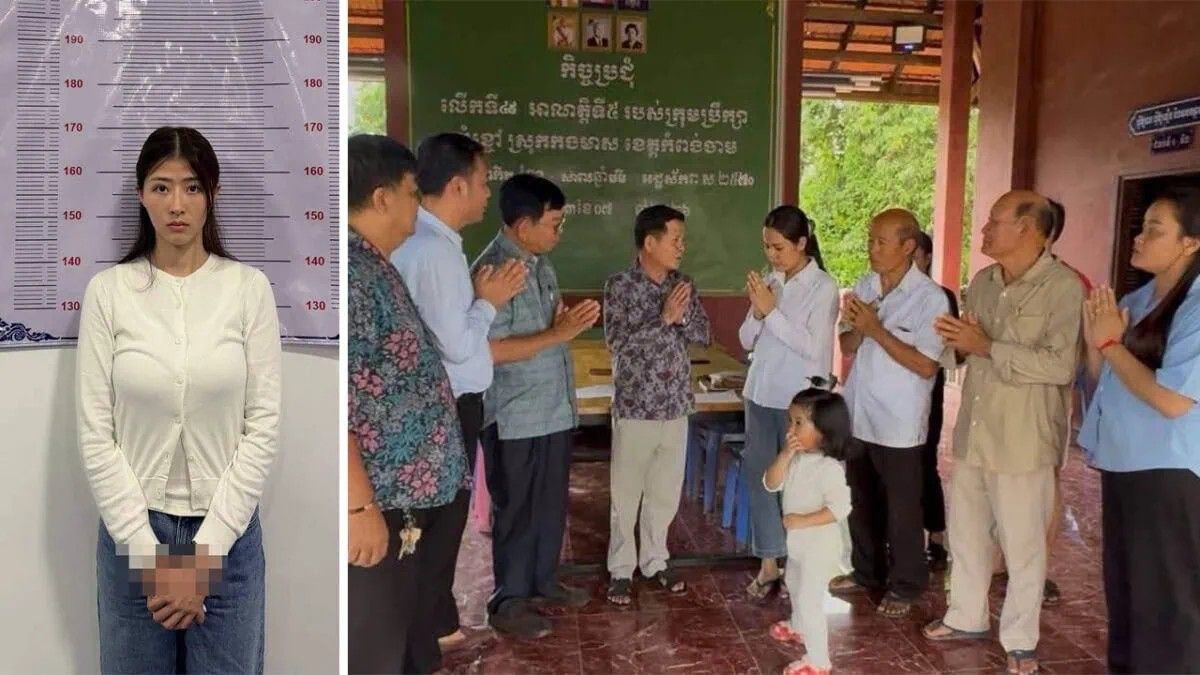
The family of Kuoch Limhan, a Ministry of Public Works and Transport official killed in a traffic collision in Phnom Penh last month, has accepted civil compensation of S$60,000 and formally withdrawn its civil complaint against the accused driver, Sam Meychou. The agreement, finalised on August 6 through an out-of-court settlement, brings closure to the civil dispute but does not halt ongoing criminal proceedings against the motorist.
According to the settlement documents, Oknha Tong Hok Seng, Meychou's father, transferred the compensation sum directly to Limhan's widow. The agreement was brokered with the involvement of Seung Kimhor, who represented the victim's family interests, and was formally witnessed by Kong Sekleng, the commune chief, and lawyer Phon Thearin. Both parties committed to resolving the matter amicably, with the victim's family agreeing to withdraw the civil complaint filed in criminal case No. 4396 on July 31, 2026, with the Phnom Penh Municipal Court.
The settlement explicitly stipulates that neither party will pursue additional claims or demands related to the incident, and that the dispute has been fully resolved through mutual understanding and goodwill. Such civil settlements are increasingly common in Southeast Asian jurisdictions where families of traffic fatalities seek immediate financial relief rather than prolonged litigation. The compensation amount—roughly equivalent to several years' salary for many Cambodian workers—represents a substantial sum intended to provide some measure of economic security for the widow left to raise a young child independently.
However, the civil resolution carries significant limitations. The criminal investigation into Meychou's conduct remains active, and the authorities have pursued charges that extend beyond mere negligence. On July 31, the Phnom Penh Municipal Court formally charged Meychou with causing a fatal traffic accident and fleeing the scene—two distinct criminal violations that carry the potential for substantial custodial sentences under Cambodian law. The investigating judge subsequently ordered her detention pending trial, signalling that the state considers the evidence sufficiently grave to warrant continued legal action.
The circumstances surrounding Limhan's death highlight troubling patterns in urban traffic safety across Cambodia and the broader Southeast Asian region. On the evening of July 28, Meychou's vehicle allegedly crossed the centreline while executing an overtaking manoeuvre in Sen Sok district. The collision with Limhan's motorcycle proved instantly fatal. Witness accounts and scene evidence suggest that Limhan, who was reportedly returning home with milk for his young daughter, had no opportunity to react or evade the oncoming vehicle. Video footage from the incident captured a stark and distressing image: Meychou and an accompanying individual departing the scene in a tuk tuk whilst Limhan's body lay motionless on the rain-soaked pavement.
Meychou's initial response to the incident—apparently fleeing with a companion rather than remaining to render assistance or alert emergency services—forms the basis of the second criminal charge. She eventually surrendered to authorities on the afternoon of July 30, more than thirty hours after the collision. Her decision to hand herself in may potentially influence sentencing considerations, though Cambodian courts do not operate under strict sentencing guidelines that formally reward early guilty pleas in the manner common in some Western jurisdictions.
The divergence between civil and criminal proceedings in this case illustrates a fundamental principle embedded in most legal systems: financial compensation does not extinguish the state's independent interest in prosecuting conduct deemed harmful to public order. While the victim's family has secured immediate financial relief, the Phnom Penh Municipal Court's decision to proceed with criminal charges reflects official recognition that Meychou's conduct—particularly the apparent abandonment of the victim—violates societal norms and legal obligations that transcend private compensation arrangements.
For Malaysian observers, this case underscores persistent challenges in traffic law enforcement and victim compensation frameworks across the region. Unlike Malaysia's more developed insurance compensation system and statutory fault liability schemes, Cambodia's reliance on ad hoc civil settlements creates significant disparities in outcomes depending on the accused party's financial capacity. Limhan's family secured S$60,000 because Meychou's father possessed sufficient resources; families of victims struck by less affluent drivers may receive substantially less or nothing.
The criminal proceedings now moving through the Cambodian courts will determine whether Meychou faces imprisonment, fines, or other penalties. The duration and visibility of the trial may also influence public discourse surrounding road safety enforcement in Phnom Penh, where traffic fatalities have become a persistent public health concern. Whether the criminal conviction—if secured—will result in meaningful deterrence effects or systemic safety improvements remains uncertain, as Cambodia grapples with inadequate road infrastructure, inconsistent enforcement, and limited public safety campaigns.
For the Limhan family, the settlement provides immediate financial breathing room but cannot restore what was irretrievably lost. The widow must now navigate raising their young daughter alone, whilst Limhan's colleagues at the Ministry of Public Works and Transport have lost a colleague whose work contributed to Cambodia's infrastructure development. The criminal case continues its progression through Cambodian courts, where questions of accountability and public justice remain to be resolved through proceedings unaffected by the civil agreement already concluded.

